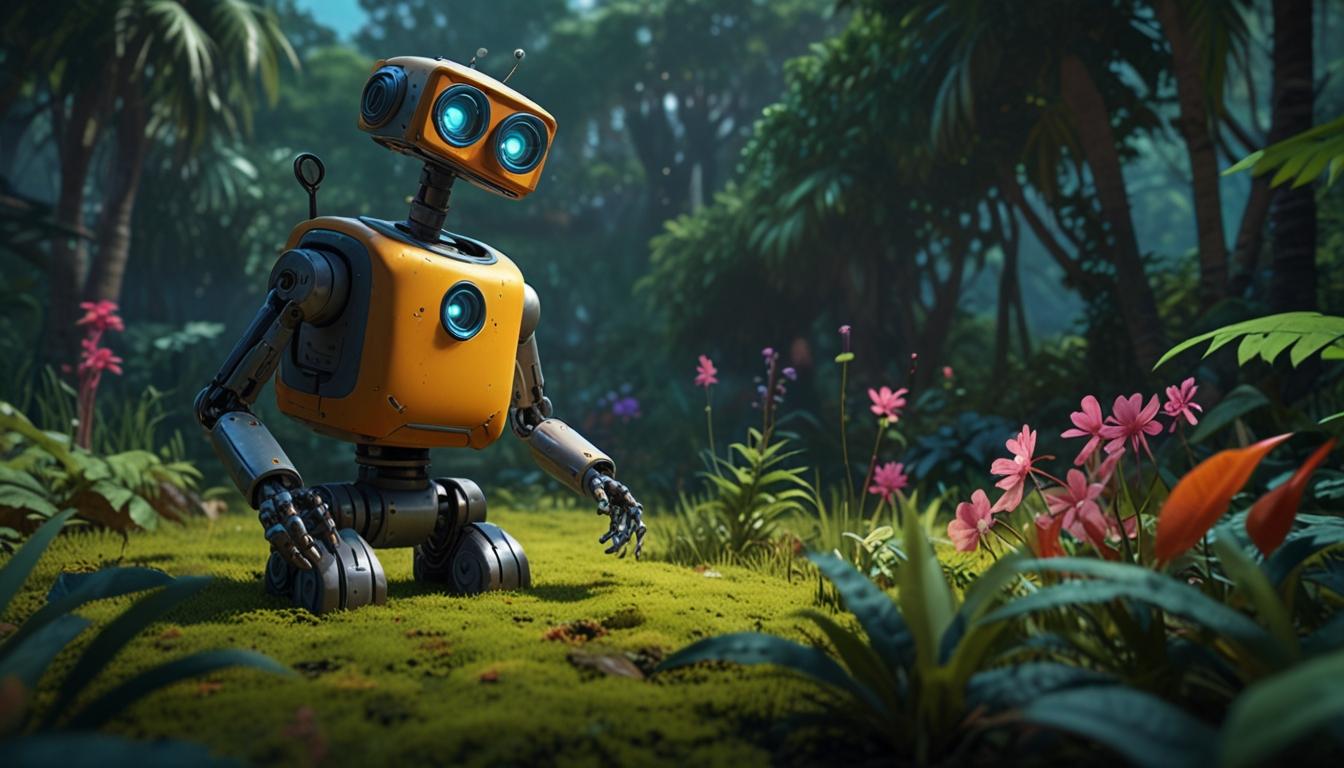
'The Wild Robot' Film Adaptation Explores Nature and AI
In 2024, the trend of adapting beloved novels into films continues to enthral audiences, with one of the most captivating entries being 'The Wild Robot'. This film, adapted from Peter Brown's 2016 novel, is directed by Chris Sanders and tells the story of Roz, a robot stranded on an island who embarks on a journey to understand the natural world. While marketed as a family-friendly adventure filled with warmth and stunning animation, the film also delves into significant themes concerning humanity's relationship with technology and nature.
A Faithful Yet Expanded Adaptation
'The Wild Robot' effectively retains much of the essence of Brown's original novel, but Sanders introduces creative liberties to expand upon Roz's interactions with the island's creatures and its complex ecological systems. The novel's straightforward narrative is transformed into a visual spectacle that embraces environmental themes, while the film delves deeper into Roz’s artificial intelligence (AI) evolution.
In the book, Roz's programming facilitates her adaptation to the island's environment. However, the film emphasises how Roz’s AI learns empathy, survival instincts, and the balance between nature and technology. This additional philosophical layer not only keeps the core charm of the book but also enhances its relevance amidst today's discussions on AI and environmental sustainability.
Stunning Animation
Chris Sanders' utilisation of traditional animation combined with CGI creates a visually captivating natural world. Every leaf, tree, and animal in 'The Wild Robot' feels vibrant and distinct, successfully transporting viewers into the lush island ecosystem that Roz grows to cherish. The film's colour palette transitions from bright and inviting to darker tones, reflecting the challenges and dangers Roz faces in the wild. This visual strategy ensures environmental accuracy and immersion, making the island a character in itself, integral to Roz’s transformation.
Voice Casting Excellence
The film's impressive voice cast plays a crucial role in adding depth to the characters. Lupita Nyong’o voices Roz, bringing a nuanced performance that evolves from emotionless and robotic to one filled with empathy and humanity. The supporting roles, featuring Pedro Pascal as Fink and Bill Nighy as Longneck, add further emotional weight. Particularly noteworthy is Kit Connor’s portrayal of Brightbill, symbolising the delicate blend between the mechanical and organic worlds.
Themes of Survival, Empathy, and Coexistence
At its core, 'The Wild Robot' is not just a survival story. It explores profound themes of empathy and coexistence, depicting how a cold, emotionless machine can develop a genuine connection with life. Roz initially focuses solely on survival, but observing and interacting with the island's animals teaches her to care deeply for them, sometimes at her own peril.
The film also questions the essence of being "alive" and "human". Roz’s journey from a programmed machine to an empathetic entity blurs the lines between AI and humanity. Sanders' adaptation addresses the fear of technology overshadowing the natural world but provides an optimistic outlook, suggesting that technology, if used wisely, can harmonise with nature.
A Timely Message for Younger Audiences
Although a family film, 'The Wild Robot' doesn’t shy away from discussing complex topics such as environmentalism, technology, and their interplay. These themes are especially pertinent for younger viewers, introducing them to ideas of sustainability, empathy, and the consequences of human activities on the planet. Roz’s story parallels humanity’s ongoing challenges with industrialisation and environmental degradation, offering a hopeful narrative of potential coexistence.
Literary Transition and Narrative Flow
Though largely successful, the film's adaptation isn't without flaws. The pacing occasionally falters, particularly during Roz's solitary survival scenes, where the narrative's flow can feel sluggish. Additionally, the film's tone shifts from whimsical to darker themes as it progresses, which may be jarring for younger audiences. However, these tonal transitions are handled with care, ensuring the film remains accessible without becoming too heavy.
Conclusion
'The Wild Robot' (2024) stands as a visually stunning and emotionally compelling adaptation of Peter Brown’s novel. Chris Sanders’ direction, combined with an exceptional voice cast and impressive animation, brings Roz's world and her journey to life in a manner that is both entertaining and thought-provoking.
The film's themes of empathy, survival, and environmental consciousness resonate deeply, appealing to audiences of all ages while prompting viewers to consider their relationship with the planet and technology. 'The Wild Robot' offers a heartfelt journey into the wild, illustrating that even machines can learn to care for and preserve the world around them.
Source: Noah Wire Services