Universities Turn to AI-Enhanced Technologies to Boost Campus Experience
As competition for student enrollment intensifies, colleges and universities around the globe are increasingly investing in new technologies to enhance the campus experience. Institutions are now focusing on developing and maintaining sophisticated digital ecosystems that support campus-wide navigation, communication, and engagement. This investment is seen as essential for creating a positive, informed community and maintaining a competitive edge in attracting students.
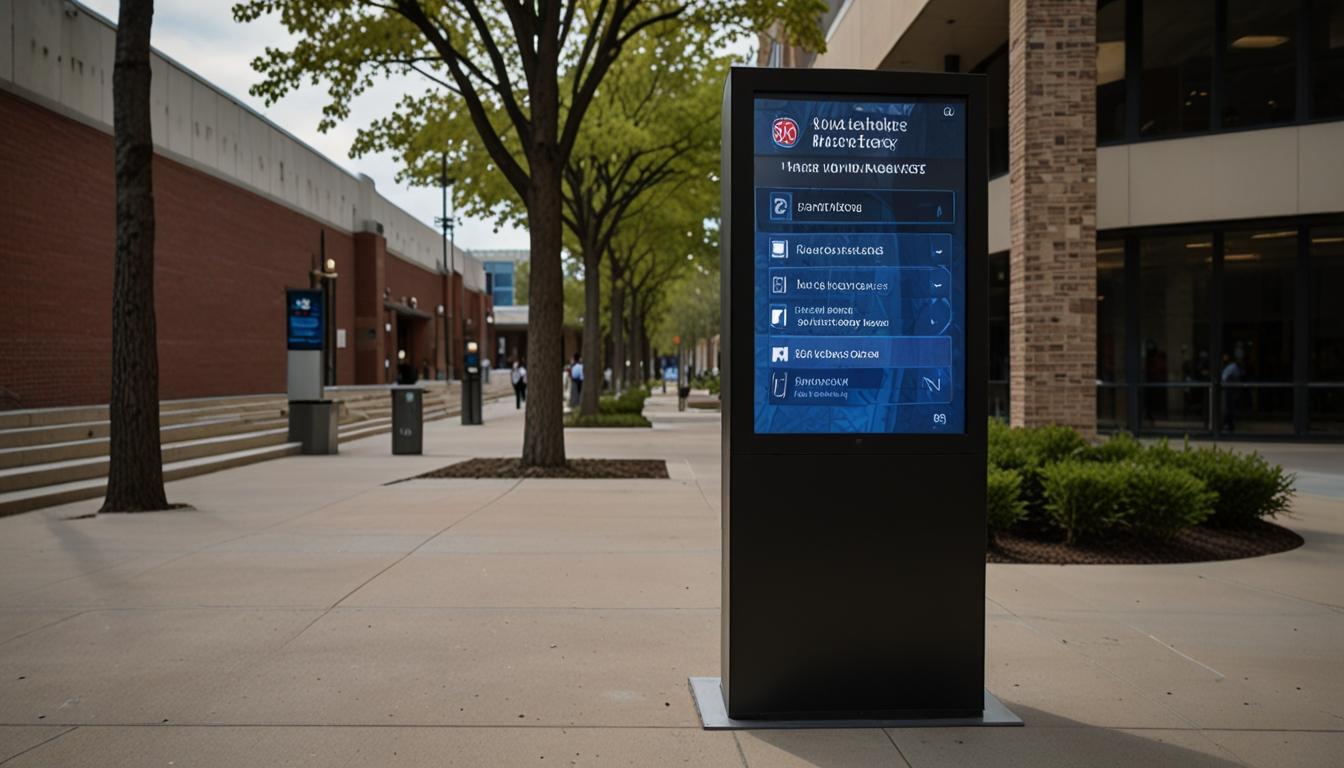
The use of AI-enhanced content management software (CMS) innovations is at the forefront of this technological transformation. AI-driven CMS solutions offer new levels of personalisation for digital signage ecosystems, utilising institution-specific data to integrate with hardware across campuses. This technology assists in wayfinding, communication, and content management, making campus operations smoother and more efficient.
One sector poised for rapid growth is digital signage software in education, which is projected to expand at an annual growth rate of 21.6% over the next decade. AV integrators, specialists in the installation of audio-visual systems, are uniquely positioned to support this growing demand for intelligent campus-wide communications.
However, managing digital signage ecosystems across expansive campuses, which can cover hundreds or even thousands of acres, is not without its challenges. The workloads associated with these systems often cause hesitancy among higher education leaders due to the time and resources needed for effective management.
AI-accelerated content deployment, particularly important for emergency communications, is one solution. AI-driven CMS solutions enable digital signage management with minimal manual intervention, automating many of the routine tasks. The software retrieves information quickly and supports template automation, messaging, content design, and scheduling—thus simplifying content collaboration and consistency. This allows institution staff to update digital signage without needing to be CMS experts.
Ownership and access to the digital signage systems are another challenge. While common areas benefit from a wide-net content strategy, individual departments often have their own content agendas. Effective CMS solutions offer hierarchical controls and location-based scheduling, enabling department leaders to share specific content on their screens while still allowing campus-wide messages to be centrally managed and distributed.
The operational support of AI-enhanced CMS extends beyond content distribution and into areas such as space management—a crucial task for maximising campus resources. AI integrations can simplify space reservations via campus screens, allowing administrators to monitor space usage, occupancy, and sanitation needs effortlessly.
Beyond operational efficiency, AI-enhanced CMS solutions improve safety by streamlining emergency communications. Supplementing mobile alerts and verbal announcements, AI-supported interfaces allow administrators to quickly distribute alerts and safety protocols across campus signage. Integrating these CMS with familiar emergency alert software like RAVE or Everbridge enhances overall campus security.
Additionally, these technological advancements aim to improve the visitor experience. Navigating large, complex campuses can be daunting for newcomers and alumni alike. AI-enhanced wayfinding solutions help reduce visitor confusion and operational strain, and multilingual and ADA-compliant chatbots provide easy access to vital information and resources.
Wayfinding solutions also extend to virtual campus tours and orientation materials accessible through mobile devices. This approach caters to the preferences of digitally-savvy students and offers flexibility for those unable to visit the campus due to geographical constraints.
By adopting AI-enhanced CMS solutions, educational institutions can transform the campus digital experience, creating a safer, more connected, and efficiently managed environment. These investments in AI technology not only address current operational challenges but also prepare institutions for future technological advancements, ensuring robust and scalable infrastructure for years to come.
Source: Noah Wire Services