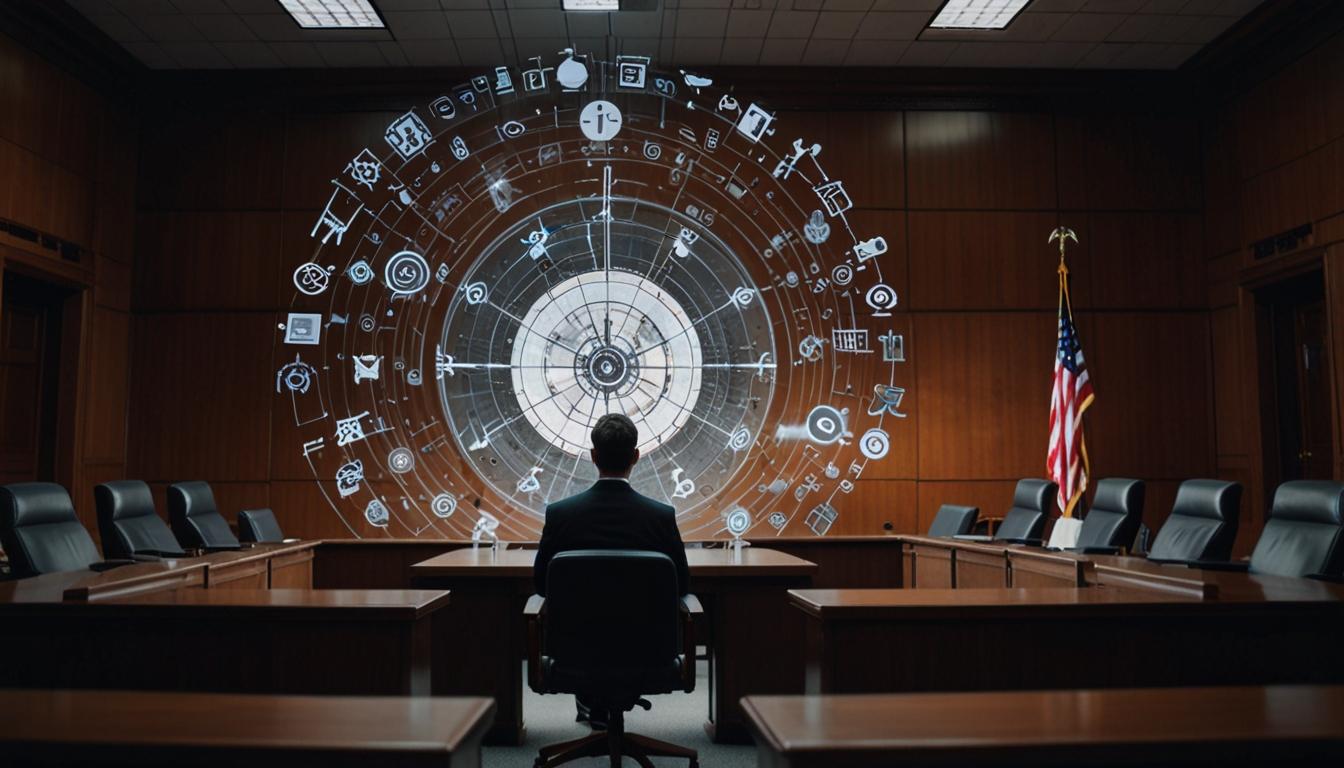
US Court of Appeals Hears Landmark Case on AI-Generated Image Copyrights
Washington, DC – On September 19, 2024, the US Court of Appeals for the DC Circuit heard significant arguments in the case of Thaler v. Perlmutter, addressing the contentious issue of whether an image autonomously generated by artificial intelligence (AI) can qualify for copyright protection.
This appeal follows a decision by the DC District Court which concluded that copyright law mandates human authorship for works to be eligible for copyright. The District Court’s decision, cited as 687 F.Supp.3d 140, pivoted on the applicant, Stephen Thaler’s admission in his copyright application. Thaler explicitly acknowledged that the image in question was "autonomously generated by an AI" and lacked any human authorship. The court's ruling was unequivocal: "In the absence of any human involvement in the creation of the work, the clear and straightforward answer is the one given by the Register: No."
During the appellate hearing, the panel of judges appeared sceptical of Thaler’s contentions. They pointed out that Thaler had seemingly designed this case to serve as a test of the boundaries of copyright law. It was particularly noted that Thaler, only during the appeal, proposed that his programming of the machine and algorithm constituted sufficient human input. However, the judges seemed resistant to entertain arguments that had not been part of the initial administrative record.
Indications from the oral arguments and the nature of the panel's inquiries suggest that the DC Circuit is likely to uphold the lower court’s decision. This would mean reaffirming the necessity of human contribution in the creation process as a prerequisite for copyright eligibility. However, the extent of human input required to meet this threshold remains an open question.
The Copyright Office has already provided preliminary guidance on the factors they will consider to determine if a work fulfills the "human requirement." While specifics were not detailed in the hearing, these factors serve to assist applicants in understanding the boundaries of copyright eligibility concerning AI-generated works.
This case stands as a significant examination of copyright law in the age of advanced AI technologies, highlighting the legal challenges that arise as technology evolves to perform tasks traditionally undertaken by humans. The outcomes and precedents set forth in this case are likely to have far-reaching implications for future AI-related copyright disputes.
Source: Noah Wire Services