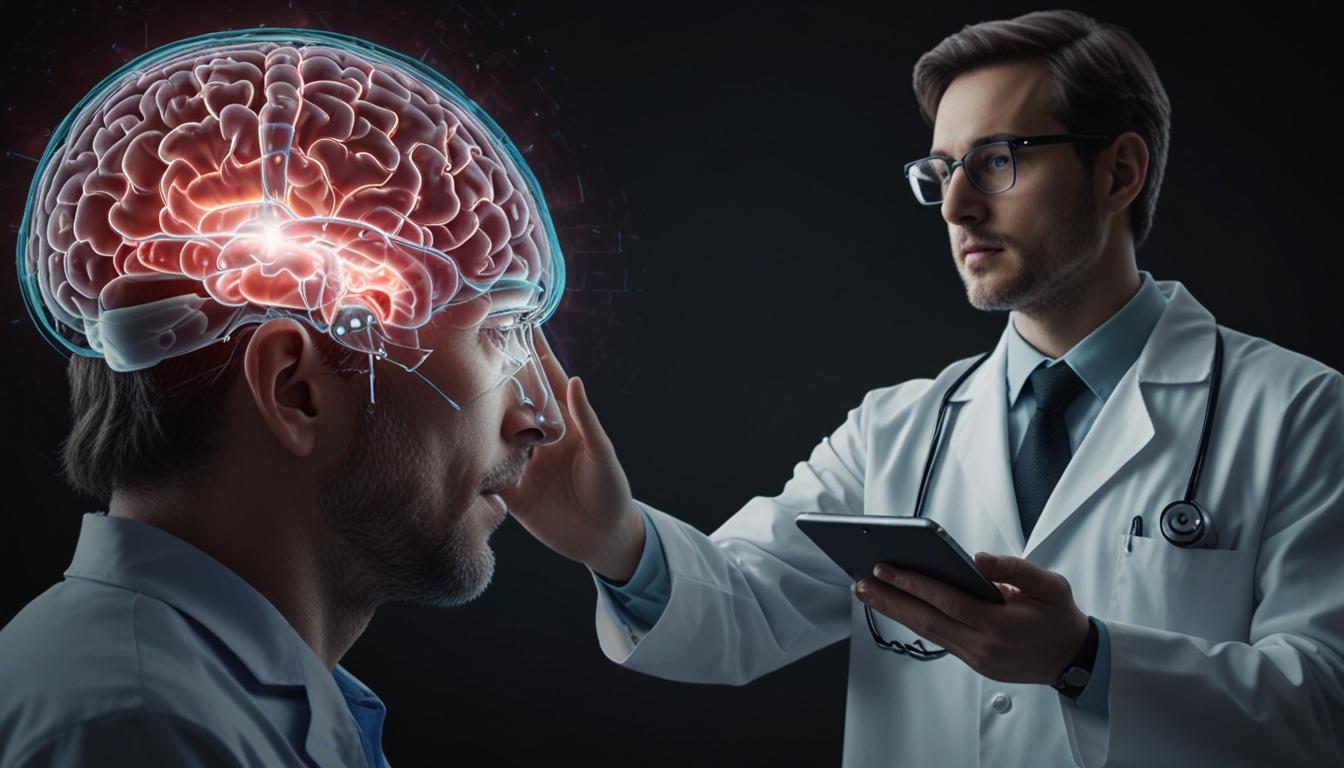
A new pre-press study highlights the intriguing potential of Large Language Models (LLMs) such as GPT-4, suggesting they could serve as significant assets in medical diagnostics. The research was conducted to compare the diagnostic accuracy of physicians using conventional methods, physicians using GPT-4 as a support, and GPT-4 operating independently. The study's findings indicate that GPT-4 not only outperformed clinicians in isolation but also did not significantly enhance the diagnostic accuracy when used by physicians, pointing towards a disconnect in effective collaboration between AI tools and human expertise.
In this comprehensive study, GPT-4 demonstrated a notable ability to engage in diagnostic reasoning, achieving a 92.1% score when used independently. In contrast, physicians using conventional resources scored a median of 73.7%, while those supplementing their efforts with GPT-4 reached 76.3%. Additionally, when it came to the final diagnosis accuracy, GPT-4 identified the correct diagnosis 66% of the time, as opposed to 62% when solely human judgement was applied, although this difference was not statistically significant.
The study expanded upon two key components for its analysis: "diagnostic reasoning" and "final diagnosis accuracy." Diagnostic reasoning involved evaluating the process by which a physician formulates a differential diagnosis, assesses supporting and opposing factors, and selects subsequent diagnostic actions. This process was measured using a "structured reflection" tool, which captures the clinician's ability to articulate plausible diagnoses, identify relevant findings, and decide on appropriate further evaluations. Contrastingly, "final diagnosis accuracy" was concerned strictly with the ultimate correctness of the diagnosis for each case.
The minimal improvement seen when physicians used GPT-4 reflects a complex challenge in the integration of AI into medical diagnostics. It underscores issues related to the cognitive and functional alignment between AI capabilities and human clinical processes. Several elements may contribute to this challenge.
Trust issues play a significant role since physicians might distrust AI insights, often preferring their own well-honed clinical instincts over AI-generated suggestions. This scepticism, while grounded in their training to critically evaluate data, can cause physicians to overlook potentially valuable AI contributions.
Prompt engineering is another critical factor. Physicians often use LLMs like GPT-4 without explicit training on how to optimally interact with them. "Prompt engineering" is key, requiring users to craft effective queries to obtain useful results from AI. Without this expertise, the AI responses might not provide the added value expected in the diagnostic process.
Furthermore, adding AI interactions to the diagnostic process increases cognitive load. Physicians are already working within pressured environments; integrating GPT-4’s outputs with their clinical knowledge can become burdensome, potentially leading to inefficient usage of AI support.
Finally, differences in diagnostic approaches present another layer of complexity. Physicians leverage nuanced judgments based on experience, patient context, and subtle cues, while LLMs rely heavily on data patterns. While LLMs excel at recognising patterns, they may miss context-specific subtleties that are critical to human diagnosis. Conversely, clinicians might dismiss AI insights perceived as rigid or misaligned with their diagnostic narrative.
The results of this study suggest that realising AI's potential in the medical field will not merely involve providing access to advanced tools but will require effective strategies to bridge cognitive and functional divides between AI and human clinicians. This may include training enhancements, revising user interfaces, and developing systems to bolster trust in AI.
Ultimately, the promise of AI in medicine centres on its ability to augment human expertise rather than replace it. To create a productive partnership between clinicians and LLMs, a profound understanding of both human cognitive processes and AI functionalities will be vital, fostering a cooperative relationship that elevates patient care outcomes.
Source: Noah Wire Services