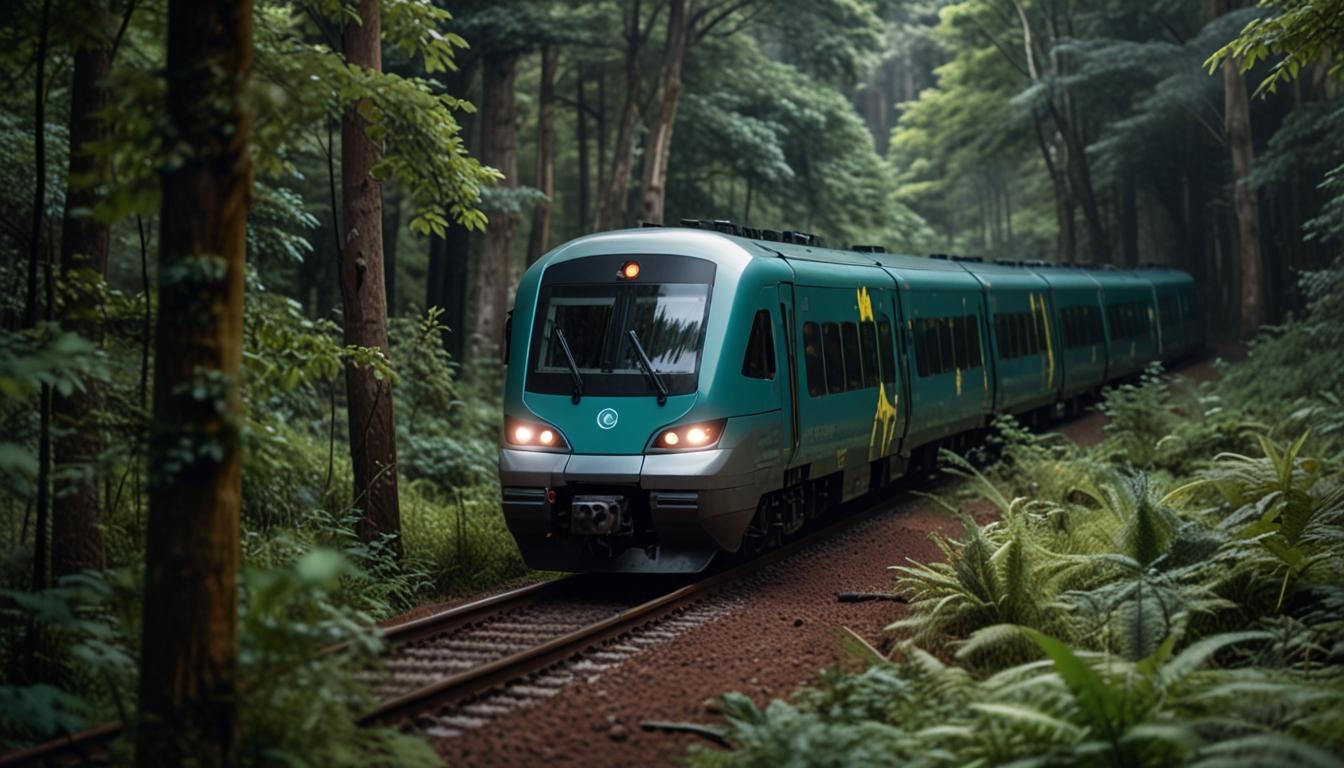
Alstom, a prominent rail manufacturer, has teamed up with tech company Flox to trial an innovative AI wildlife detection system on the Swedish railway network. This pilot initiative aims to address the considerable challenge of animal-train collisions on the tracks, an issue resulting in approximately 5,000 incidents annually as reported by the Swedish Transport Administration, Trafikverket.
The joint project has received significant governmental backing, recognising its potential benefits. The Swedish government's innovation funding agency, Vinnova, has awarded a grant worth 3.3 million Swedish Kronor (approximately $321,000) to support the initiative. The testing phase is set to take place towards the end of 2024 and early 2025, marking a critical step towards integration of advanced technology into railway operations.
Flox's CEO, Sara Nozkova, expressed enthusiasm about the project, highlighting the dual benefits for both train safety and wildlife conservation. "Our train-based Flox technology is founded on sophisticated AI and a comprehensive understanding of animal behaviour, enabling us to safeguard both railway operations and wildlife," Nozkova stated. She further commented on the collaboration with Alstom, emphasizing its potential to validate the system in a real-world railway setting.
The innovative system employs a combination of AI technology to detect the presence of animals on or near railway tracks, and bespoke sound signals designed to deter wildlife from potential collisions with oncoming trains. By recognising animals early and issuing deterrent sound signals, the system aims to minimise the risk of accidents, thereby safeguarding both animal life and maintaining the operational efficiency of train services.
This initiative is part of a wider trend of adopting AI-based solutions within the rail industry globally. Other countries have begun exploring similar technologies to improve rail safety and efficiency. For instance, Network Rail in the UK has been trialling CrossTech's AI-powered track inspection software for real-time hazard detection. These advancements underline the increasing role of artificial intelligence in transforming traditional rail safety measures and modernising infrastructure.
The outcome of Alstom and Flox's project could serve as a pivotal model for future AI integrations in railway systems worldwide, highlighting how technology can contribute to solving environmental challenges while optimising standard operational procedures. As the testing progresses, industry stakeholders will likely monitor the developments closely, assessing the scalability and adaptability of such AI-driven solutions in various geographical and operational contexts.
Source: Noah Wire Services