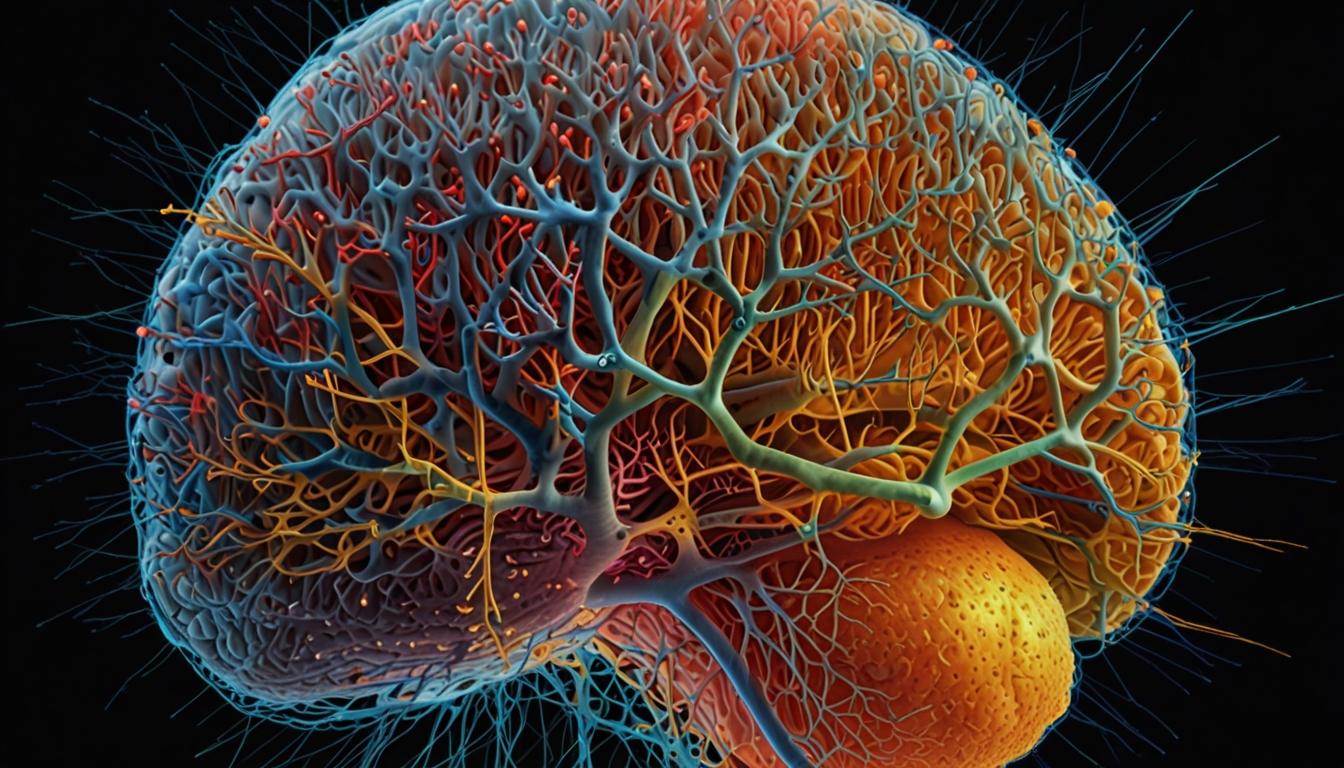
Breakthrough Map Offers First Complete Neural Wiring of a Fruit Fly Brain
In an extraordinary scientific feat, an international consortium of researchers known as the FlyWire Consortium has successfully charted the entire neural connectivity of an adult fruit fly brain, marking a significant advance in neuroscience. The comprehensive neural wiring diagram, or connectome, documents over 140,000 neurons and 50 million synaptic connections, providing a new framework for understanding the brain's complex functionality.
The project, detailed in a series of publications in the journal Nature, is hailed as the largest and most complete connectome of an adult animal to date. The intricate map offers a rare insight into the sophisticated neural architecture of the common fruit fly, Drosophila melanogaster, an organism already of key interest to researchers due to genetic similarities with humans. Approximately 60% of human genes have equivalents in flies, and nearly three-quarters of human genetic diseases share pathways with this small insect, which bolsters its value as a model organism in scientific studies.
The creation of the fly brain connectome was a decade-long, collaborative effort involving leading institutions such as Princeton University, the University of Cambridge, the University of Vermont, and the MRC Laboratory of Molecular Biology in the UK. More than 287 researchers from 76 laboratories globally, assisted by volunteer 'citizen scientists', participated in this massive undertaking, with funding support from major organisations, including the National Institutes of Health (NIH) BRAIN Initiative and the UK’s Medical Research Council.
Scientists began the laborious process of building the connectome by dissecting a female fruit fly's brain into over 7,000 ultra-thin slices. These 40 nanometer-thick sections were then captured into more than 21 million high-resolution electron microscopy images, forming a staggering data repository exceeding 100 terabytes—equivalent to the storage in about 100 typical laptops. Artificial intelligence was pivotal in translating these images into a detailed three-dimensional neural map, which showed each neuron's precise location and connectivity.
Despite AI's role in automating parts of the mapping, human expertise was crucial in correcting errors and annotating the vast dataset. This process involved tracing the pathways of neurons, classifying over 8,400 distinct cell types, and compiling a detailed 'parts list' of the neural circuit components. The result is akin to a Google Maps version of the brain, offering intricate details akin to street names and businesses in a city, complete with the dynamic functions each part of the brain supports.
This neural atlas is expected to enable researchers to explore how specific brain circuits underpin distinct fruit fly behaviours, such as walking, flying, and mating rituals. Notably, scientists have identified 'interrogator' neurons, which integrate diverse sensory inputs, and 'broadcaster' neurons that could synchronise actions across different neural regions. The connectome can simulate brain activity and function predictively, aiding further understanding of neural circuits and their responses to external stimuli.
In addition to its potential applications in enhancing understanding of brain function in other species, the fruit fly's brain map sets a new standard for future projects targeting more complex brains. A similar mapping of a mouse brain is underway, projected to take five to ten years, which could elucidate neural circuit similarities across species, extending to human brains. Dr. Gregory Jefferis of the University of Cambridge, one of the project's leaders, suggests that fly brain insights could pave the way for groundbreaking studies in human brain structure and function, particularly in understanding miswirings implicated in neuropsychiatric disorders.
The implications of this work are profound, offering the potential to revolutionise approaches to brain-related illnesses by revealing fundamental principles of neural organization and operation. As Dr. John Ngai, director of the NIH BRAIN Initiative, states, the fruit fly connectome opens doors to asking more precise scientific questions, advancing the search for therapeutic interventions across a spectrum of brain conditions.
The fruit fly's whole brain connectome is freely accessible to the research community online, encouraging further exploration into this intricate model, which holds promise for the future of neuroscientific discovery and understanding of brain function across species.
Source: Noah Wire Services