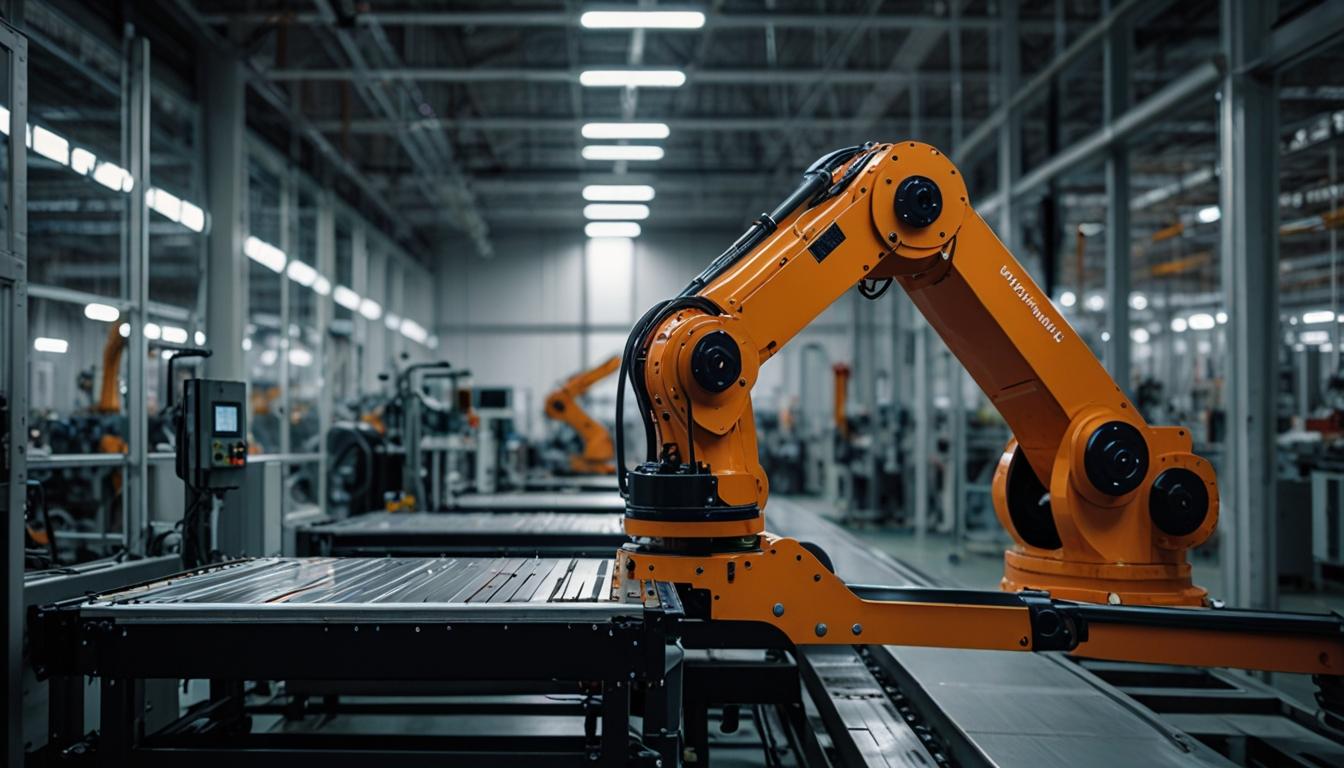
Manufacturing Industry Accelerates Adoption of AI Technologies
Washington, DC—The manufacturing sector is witnessing a significant surge in the adoption of artificial intelligence (AI) technologies, poised to transform operations and enhance productivity across industries. This trend was detailed during the Nexus 2024 conference, held from 30th September to 3rd October, where Penelope Brown, Senior Content Director at the Manufacturing Leadership Council (MLC) and the National Association of Manufacturers (NAM), outlined the burgeoning role of AI in manufacturing.
The MLC, being a division of NAM, recently conducted a survey indicating that while the majority of manufacturers are still in the nascent stages of AI incorporation, a striking 78% of respondents plan to boost their AI investment over the next two years. Furthermore, 52% of these manufacturers already possess a corporate AI strategy, underscoring the technology's rising significance in the sector.
“At this point, AI is as good as it’s ever been and as bad as it will ever be,” remarked Brown, emphasising the early stage of AI development and adoption. Brown highlighted the expansive potential of AI, particularly for baking and snack manufacturers, as AI can significantly optimise product portfolios. By meticulously analysing stock-keeping units (SKUs), product dimensions, and packaging, AI aids in determining which products justify continued investment and which could be phased out.
One of the key technological advancements noted by Brown is the implementation of AI-guided vision systems to bolster quality control. By employing deep learning, these systems surpass traditional vision systems in identifying subtle defects, such as twisted cables or minute surface scratches, which were previously undetectable.
Moreover, AI's application is widening to encompass production efficiency analysis and predictive maintenance. Through algorithmic analysis, AI can ascertain whether production timelines are being met or identifying potential bottlenecks. Predictive maintenance, which alerts operators to irregularities in machine performance, is gaining popularity as it offers significant operational reliability and machine longevity.
Despite these advances, Brown addressed prevalent misconceptions surrounding AI in manufacturing. One major concern is the fear that AI will result in a decreased workforce within the sector. However, with manufacturing currently facing substantial labour shortages—486,000 job openings remained unfilled as of 1st July—Brown posits that AI is unlikely to displace workers in the foreseeable future.
Additionally, apprehensions exist around the perceived cost and complexity of AI, particularly for smaller enterprises. Brown pointed to the rise of Open-Source AI, allowing companies to access, develop, and modify AI technologies at a reduced financial burden, thereby facilitating broader AI adoption across various scales of manufacturing businesses.
For successful integration of AI, Brown recommends that manufacturers have a clearly defined understanding of their data collection methods, set objectives aligned with their business case, and ensure a dedicated team is in charge of AI initiatives. Engaging frontline workers in dialogue is also crucial, as their insights can guide effective and impactful AI utilisation.
These insights from the Nexus 2024 conference reflect a pivotal moment in manufacturing, spotlighting AI as a catalyst for innovation and growth. As the sector increasingly integrates this transformative technology, manufacturers are positioned to enhance efficiency, quality control, and operational success, marking a new era in industrial production.
Source: Noah Wire Services