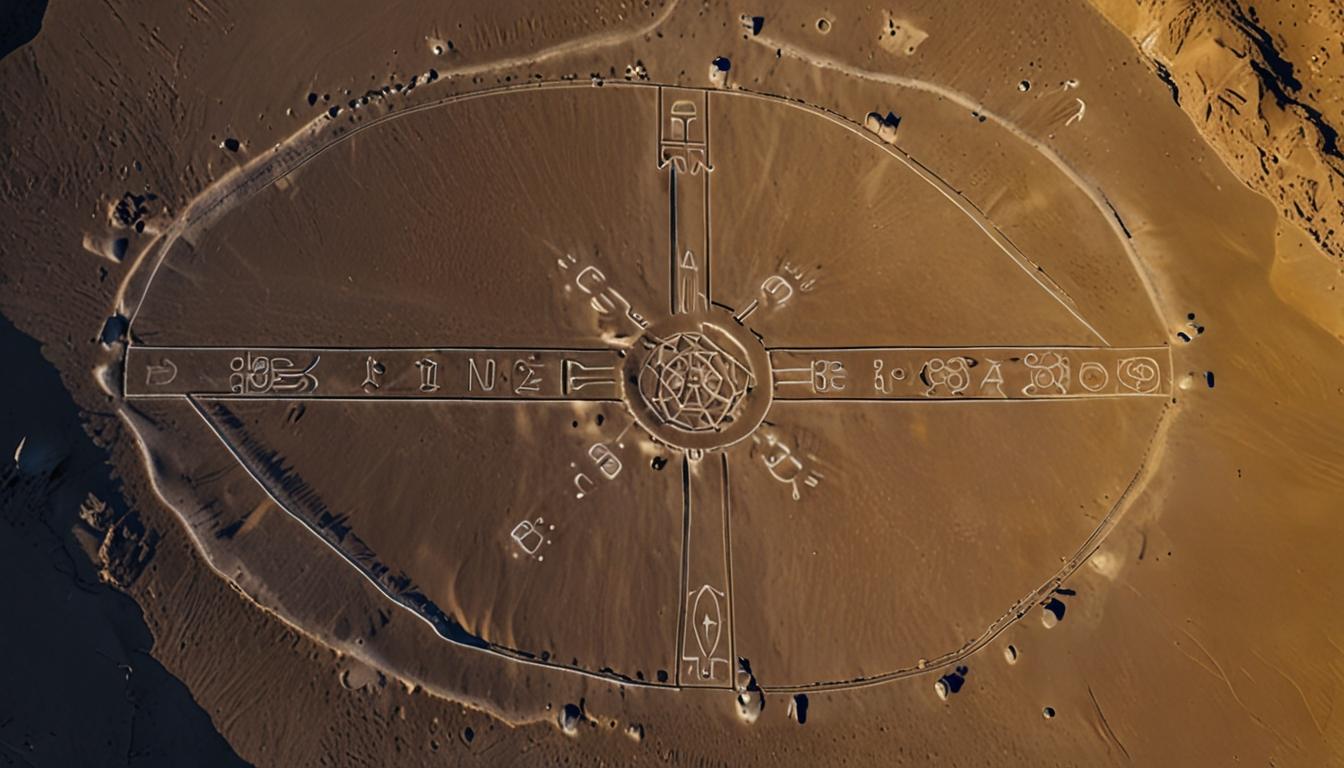
In an exciting breakthrough for archaeology, a new study has unveiled the discovery of more than 300 previously unknown geoglyphs etched into the arid expanse of the Nazca Desert in southern Peru. This significant find was made possible through the innovative utilisation of Artificial Intelligence (AI) and drone technology, offering fresh insights into the ancient Nazca civilisation that flourished over two millennia ago.
The Nazca Lines, a world-renowned array of massive ancient drawings, were etched into the desert surface by the Nazca people. These geoglyphs, which include a wide variety of forms ranging from simple geometric shapes to intricate depictions of animals and plants, are formed by the careful removal of the desert's reddish upper layer to reveal the lighter ground beneath. Many of these lines stretch for hundreds of meters, with the longest reaching approximately 1,200 feet (366 meters), and can only be fully appreciated from an aerial perspective. The site was designated a UNESCO World Heritage Site in 1994, underscoring its global cultural significance and the need for its preservation.
Since their initial discovery in 1927, around 430 geoglyphs have been identified in the region. However, in just six months, a collaborative effort using AI-driven analysis and drone mapping has resulted in the discovery of 303 new geoglyphs—most of which are significantly smaller than those previously documented, measuring between 9 and 23 feet (3 to 7 meters) in width. This latest batch of geoglyphs includes depictions of various animals like llamas and fish, as well as anthropomorphic figures, such as a person without a head and a killer whale clutching a knife.
The technical achievement was led by researchers who developed a specialised AI programme capable of scanning and analysing satellite imagery to identify potential geoglyph locations. The search involved a substantial investment of time—over 2,600 hours—during which researchers meticulously examined AI-suggested sites with drone photography, coupled with on-the-ground verifications in Peru.
Despite the AI's frequent inaccuracies—yielding one viable geoglyph per every 36 false positives—the technology significantly accelerated the research process. According to Johny Isla, head of the study on behalf of Peru, tasks that once spanned three or four years can now be accomplished within just a few days thanks to this technological advancement.
The significance of these geoglyphs continues to be a subject of intrigue and study. Masato Sakai, who spearheaded the research project, notes that this new understanding contributes crucial information to the ongoing investigation of the Nazca Lines. One of the findings suggests the existence of pathways near clusters of smaller geoglyphs, possibly indicating they were intended for viewing by desert travellers—a hypothesis that could illuminate their purpose and context within Nazca society.
In contrast, the larger geoglyphs, which require an aerial vantage for complete visibility, are hypothesised to have held ceremonial or ritualistic importance. While the full meanings of these ancient designs remain elusive, this evolving research underscores a profound cultural legacy left by one of history's early civilisations.
Looking forward, researchers anticipate exploring nearly 250 further potential geoglyphs suggested by the AI programme, promising more revelations about the ancient and enigmatic Nazca people. As exploration continues, each geoglyph discovered adds a piece to the puzzle of understanding the intent and practices of this remarkable civilisation.
Source: Noah Wire Services