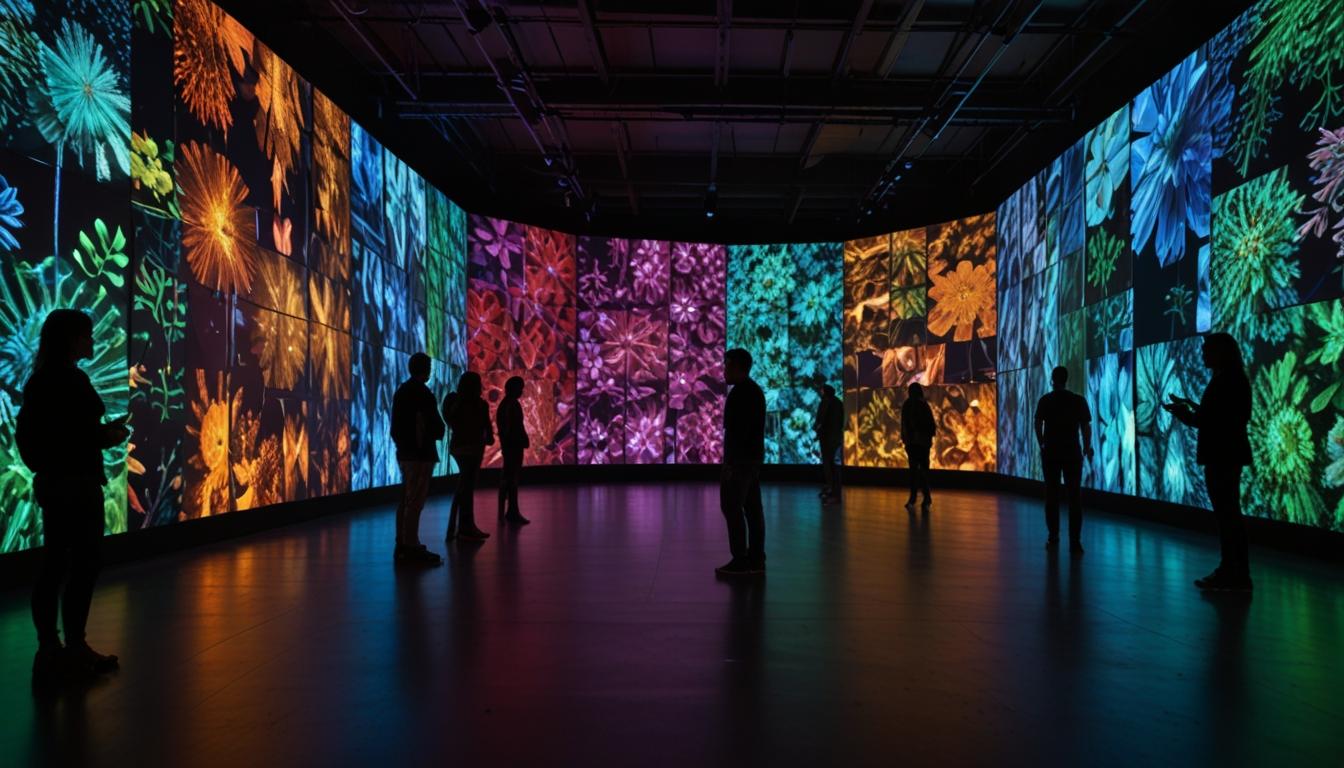
In an innovative stride within the art world, plans have been unveiled for the opening of the world's first permanent museum dedicated to AI art. Named Dataland, the museum is set to open next year as a part of the Grand L.A. development, which promises to be a cultural hub in Los Angeles, California. The visionary behind this pioneering establishment is Refik Anadol, a new media artist renowned for his explorations in digital art.
Occupying a sprawling 20,000 square-foot space, Dataland will be in the esteemed company of neighbouring galleries such as the Museum of Contemporary Art (MOCA) and will highlight AI-driven art pieces. The museum's digital installations will draw from the Large Nature Model (LNM) developed by the Refik Anadol Studio. This model is notable for being the world's first open-source AI model exclusively based on nature data.
The LNM garners its insights from a robust dataset, accumulated with permission from reputable institutions. Contributors include the Smithsonian, the Natural History Museum in London and the Cornell Lab of Ornithology, among others, amassing millions of specimens, images and sounds. Further enriching this data compilation are over half a billion images of natural phenomena. The ethically sourced and meticulously curated dataset forms the backbone for the museum's captivating digital art installations, described by Anadol as a "living museum made of pixels and voxels."
Anadol has taken strides to maintain this model's ethical integrity by housing the LNM on Google servers located in Oregon, powered exclusively by renewable energy sources. This has led Anadol to brand his initiative as 'ethical AI.'
The establishment of Dataland comes at a crucial time in the dialogue surrounding AI's role in art. There's been a burgeoning influx of AI-generated imagery within mainstream artistic circles, provoking debate about creativity's evolution in the face of technological advancements. While some view AI as a disruptor to traditional artistic values, others, including Anadol, perceive it as a collaborative partner in artistic creation. Anadol himself regards AI as a "co-creator and co-being," integral to his artistic vision.
The methodologies employed by the Dataland team further underscore its commitment to innovation and ethical creation. The collection process involves advanced technologies such as LiDAR, photogrammetry, and ambisonic audio, encompassing multisensory experiences, including soundscapes and even scents, from diverse ecological settings like rainforests.
Dataland aims to offer a multisensory tableau that not only showcases the symbiosis between human creativity and machine learning but also ventures into charting a potential future path for the art world. As the museum gears up for its debut, it is poised to become a significant milestone in the narrative of AI's cultural significance. The art form, which Anadol tentatively dubs as 'generative reality,' attempts to carve out a new category distinct from familiar forms such as augmented and virtual realities.
The coming of Dataland marks a notable fusion of art, technology, and ethics, echoing the possibilities of AI not just as a creative tool but also as a bridge to more sustainable and responsible artistic practices. Whether this novel form, labelled by some as a movement, will indeed influence the future of art, remains a question for its visitors to ponder upon.
Source: Noah Wire Services