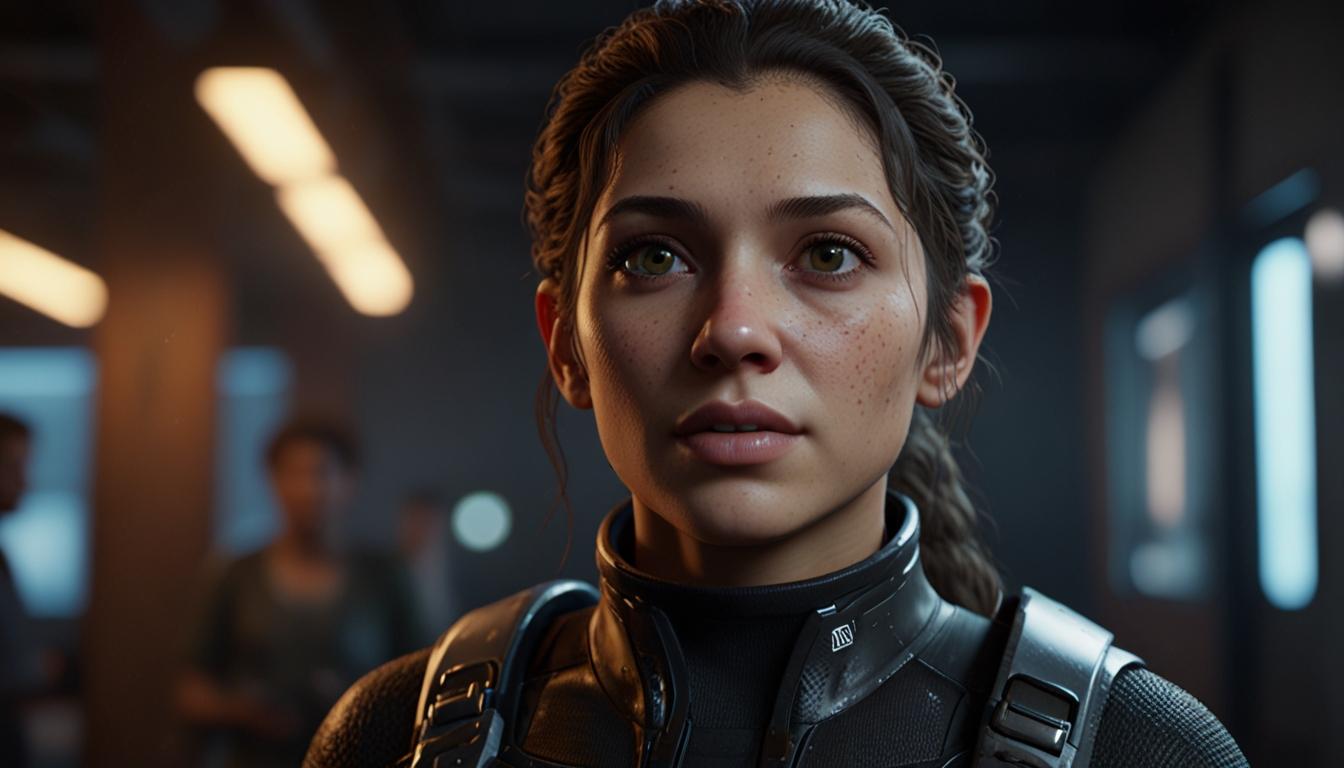
In a significant development for the gaming and digital content creation industries, Nvidia has unveiled a suite of new plugins designed to streamline the creation and deployment of AI-driven MetaHuman characters in Unreal Engine 5. This announcement was made at the Unreal Fest Seattle 2024, marking a pivotal moment for developers working on Windows PCs.
Nvidia's latest offering includes three key plugins, each targeting a different aspect of character development. The first of these is the Audio2Face-3D Plugin, which enables AI-powered lip sync and facial animations directly within Unreal Engine 5. This tool allows developers to generate realistic speech and expressions, facilitating more lifelike character interactions in video games and simulations.
Additionally, the Nemotron-Mini 4B Instruct Plugin has been introduced to provide response generation for interactive character dialogues. This enhancement is intended to improve the narrative experience by enabling characters to engage in more dynamic and responsive conversations, thereby enriching player immersion.
Another noteworthy addition is the Retrieval Augmented Generation (RAG) Plugin. This plugin is designed to supply contextual information that bolsters character interactions, crafting a more enriched and nuanced gameplay experience. These tools combined are set to advance the development of AI-powered digital humans, enabling more intricate and realistic character designs.
Besides plugins for Unreal Engine 5, Nvidia has also released a new Audio2Face-3D Plugin for Autodesk Maya. This plugin similarly facilitates audio-driven facial animations but focuses on seamless integration between Maya and Unreal Engine 5, enhancing the workflow for artists and developers. By providing access to source codes, the plugin allows for further customisation and integration with other digital content creation tools, potentially broadening its application across various creative projects. The Maya ACE plugin is now available for download via GitHub, offering users an additional resource for enhancing their creative capabilities.
Furthermore, Nvidia has rolled out the Unreal Engine 5 Renderer Microservice with Pixel Streaming. This service employs Epic’s Unreal Pixel Streaming technology and supports the ACE Animation Graph microservice, particularly targeting developers who seek to stream high-fidelity MetaHuman characters to diverse devices using Web Real-Time Communication (WebRTC). At its core, the tool aims to reduce latency and memory usage, optimising the deployment of digital humans in cloud-based environments.
Nvidia's release is anticipated to significantly impact how developers integrate AI technology into digital character creation. By simplifying these processes, the company hopes to enable a wider range of developers to engage in high-level, AI-enhanced development. This move not only illustrates the growing collaboration between AI technology and digital content creation but also positions Nvidia as a key player in this rapidly evolving industry landscape. With early access applications now open, developers are being invited to explore the potential of these advanced tools in their projects.
Source: Noah Wire Services