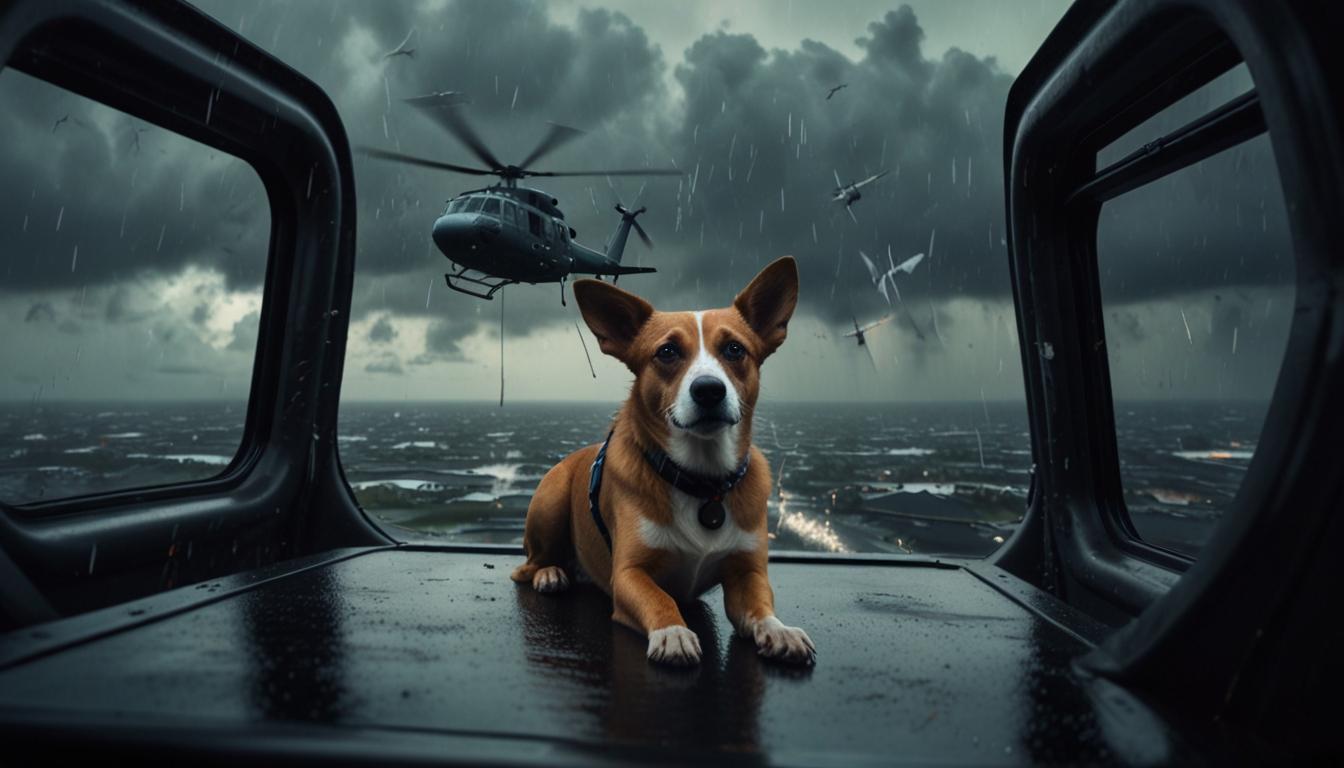
In recent developments, the dissemination of AI-generated images during hurricane emergencies has emerged as a noteworthy concern. With Hurricane Milton currently impacting Florida, several misleading images purportedly depicting rescue efforts and disaster scenes have circulated on social media platforms. These images, often crafted using artificial intelligence, lack authenticity and have spurred confusion amidst an already dire situation.
Among the fabrications is an image of a dog piloting a helicopter supposedly engaged in rescue missions during the hurricane. This digitally manipulated image was created using AI tools, apparently as part of a trend that leans towards the surreal and sensational. Such imagery includes a viral tweet featuring a digitally altered image of a young girl holding a puppy during what was claimed to be Hurricane Helene. This image was reshared by prominent figures, including Utah Senator Mike Lee, purportedly to ignite discussions on hurricane relief efforts.
Adding to the list of dubious imagery is another AI-generated portrayal showing former President Donald Trump purportedly rescuing a baby from floodwaters. These images have been shared under various ideological banners, often with captions that seem to satire or critique current political dynamics or humanitarian responses.
The proliferation of such content poses challenges not only to the audience but also to professional photojournalists. These journalists report from the front lines, capturing real-time conditions, often at personal risk. Their efforts are essential for ensuring accuracy in reporting from disaster-affected areas, yet they now face the added burden of their work being muddled with AI fabrications.
Identifying these AI-crafted images requires a discerning eye. Common giveaways include discrepancies in anatomy, such as incorrect numbers of fingers or poorly defined appendages. Faces in AI images can appear blurry or misshapen, lacking the nuanced detail of genuine photographs. Additionally, skin tones in these images may seem overly smooth or surreal.
In light of these events, critical analysis and verification of imagery have become imperative. As technology continues to evolve, the responsibility falls on both content creators and consumers to navigate truth and authenticity in digital media. The current scenario in Florida underscores the need for vigilance and discernment in an era where not all visuals can be trusted at face value.
Source: Noah Wire Services