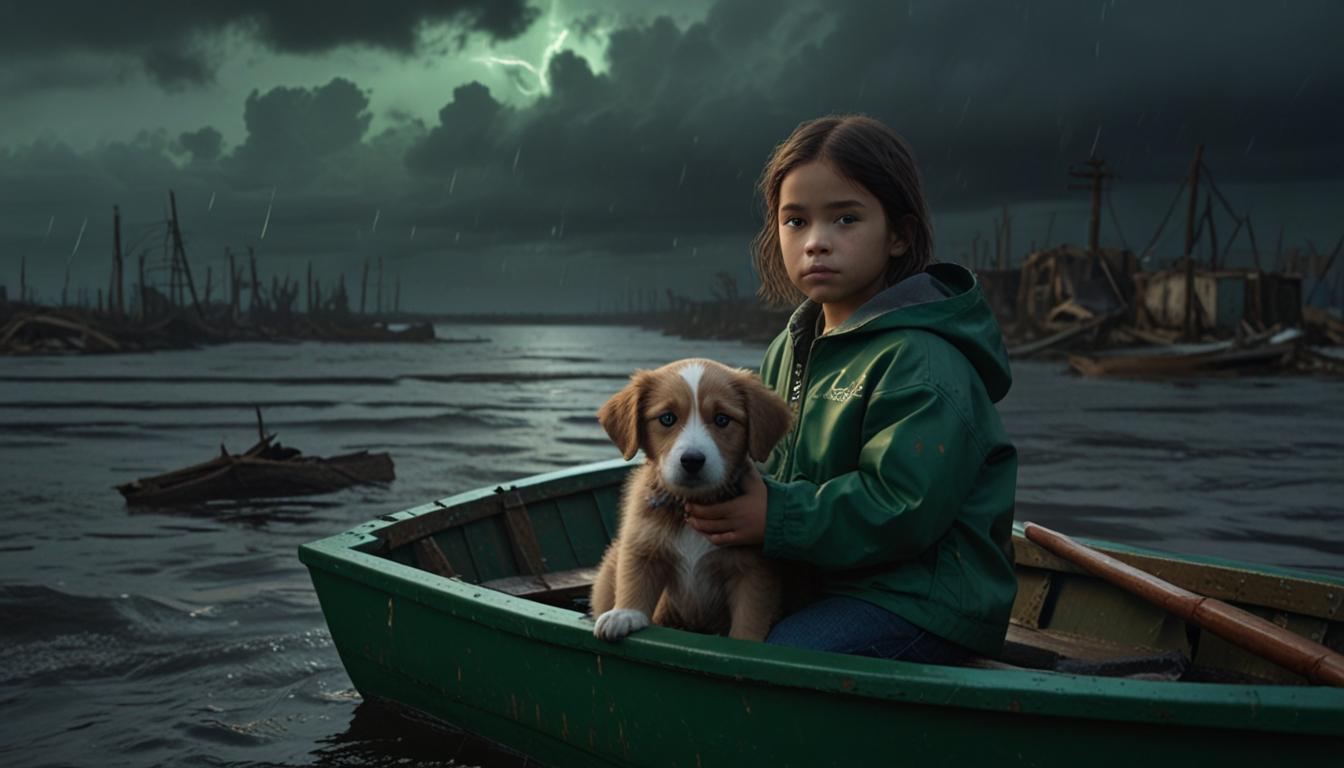
In the aftermath of Hurricane Helene, notable for being the most devastating storm to impact the United States since Hurricane Katrina in 2005, a set of compelling images went viral on social media, depicting a young girl being rescued with her puppy amidst the floodwaters. These images, lauded for their emotional depth and purportedly deserving of a Pulitzer Prize, have since been revealed as products of generative artificial intelligence.
The hurricane, which has caused substantial damage and loss of life, has seen ongoing relief and rescue operations. Amidst this, the viral images captured the attention of many, seemingly encapsulating the drama and heroism associated with such rescue efforts. The first image shows a distressed girl sitting in a green boat clutching a brown puppy, while another image captures her gazing directly at the camera, holding a dog with distinct black, brown, and white markings. A third image, also shared widely online, appears to feature the same girl but with a different dog. However, all these images are not what they seem.
A thorough investigation by VERIFY, which included the use of tools such as RevEye for reverse image searches, definitively concluded that these images are AI-generated. Generative artificial intelligence, a sophisticated technology capable of creating realistic content such as images and videos from algorithmic prompts, was responsible for their creation.
Upon investigation, several anomalies typically associated with AI-generated content were identified in the images. These include a lack of continuity in background details, and visible discrepancies in the appearance of the girl and the puppies. In one instance, the girl's facial features appeared almost cartoonish, with inconsistencies noted in her skin tone and the shape of her ear. The boat in the background also displayed distortions typical of AI-rendered graphics. Another image exhibited disproportionate features, such as elongated fingers and missing fingernails, further affirming the synthetic origin of the images.
The process of determining the authenticity of such images involves looking for signs of digital manipulation, which includes artefacts that digital imaging experts recognise as indicators of AI generation. These artefacts often manifest as distortions in physical features or backgrounds, and are indicative of the limitations artificial intelligence still encounters in realistically replicating human features and natural scenes.
The images first surfaced online on 1 October as an X post by a user known for sharing conservative-leaning content. Following this initial post, the images swiftly spread across multiple platforms, frequently accompanying criticism directed at the U.S. government’s handling of disaster response and hurricane aid. Despite the widespread sharing, the origins of the image featuring the girl with the brown dog remain unverified.
This incident highlights the ease with which AI-generated content can be disseminated online, often being utilised in campaigns to provoke emotional responses or influence public opinion. The Cybersecurity and Infrastructure Security Agency (CISA) has noted the use of such tactics in disinformation campaigns, which seek to manipulate or intimidate through emotion rather than fact.
As the remnants of Hurricane Helene continue to be addressed by governmental and humanitarian agencies, this episode serves as a poignant example of the challenges presented by digital media and the increasing role of artificial intelligence in shaping public discourse. The impact of these images extends beyond the initial deception, prompting ongoing discussions about digital ethics and the spread of potentially misleading information in times of crisis.
Source: Noah Wire Services