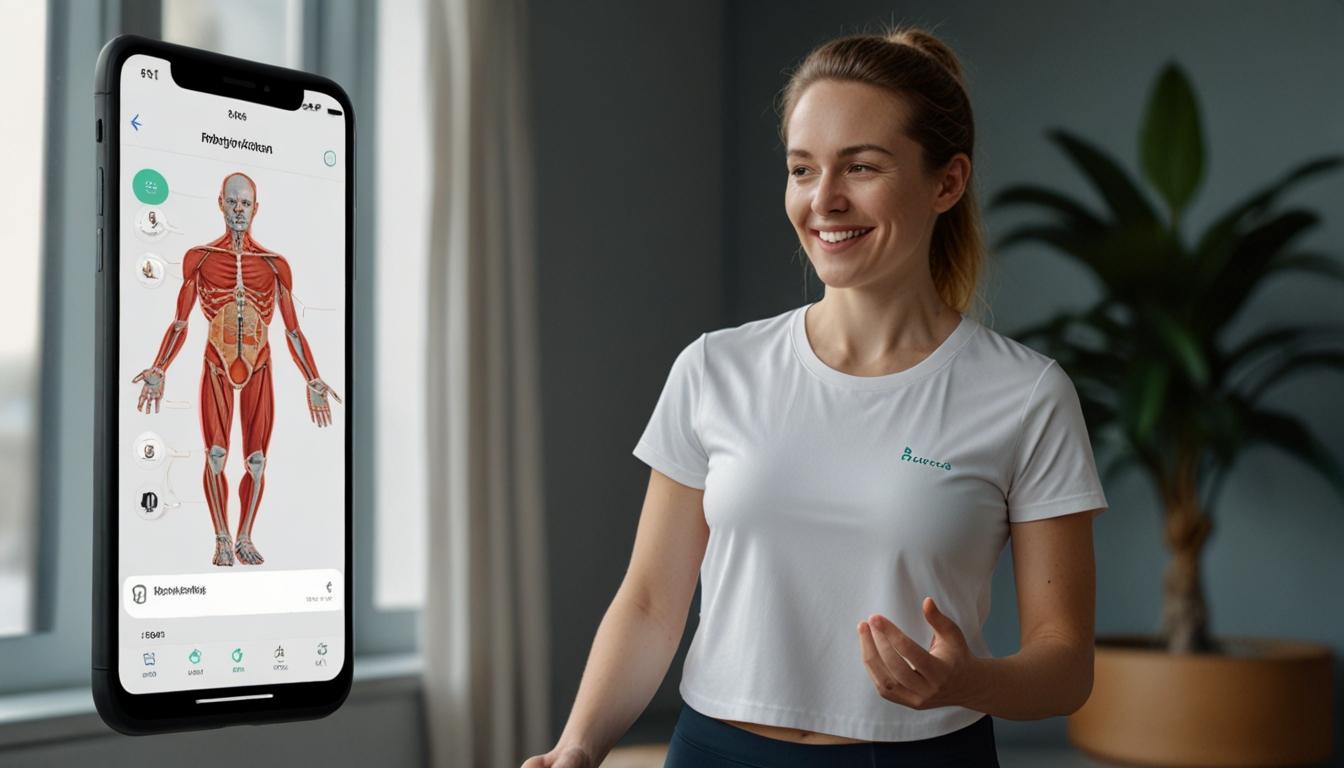
An innovative new approach is changing the way back pain is treated in the UK, with the introduction of an AI-powered physiotherapy app known as Flok. Utilising advanced AI technology, Flok offers a digital solution to a problem that has long troubled many – chronic back pain. Nicola Dunklin, an NHS employee, is among those who have benefited significantly from this cutting-edge application.
Nicola's journey with back pain began in her teenage years, stemming from a condition known as scoliosis, characterised by a curvature of the spine. Despite numerous consultations with healthcare professionals, the root cause of her pain remained unaddressed, and she was often left with only painkillers as a remedy. However, her participation in a trial for Flok, initiated by the NHS Trust she is employed at, has brought a significant change to her life.
Flok operates using AI-driven decision-making technology to prescribe physiotherapy treatment. The app features a virtual physiotherapist, named Kirsty, generated by manipulating video of a real practitioner. Users interact with Kirsty by answering questions about their condition, which the AI uses to tailor exercises specifically to their needs.
For Nicola, the experience was straightforward. After downloading the app, she began weekly sessions and responded to questions regarding her pain and the difficulty of different activities. Based on her feedback, Flok recommended specific exercises aimed at alleviating her discomfort. Within just a few sessions, the app identified that her back pain was likely caused by stiffness in her upper back – a realisation that marked a turning point for her.
Developed by software engineer Rick Da Silva and medicine graduate Finn Stevenson, Flok aims to address a significant issue within the NHS: the high demand for physiotherapy services coupled with limited capacity. Stevenson, who has a background in spinal conditions and first-hand experience with NHS services, highlighted the long waiting times faced by patients seeking treatment for back pain. The NHS spends approximately £5 billion annually addressing this leading cause of disability in the UK, affecting up to one-third of adults at some point in their lives.
Currently, Flok stands as the NHS’s first AI clinical service to receive medical device clearance from the Medicines and Healthcare products Regulatory Agency (MHRA) and regulation from the Care Quality Commission. Having been piloted successfully in various locations across England and Scotland, the app is now providing daily NHS appointments. Plans are already underway for a more extensive implementation, with an estimated 50,000 NHS patients expected to be treated by the AI physio within the coming year.
Despite its promise, the question remains whether an AI can fully replicate the benefits of human physiotherapy. Some experts, such as Brighton Physiotherapy Clinic’s Tina Mason, express concerns about the AI's ability to ensure patients perform exercises correctly, a key aspect often requiring manual correction in person.
However, feedback from patients has generally been positive, with trial users rating the service as equivalent or superior to traditional care. Stevenson is adamant that AI should only complement existing services, offering patients a choice rather than replacing human interaction entirely. For more complex cases, the app is designed to flag potential issues and direct patients to medical professionals.
Nicola acknowledges the limitations but sees the app as a valuable option, offering a level of personalisation she found lacking in previous treatments. For her, the convenience and customisation offered by Flok have made a significant difference. While it may not replace the human touch entirely, she sees a future where AI and traditional methods coexist to provide better care for individuals suffering from back pain.
Source: Noah Wire Services