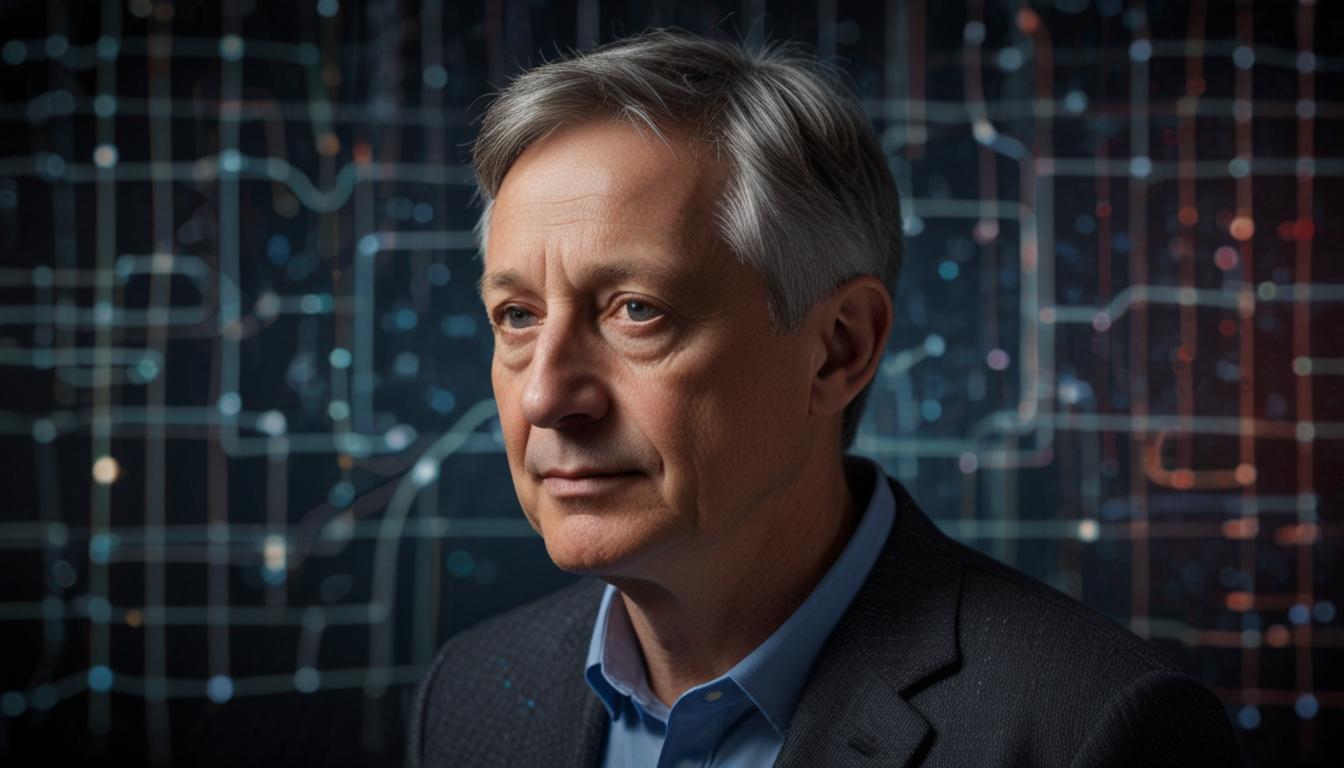
Artificial intelligence (AI) continues to dominate discussions in the field of human resources (HR), especially as enterprises evaluate new technologies to enhance workforce efficiency and management. While AI feels like a modern breakthrough, its roots stretch back to the 1940s with significant developments in subsequent decades. One of the notable contributors to the advancement of AI is Geoffrey Hinton, often referred to as a “godfather of AI," who started delving into the field in the 1970s at renowned institutions like Cambridge University and the University of Edinburgh.
Recently, a milestone in AI history was reached when Geoffrey Hinton, alongside fellow researcher John J. Hopfield, was awarded the Nobel Prize in Physics. The prestigious accolade recognises their pioneering work on artificial neural networks. These networks, inspired by the intricate architecture of the human brain, have been instrumental in developing contemporary AI models employed by technological giants such as Google and OpenAI. Hinton has acknowledged being "stunned" by the capabilities of modern large language models like GPT-4, expressing both awe and concern over their rapid advances. Nevertheless, he remains optimistic about AI's potential for positive impact.
In the realm of HR technology, several organisations have recently unveiled new products and appointments aimed at leveraging AI to improve workforce management. The Josh Bersin Company announced the launch of Galileo Professional, an AI-powered expert assistant offered on a subscription basis, tailored for individuals and smaller teams. This innovation demonstrates the growing trend of incorporating AI tools to aid in HR functions.
iCIMS, a company specialising in talent acquisition technology, named Jody Kaminsky as its new Chief Marketing Officer. Kaminsky's 15 years of experience in the sector, particularly in leading marketing teams in major cloud companies, positions her to play a pivotal role in advancing iCIMS' marketing strategy.
ADP also made headlines with the introduction of Lyric, a generative AI-driven Human Capital Management (HCM) platform. This platform is designed to simplify HR, payroll, and service capabilities on a global scale, providing ADP customers with enhanced tools for workforce management that emphasise insight, compliance, and adaptability.
Furthermore, Revature, a provider of technology talent services, launched its Total Talent Solution aimed at delivering more productive talent efficiently and with higher return on investment. This solution targets mid-to-large enterprises, consultants, and government agencies, aligning with the industry's growing focus on not just finding, but optimising talent.
The application and discussion of AI in HR were anticipated topics at the forthcoming exclusive summit for senior HR executives. Set to be held at the Stein Eriksen Lodge in Park City, Utah, from November 11-13, 2023, this event aims to facilitate dialogue around significant HR challenges and opportunities.
Meanwhile, discussions at HR tech events have shifted focus slightly. Principal analysts at Forrester suggest that HR leaders should look beyond generative AI (Gen AI) to address other key challenges and innovations within the sector. One such voice in this field is Torin Ellis, a business consultant, who advocates for technology's role in achieving operational DEIB (diversity, equity, inclusion, and belonging) goals and enhancing employee experience in alignment with organizational values.
In conclusion, as AI continues to evolve, its integration into HR processes aims to revolutionise how businesses manage and support their workforce, presenting both exciting opportunities and new challenges for industry leaders to navigate.
Source: Noah Wire Services