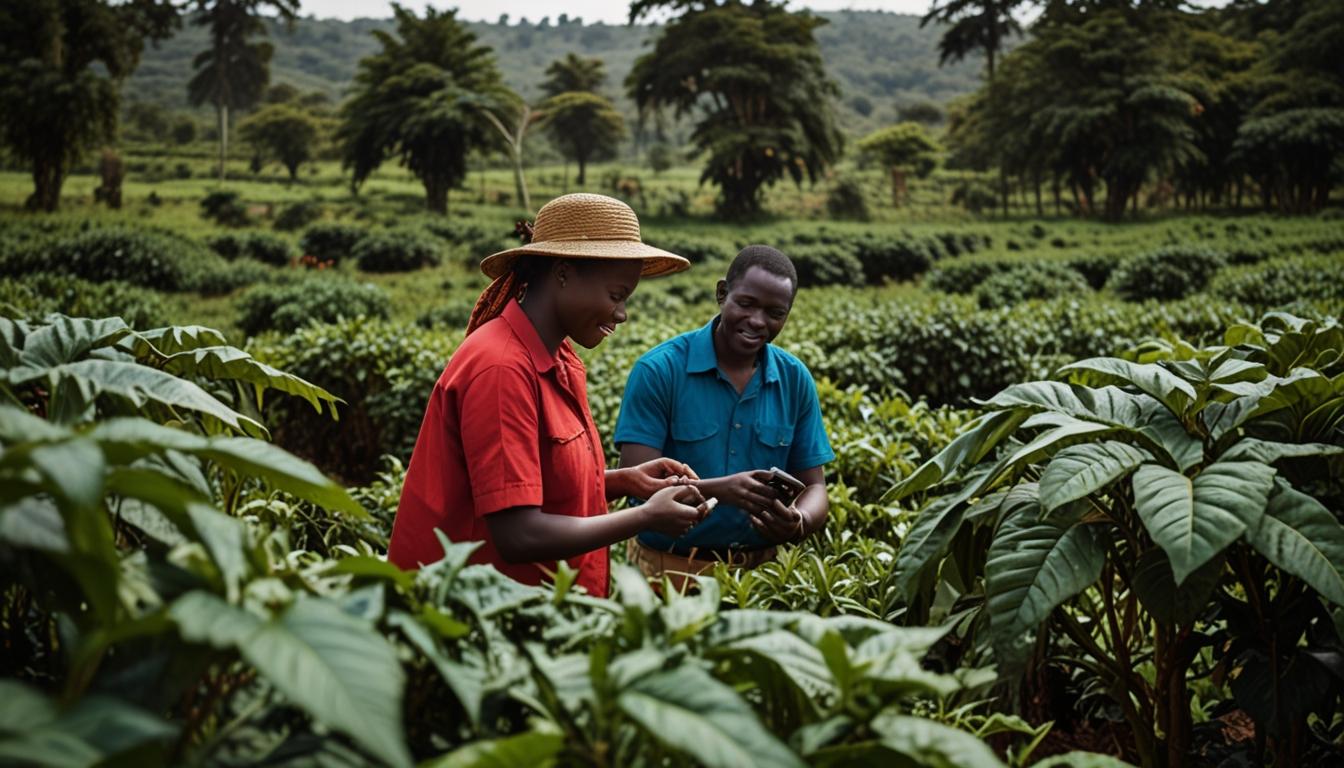
In Kericho, Kenya, a technological revolution is brewing among small-scale farmers seeking to bolster their agricultural productivity. Sammy Selim, a coffee farmer in Sorwot village, has embraced Virtual Agronomist, an artificial intelligence (AI) tool that offers precision fertiliser application advice. This modern practice is transforming how he cultivates coffee on his one-acre farm. Since incorporating the tool, Selim has witnessed a remarkable increase in his farm's coffee yield, from a meagre 2.3 tonnes in earlier seasons to 7.3 tonnes in 2022.
Virtual Agronomist utilises AI to recommend fertiliser types and quantities to farmers, based on specific soil and environmental data. For Selim, who previously relied on general farmer knowledge or sample tests from distant labs, the timely and accurate feedback has curbed unnecessary expenses and improved yield outlooks.
This AI-driven approach is not isolated to Selim's farm. Across Kenya, digital tools are reshaping agricultural practices. In Kwa Mwaura village in Machakos county, farmer Musau Mutisya uses PlantVillage, another AI-powered application that identifies pests and diseases from photographs of crop leaves. The app advised Mutisya on identifying the fall armyworm pest and provided guidance on control measures, thus replacing trial-and-error methods with precise interventions.
The rise of these technologies responds to a longstanding challenge Kenyan farmers face – the scarcity of agricultural extension officers. With a nationwide ratio of one officer per 1,093 farm households, far below the recommended ratio, many farmers have lacked reliable access to expert advice. Digital tools are now seen as a potential solution to bridge this advisory gap, as supported by organisations like the Gates Foundation and iSDA, the creator of Virtual Agronomist.
Florah Maritim, factory manager at the Sorwot Coffee Farmers Cooperative Society, acknowledges the challenges farmers face with understanding soil requirements. By leveraging AI, farmers can now receive clearer insights into what fertilisers and interventions their crops require. Meanwhile, Boniface Nzivo, a farmer in Machakos county, praises the FarmShield system for helping him manage his greenhouse's microclimate and optimising cucumber production.
Despite their promise, some experts, like Angeline Wairegi from Athene Research Group, caution against the over-reliance on AI tools. They highlight the risk of neglecting traditional agricultural knowledge that has supported African farming for generations. Such perspectives urge for a balanced approach, ensuring digital advancements complement rather than supplant indigenous practices.
The transformative potential of AI in agriculture is evident, but challenges remain. Efforts to expand smartphone access and improve digital literacy are crucial to ensure more widespread adoption among Kenya's seven and a half million small-scale farmers. As Africa seeks to maximise AI's economic benefits, the agricultural sector continues to be a forefront in demonstrating the technology's capabilities.
Source: Noah Wire Services