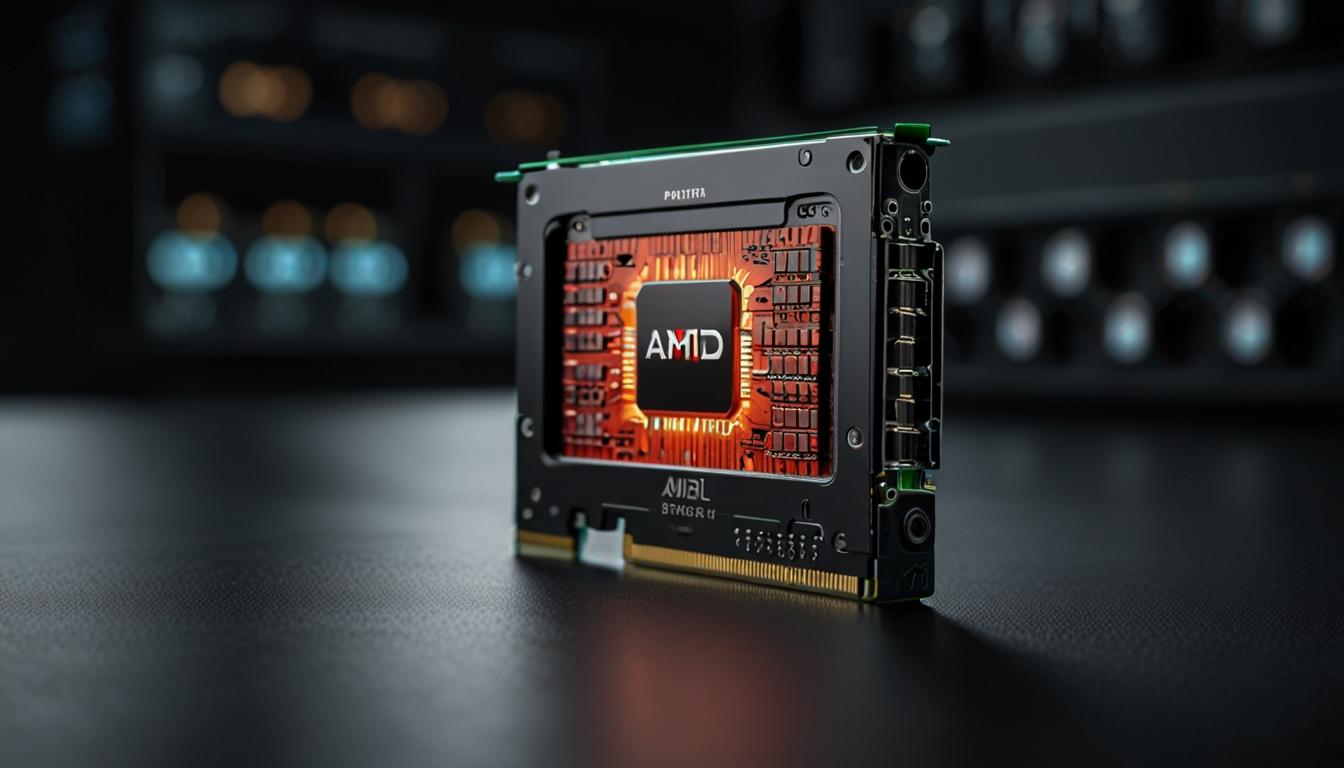
Advanced Micro Devices (AMD) has taken a significant step in its strategic pursuit to challenge Nvidia's dominance in the AI chip market by unveiling its new Instinct MI325X accelerator. Announced on Thursday, October 10, 2023, during AMD’s Advancing AI 2024 event, this ambitious launch is designed to penetrate Nvidia's stronghold in the lucrative data centre GPU segment, known mostly for its high profit margins and consistent demand driven by burgeoning AI applications.
The introduction of the Instinct MI325X accelerator signals AMD's bid to gain more ground in a market where Nvidia has long held an overwhelming share. In particular, Nvidia's market share in AI chips stands at a staggering 95%, a stronghold it maintains largely due to the widespread adoption of its CUDA (Compute Unified Device Architecture) ecosystem, which has set the standard for AI and high-performance computing applications.
AMD’s strategic moves were not limited to hardware as the event also served as a platform to unveil a comprehensive range of data centre solutions. These include the fifth-generation AMD EPYC server CPUs, AMD Pensando Salina DPUs, AMD Pensando Pollara 400 NICs, and the AMD Ryzen AI PRO 300 series processors, which are particularly targeted at enterprise AI PCs. The expansive portfolio reflects AMD's broader vision of tackling AI, enterprise, cloud, and mixed workloads, thereby providing versatile solutions to a spectrum of industry needs.
The backdrop for these developments is the continuing boom in generative AI, fuelled by capabilities such as large language processing, which have substantially increased the demand for robust GPUs capable of handling complex AI system computations. In recent earnings reports, Nvidia has been the primary benefactor of this trend, with data centre revenues enjoying notable spikes.
Max (Chong) Li, an adjunct professor at Columbia University and the CEO of decentralized AI data provider Oort, suggests that AMD’s foray into the market could instigate pricing pressures. He highlights that Nvidia currently commands high profit margins, estimated at 75% on AI chips. The entry of a competitor like AMD could induce competitive pricing beneficial for broader business adoption, although he notes that immediate price reductions might not be forthcoming.
Beyond mere price competition, AMD recognises the critical role of software ecosystems in anchoring its market presence. The company has invested in the ROCm (Radeon Open Compute) software stack, claiming to have significantly improved the inferencing and training performance of its AMD Instinct MI300X accelerators on widely-used AI models. At the time of the announcement, the number of models seamlessly running out-of-the-box on AMD Instinct had tripled compared to when the MI300X was launched.
Industry experts, including Dev Nag, CEO of support automation company QueryPal, underscore the challenge AMD faces in not only matching hardware capabilities but also in cultivating a viable software ecosystem that can rival Nvidia’s. Nag notes Nvidia's significant R&D investment in software, highlighting that the company's robust software capabilities contribute heavily to its market leadership.
From a business perspective, AMD's strategic moves could potentially transform the AI chip marketplace. With increased competitive dynamics, businesses might witness a diversification in options and price ranges in the coming years, an evolution that could democratise access to AI technologies for small and medium-sized enterprises. While AMD may initially position itself as a value player rather than making sharp price cuts, its strategy of advocating open standards and reducing dependence on proprietary ecosystems could foster more interoperability and integration ease in AI development.
AMD's announcement was met with positive reactions from several industry partners, including major corporations such as Dell, Google Cloud, HPE, Lenovo, Meta, Microsoft, Oracle Cloud Infrastructure, and Supermicro, reflecting broad-based support and collaborative opportunities in this market shift.
Looking ahead, Chair and CEO of AMD, Lisa Su, articulated the commercial potential of the data centre AI accelerator market, forecasting its growth to $500 billion by 2028. Even capturing a small fraction of this burgeoning market could translate into significant financial gains for AMD, validating its vigorous push into the AI chip segment.
For sectors ranging from retail to manufacturing, such competitive market landscapes are anticipated to catalyse the integration of AI into foundational operations, facilitating advancements in areas like demand forecasting, process optimisation, and customer personalisation. As technology becomes more accessible, a wave of adoption within both developed and emerging markets is anticipated, mirroring the proliferation of mobile technology in past decades.
Source: Noah Wire Services