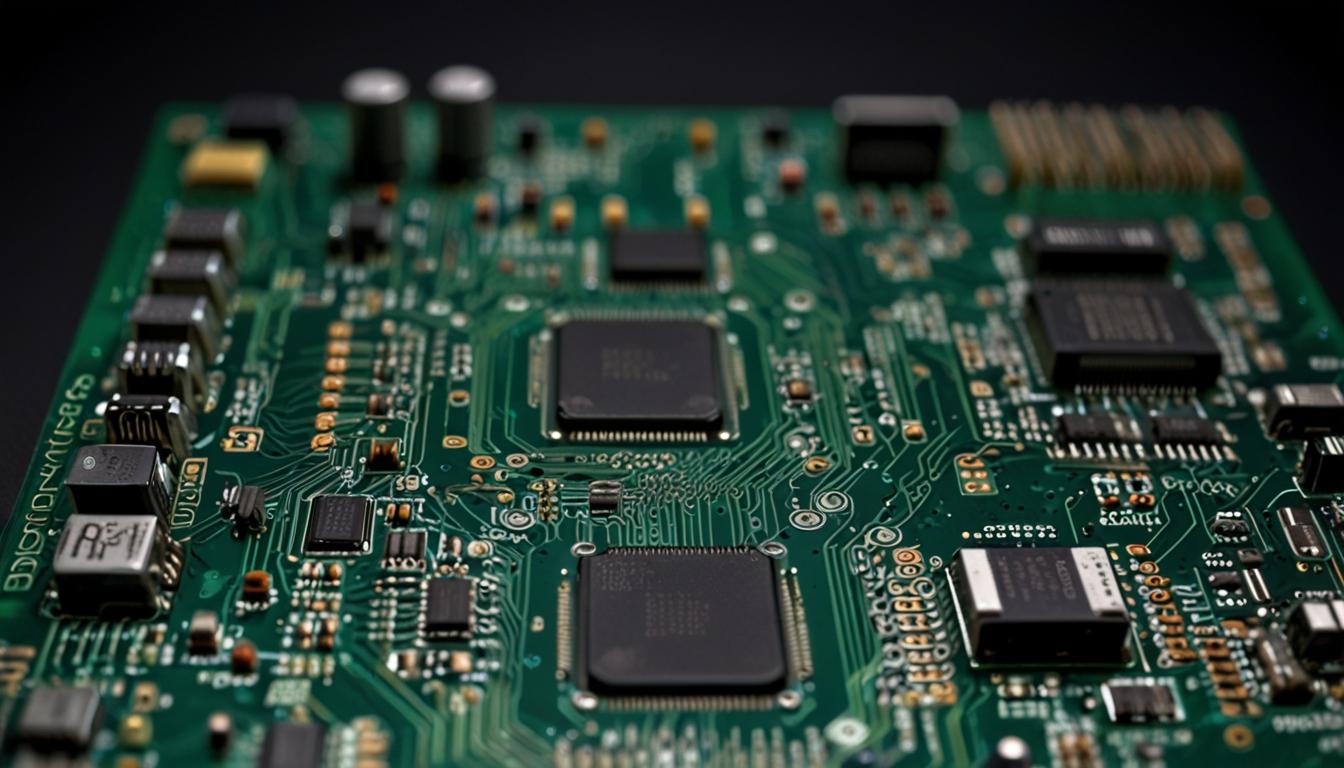
Detailed Review of BeagleY-AI: A New Player in the SBC Market
The BeagleY-AI, unveiled by BeagleBoard.org, enters the highly competitive arena of single-board computers (SBC), aiming to cater specifically to artificial intelligence applications. This cutting-edge SBC is operated by a Texas Instruments AM67A quad-core Cortex-A53 processor paired with an additional ARM Cortex-R5F processor, geared for handling low-latency I/O operations. It is built to push the boundaries in AI processing, boasting two C7x DSP units for enhanced performance and a Matrix Multiply Accelerator (MMA) that’s crucial for deep learning tasks.
Packaging and Initial Setup
Manufactured in India, the BeagleY-AI arrives in a robust, well-cushioned package designed to protect the board during transit. However, it's important to note the absence of accessories within the packaging. Setting up the device requires a standard microSD card, recommended at 32 GB, to load the necessary Debian 12 operating system. The flashing process using Balena Etcher was straightforward and completed successfully in about 20 minutes. There were initial minor issues with the recommended bb-imager software, which led to Balena Eycher being used instead.
Performance and Connectivity Options
Upon setting up the OS, the board can be accessed in three distinct modes: direct USB tethering, a headless connection via the UART port, and a standalone setup with peripherals like a monitor and keyboard. For power delivery, a 5V 3A power supply is recommended to ensure stable operation, especially under heavy usage.
When tested with USB tethering, the board demonstrated quick setup and connectivity, poignantly highlighted by the LED patterns signifying operational readiness. In a standalone setting, the board was connected to external devices effortlessly. It offered seamless Ethernet connectivity and needed minimal configuration for Wi-Fi access, achievable with the utility nmtui.
Insights into System Specifications and Benchmarks
The board's hardware was evaluated using inxi, offering a clear snapshot of the system setup. The benchmarking carried out using sbc-bench presented intriguing results, similar to the capabilities found in Raspberry Pi 3B+. However, issues with temperature reporting were encountered, alongside a high average load that was noted, suggesting potential background activity interfering with some performance insights.
Network and Multimedia Performance
Network tests using a TP-Link 4G LTE router showed steady performance across both Ethernet and Wi-Fi, with slightly limited speeds due to network constraints rather than the SBC’s capabilities.
In multimedia performance, the BeagleY-AI was found to handle video playback tasks on YouTube adequately at lower resolutions. However, challenges arose with higher resolutions like 1440p and 2160p, primarily due to network speed limitations potentially affecting streaming and buffering.
Web Application and Graphics Testing
The performance of web applications was tested using Speedometer benchmarks, where notable variances among different browsers were observed. Graphics capabilities were also tested using WebGL rendering and glmark-es2, revealing that while the device can handle tasks, the performance dipped significantly during intensive 3D rendering tests.
AI and Machine Learning Endeavors
The notable potential of this device lies in its AI capabilities, tested using TensorFlow Lite for object detection. The board performed object detection tasks at a modest 3 FPS. Alternative AI testing was conducted using MediaPipe, demonstrating varied processing rates across tasks such as gesture recognition and image segmentation, pointing to areas ripe for further optimisation and development.
Power Consumption and Additional Observations
Temperature monitoring showed the board maintaining reasonable temperatures, peaking during full load scenarios. Power readings revealed an average draw of under 6W, underscoring the board's efficiency in power use during high-demand operations.
The open-source nature of the BeagleY-AI allows for further exploration via the manufacturer’s website, presenting additional supportive files like schematics and 3D models that could assist developers and hobbyists alike in customising and optimising the board’s applications.
Conclusion
The BeagleY-AI shows promise as an SBC tailored for AI applications, offering capabilities comparable with established models like the Raspberry Pi 3B+. Despite facing some software support limitations, it presents a viable option for those eager to explore AI processing on a compact board. Those interested can acquire the BeagleY-AI for around $70 from various retailers.
Source: Noah Wire Services