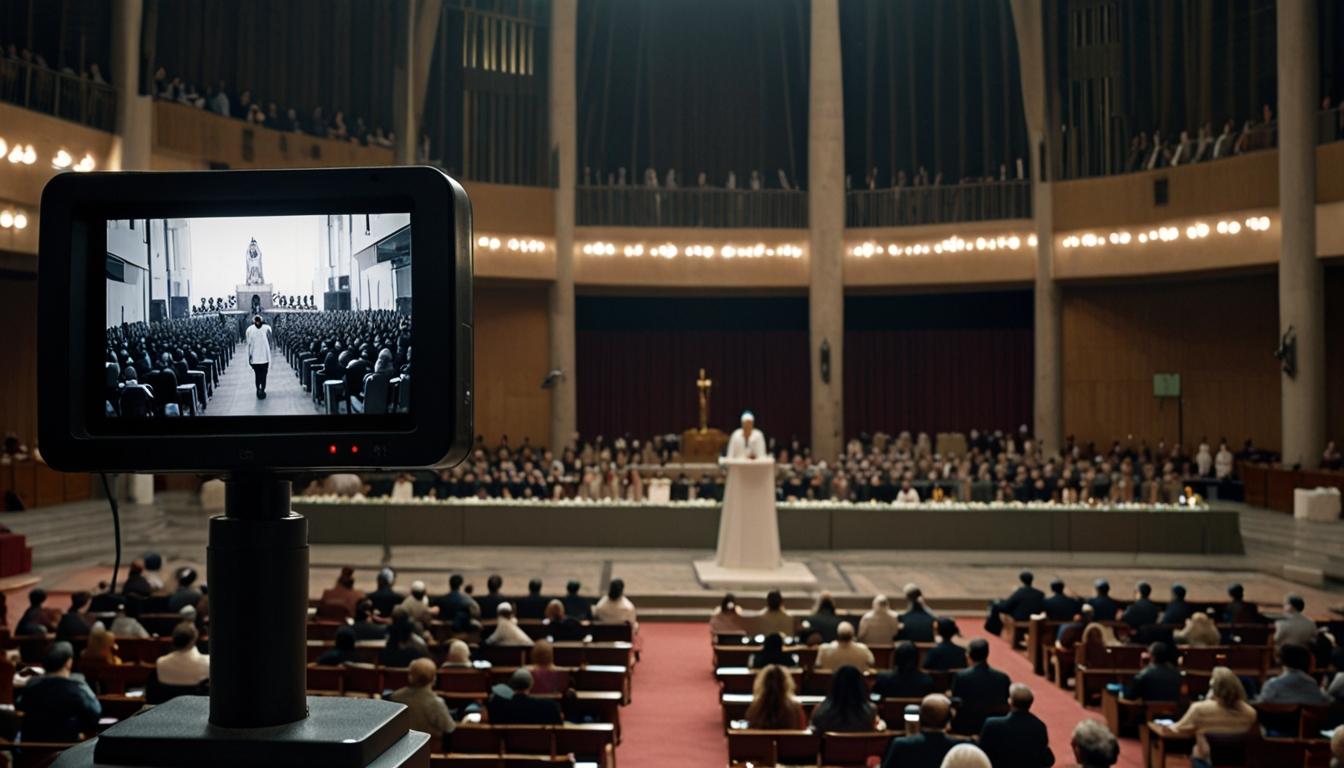
In recent global developments, concerns have been raised about the use of artificial intelligence (AI) technologies by authoritarian regimes, particularly in China and Iran, targeting religious groups such as Christians. The caution comes from Stephen Schneck, Chair of the U.S. Commission on International Religious Freedom, who highlighted the "truly Orwellian" nature of these surveillance techniques. This warning was made in anticipation of the International Ministerial Conference on Freedom of Religion or Belief, which is taking place in Berlin this year.
According to Schneck, oppressive regimes are deploying AI technologies like facial recognition to monitor religious ceremonies and activities, a capability that was previously unavailable. This development facilitates the tracking and repression of Christians in these countries. The implications of such technologies have become a notable concern for human rights observers and religious freedom advocates, linking the rise of AI with increased authoritarianism and the deterioration of democratic practices.
The conference in Berlin aims to address how governments are employing AI to exert control over religious communities. This meeting is particularly significant as it correlates with the backdrop of rising global religious persecution. Open Doors, a persecution watchdog, reported that in 2023 alone, more than 365 million people worldwide, or roughly one in seven Christians, experienced persecution due to their faith.
Arthur Herman, Director of the Quantum Alliance Initiative at the Hudson Institute, elaborated on China’s strategic integration of AI within its military and social systems. Herman noted the aggressive aspirations of China to position itself as a leader in AI by 2030, with investments accounting for a significant portion of global AI spending by 2027. He highlighted the Chinese Communist Party's use of AI in suppressing religious groups, using the oppression of the Uyghur population as a distressing example. These actions serve not only as a mechanism for internal control but also potentially as a model to be exported to similar regimes worldwide.
This utilisation of AI extends beyond religious monitoring and into broader questions of ethics and morality. Religious leaders, including those from the Southern Baptist Convention and the World Evangelical Alliance, have voiced concerns over the implications of AI on free will and human identity. The Southern Baptist Convention, for instance, passed a resolution addressed to its members, urging the ethical development and deployment of AI technologies, recognising the risks of adverse effects stemming from the "Fall" and the significance of using AI with discernment and care.
George Barna, an expert on church trends, expressed scepticism regarding AI's influence on the religious community, suggesting that its artificial nature poses potential threats to mental, physical, and spiritual health. He advised religious leaders to approach these technologies with caution.
These discussions underscore the growing need for international cooperation and ethical governance in AI application, emphasising the balance between technological advancement and the preservation of human rights and freedoms. As AI continues to evolve, its impact on society, particularly in regions experiencing political repression, remains a critical focus for worldwide religious and civic leaders.
Source: Noah Wire Services