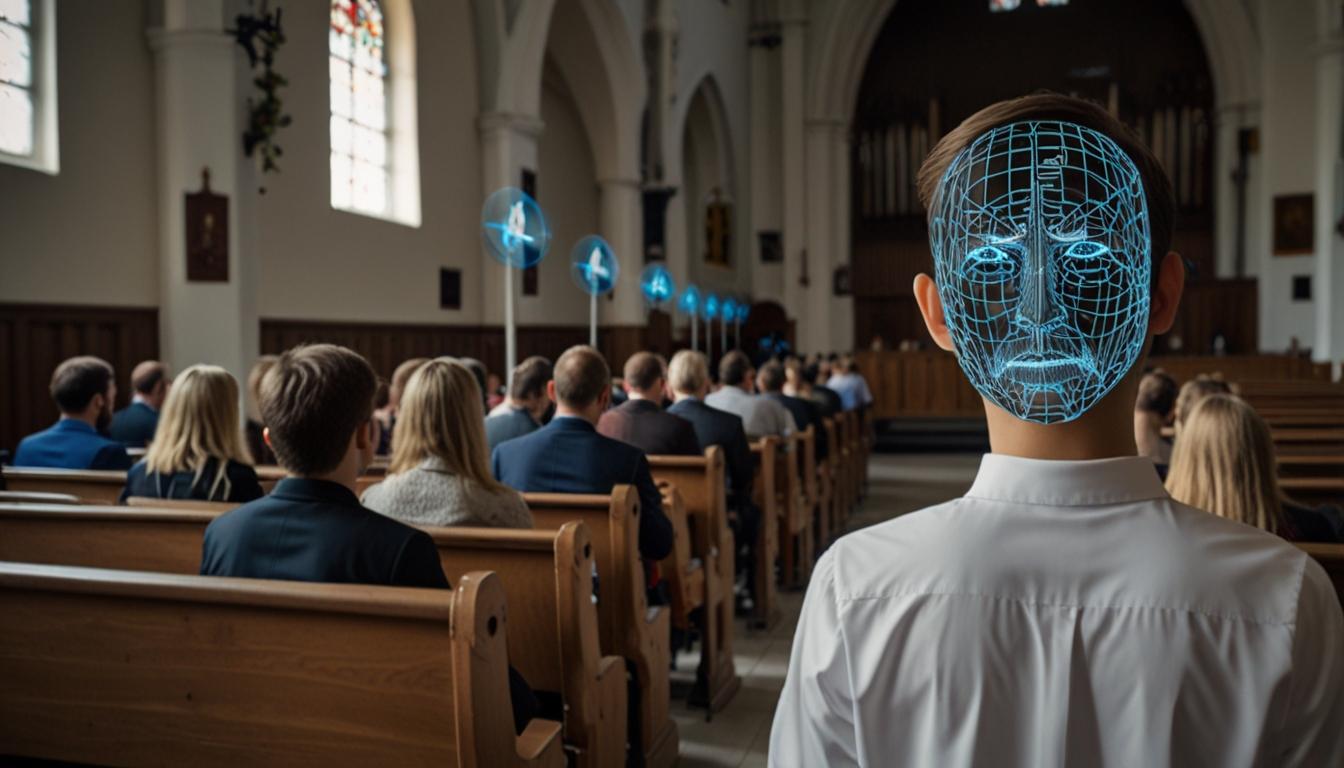
Recent developments in artificial intelligence (AI) have raised significant concerns regarding their use by authoritarian regimes to suppress religious freedoms, according to Stephen Schneck, chair of the U.S. Commission on International Religious Freedom. Schneck highlights how countries such as China and Iran are utilising advanced technologies, including facial recognition, to monitor and repress religious communities, specifically Christians.
In a statement to Premier News, Schneck emphasised the threatening role of AI technologies in religious repression. "Some of these new technologies used by countries like Iran and China create brand new ways for the repression of religion or the control of religion around the world. So it's a very concerning development and something that we want to keep an eye on," he stated. This development is particularly pronounced in China, where facial recognition is increasingly employed to monitor individuals attending religious services, allowing the government to track and suppress their religious practices.
Schneck's comments precede the International Ministerial Conference on Freedom of Religion or Belief, scheduled to occur in Berlin. This annual global conference addresses pressing issues of religious freedom, with this year's focus on the role of authoritarian states in using AI technologies to restrict religious practice. Schneck noted, “It’s a tremendous concern and something the commission follows closely. Around the world, persecution of religion is spiking for a variety of reasons, primarily due to rising authoritarianism and perhaps some erosion of democracy.”
According to Open Doors, a religious persecution watchdog, more than 365 million people globally—nearly one in seven Christians—faced persecution in 2023 due to their faith. Arthur Herman, a senior fellow and director of the Quantum Alliance Initiative at the Hudson Institute, reflected on China's broad AI initiatives. He warned of China's strategy to replace Western values with a totalitarian model supported by the Chinese Communist Party (CCP). Herman pointed out that AI's application in military and social settings includes surveillance technology used to detain and oppress groups such as the Uyghurs.
China's role in the global AI market is expected to increase dramatically, with predictions that by 2027, it will account for one-third of worldwide AI spending. This growth aligns with China's aspiration to be the world’s leading AI superpower by 2030. Herman suggests that the CCP's use of AI in suppressing human rights provides a model that could be shared with other authoritarian governments, aiming for a broader ideological influence over democratic norms.
The ethical considerations of rapidly advancing AI technologies have sparked debate among religious leaders who are concerned about their impact on human identity and autonomy. The Southern Baptist Convention and the World Evangelical Alliance have both expressed reservations about the implications of AI on free will and human dignity.
The Southern Baptist Convention's Resolutions Committee addressed these issues in their resolution, "On Artificial Intelligence and Emerging Technologies," which was widely supported. This document encouraged proactive Christian engagement with AI technologies and urged leaders across various sectors to handle these innovations responsibly and ethically, reflecting humanity as a divine creation.
As these discussions unfold, the international community remains attentive to the evolving relationship between AI technologies and religious freedoms, emphasising the need for careful oversight and regulation to prevent their misuse in the suppression of fundamental human rights.
Source: Noah Wire Services