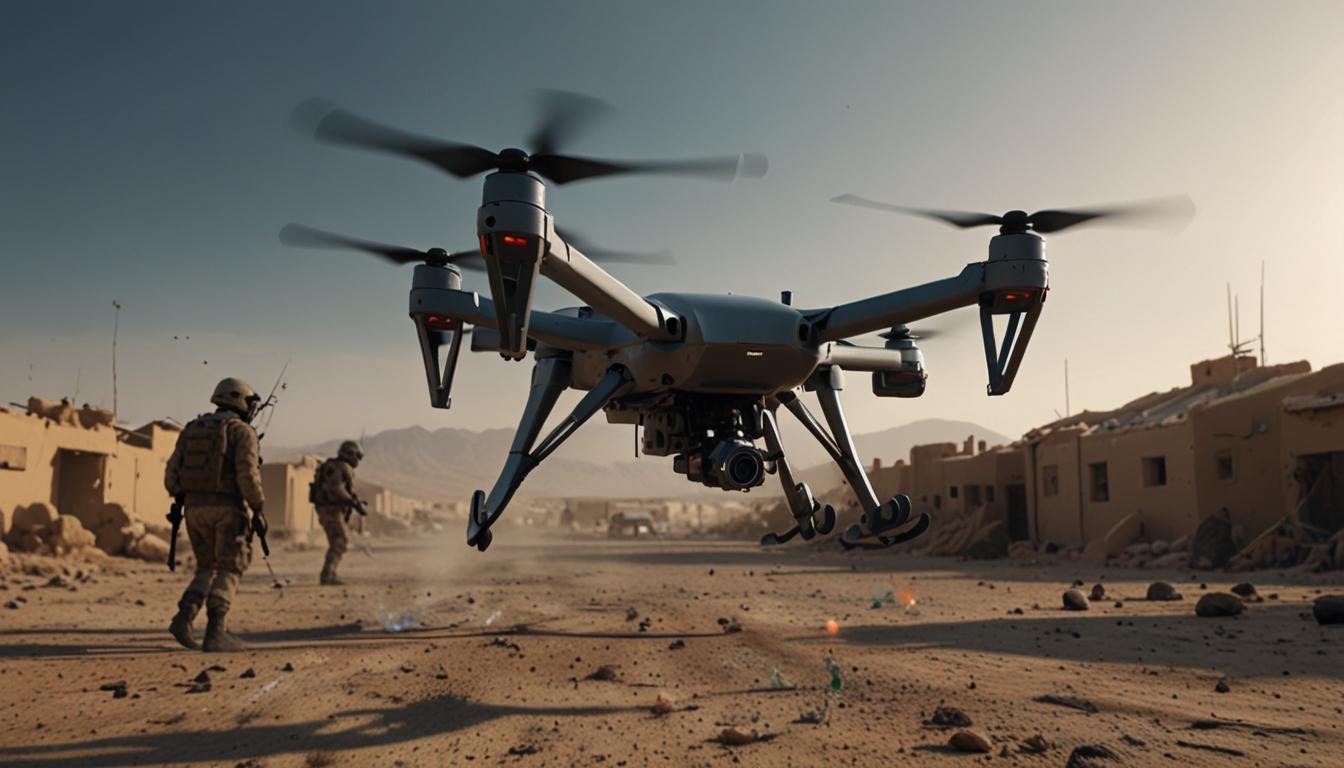
The debate over the development and use of autonomous weapons, capable of independently deciding whether or not to kill, has recently intensified in the United States. This discussion, involving influential figures in the tech and defence sectors, underscores differing perspectives on the ethical and strategic implications of such technology.
In late September, Brandon Tseng, co-founder of Shield AI, asserted that weapons in the U.S. would never become fully autonomous. Tseng highlighted Congressional and societal reluctance towards allowing an AI algorithm to make life-or-death decisions. His statement seemed to reflect a broader caution typical in Silicon Valley, which often emphasizes human oversight in lethal decisions.
However, this narrative was quickly complicated by Palmer Luckey, co-founder of Anduril, who expressed a differing view at a public event at Pepperdine University. Luckey questioned the moral objections to autonomous weapons, raising a point about the ethical inconsistencies in current warfare tactics, such as landmines, which indiscriminately cause civilian and military casualties.
Shannon Prior, a spokesperson for Anduril, clarified that Luckey's comments were not advocating for AI to autonomously initiate lethal action but highlighted concerns about adversaries potentially using "bad AI."
The conversation around AI and autonomy in weapons has seen diverse inputs from significant voices in the tech industry. Trae Stephens, another co-founder of Anduril, previously expressed that the technologies developed should enable humans to make informed decisions, ensuring accountability remains with humans, although he didn’t assert that a human should always be the final decision-maker.
The U.S. government’s stance regarding fully autonomous weapons remains somewhat ambiguous. Although the military has not adopted such weapons, there are no explicit restrictions preventing their development or sale to foreign entities. The U.S. released optional guidelines for AI safety in military applications, accepted by several allies, which require high-level approval for new autonomous weaponry. Despite these measures, moves toward a formal prohibition are absent, with officials deeming it an inappropriate time for such debates.
In line with this, Joe Lonsdale, co-founder of Palantir and an investor in Anduril, argued for a more nuanced approach to AI integration in defence. At a Hudson Institute event, Lonsdale pointed out the flaw in a binary approach to autonomy in weapons, advocating for adaptive policies responsive to changing geopolitical threats, notably from China.
Activists and human rights groups continue to push for international regulations to curtail autonomous weapons, noting the potential for misuse and ethical concerns. However, the current geopolitical climate, particularly the ongoing conflict in Ukraine, poses challenges to these efforts. Ukrainian officials, facing off against Russian forces, express a desire for enhanced automation in military technology to better their chances in the conflict.
Meanwhile, fears that rival nations like China or Russia might deploy fully autonomous weapons systems continue to influence American strategic thinking. At a United Nations AI arms debate, a Russian diplomat's vague comments about Russia's priorities only added to these concerns.
Silicon Valley executives like Lonsdale and Luckey are actively engaging with U.S. lawmakers and military officials, spending significant capital on lobbying efforts to shape policy and discuss potential threats posed by AI advancements from adversaries.
The debate over AI and autonomous weapons represents a pivotal issue intersecting technology, ethics, and global security, with stakeholders from various sectors advocating for diverse approaches to policy and regulation. As this conversation evolves, so too will the dynamics of modern warfare and technological capabilities.
Source: Noah Wire Services