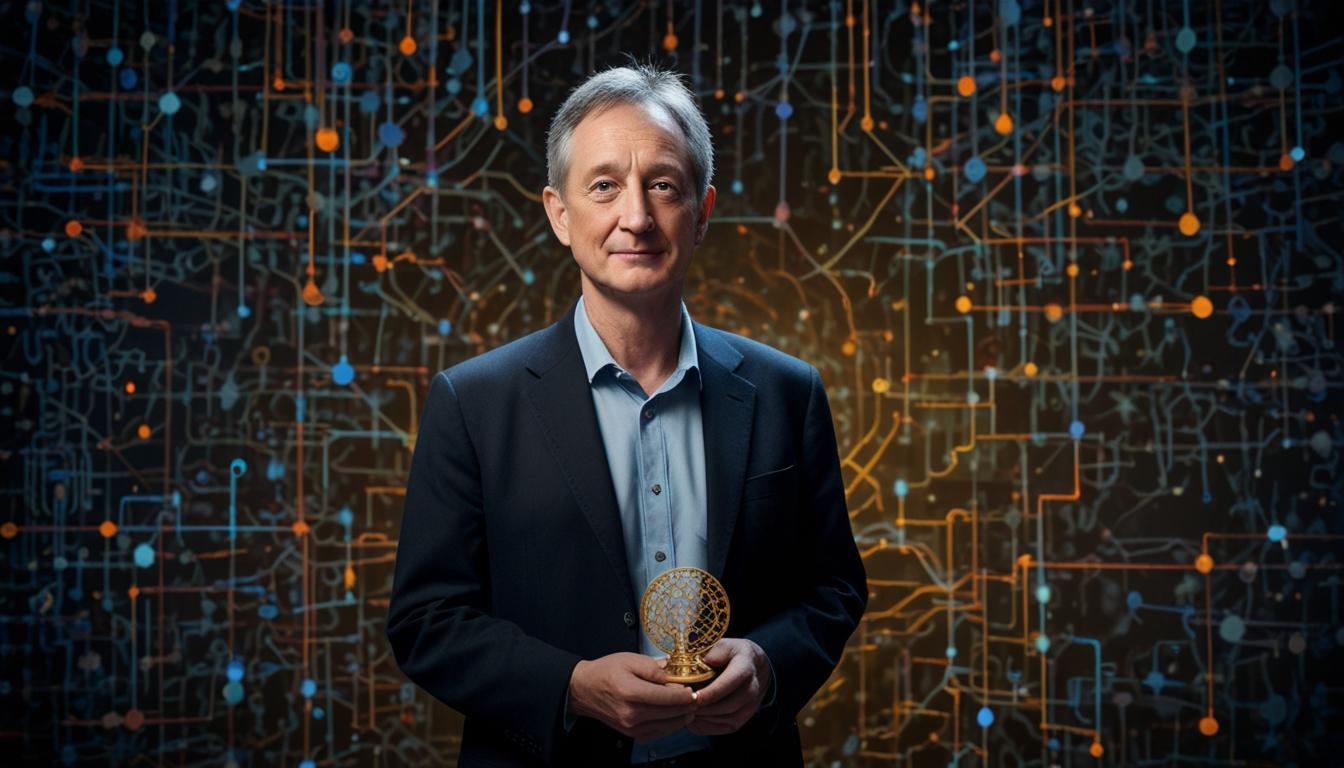
Geoffrey Hinton's Nobel Win Highlights Expanding Concerns Over AI
On Tuesday, in a historic recognition of his groundbreaking contributions to the field of machine learning, Geoffrey Hinton was awarded the Nobel Prize in Physics. Hinton, known globally as the "godfather of AI," shared this esteemed accolade with fellow academic John Hopfield of Princeton University. Both were honoured for their pioneering work in the development of machine learning using artificial neural networks.
In a stark moment reflecting on his achievement, Hinton used the opportunity to voice significant concerns about the very technology he helped evolve—artificial intelligence (AI). Drawing parallels with the Industrial Revolution, Hinton issued a pointed warning about AI's potential to exceed human intellectual capabilities, a scenario he describes as unprecedented. "It will be comparable with the Industrial Revolution," Hinton noted, stating his concerns about systems that may develop intelligence surpassing that of humans and possibly gaining control.
Having resigned from his position at Google to focus on such warnings, Hinton remains closely associated with the University of Toronto. While recognising AI's positive potential, such as increased productivity in sectors like healthcare, he remains vigilant about the risks, particularly the possibility of AI systems spiralling beyond human control.
This discourse around the dual-edged nature of technological advancements is not new among Nobel laureates. Historical precedence showcases several laureates who have cautioned about the potentially hazardous applications of their innovations.
In 1935, Frederic Joliot and Irene Joliot-Curie received the Nobel Prize in Chemistry for creating the first artificially radioactive atoms, a discovery that held promise for medical breakthroughs but also paved the way for the atomic bomb. Joliot issued a forewarning about the transformative and possibly devastating release of energy, marking the beginning of an era where advancements were viewed with caution.
Similarly, Sir Alexander Fleming, a co-recipient of the 1945 Nobel Prize in Medicine, forewarned against antibiotic misuse following his discovery of penicillin. He highlighted the ease with which bacteria could become resistant to drugs—a warning which, decades later, resonates strongly as antimicrobial resistance emerges as a critical global health threat.
In the realm of genetics, Paul Berg's 1980 Nobel Prize-winning work on recombinant DNA sparked fears concerning genetic engineering, leading to pre-emptive discussions amongst scientists about potential bioethical and safety concerns. Decades later, the field continues to navigate these complexities, with gene therapy advances such as those approved for sickle cell disease highlighting both the technology's potential and its ongoing challenges.
More recently, Jennifer Doudna and Emmanuelle Charpentier, who were awarded the Nobel Prize in Chemistry in 2020 for CRISPR-Cas9, echoed similar cautions. While acknowledging the transformative potential of gene editing, they emphasised the ethical ramifications, especially concerning heritable genetic modifications.
These narratives underscore a broader call within the scientific community for thoughtful dissemination and application of technological innovations. Hinton's recent reflections situate AI within this continuum of dual-use technologies—potent tools with the capability for both immense benefit and ethical dilemmas akin to those historically associated with nuclear power and genetic modification.
In light of these conversations, the scientific community remains firmly positioned at the frontlines of technological discovery and its societal implications, seeking balance amidst innovation.
Source: Noah Wire Services