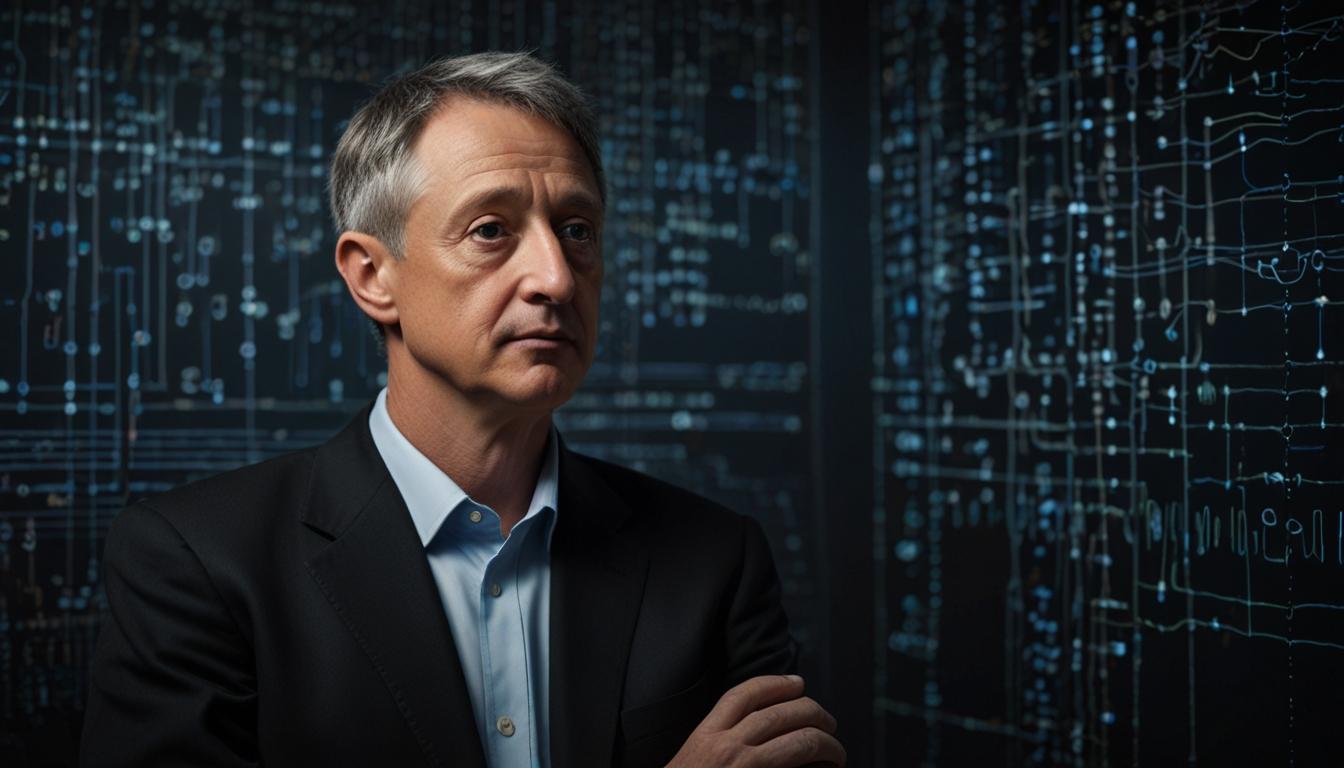
Geoffrey Hinton, a computer scientist lauded as the “Godfather of AI,” recently added a Nobel Prize in Physics to his repertoire for his foundational work on machine learning with artificial neural networks. Despite this remarkable achievement, Hinton expressed significant concerns regarding the potential consequences of artificial intelligence (AI), a field he has significantly advanced. After leaving Google to publicly discuss the potential hazards associated with AI, Hinton stressed that AI could surpass human intellectual capabilities just as the Industrial Revolution surpassed physical strength. Yet, unlike the Industrial Revolution, he pointed out, society has no experience with technology that could potentially outsmart human beings.
Currently associated with the University of Toronto, Hinton shared the Nobel accolade with John Hopfield from Princeton University. While he acknowledged AI's beneficial applications, especially in enhancing productivity within the healthcare sector, he was quick to caution against the potential risks AI poses if left unchecked, warning that intelligent systems might one day rule over humans.
Hinton joins a distinguished group of Nobel Laureates who have premised their revolutionary work on the need for caution. Historically, the creator of nuclear weapons and antibiotics, and developers of genetic engineering technology have all warned about the potential harm that their inventions could cause. Irene and Frederic Joliot-Curie, who won the Nobel Prize for Chemistry in 1935 for creating the first artificial radioactive atoms, had predicted the possibility of uncontrollable chain reactions—a prediction that came true with the advent of nuclear weapons. Similarly, Alexander Fleming, the discoverer of penicillin, warned of the inevitable rise of antibiotic resistance back in 1945. Today, antimicrobial resistance is considered a major global health threat.
Paul Berg, who received the Nobel Prize for his work on recombinant DNA in 1980, also expressed concern about genetic engineering, emphasising the need for substantial knowledge before venturing into genetic disease treatment. Despite his concerns, Berg was optimistic about the benefits of his work, as are researchers using gene-editing technologies like CRISPR-Cas9—a significant breakthrough that won Jennifer Doudna and Emmanuelle Charpentier the 2020 Nobel Prize in Chemistry. Doudna has insisted on the importance of ethical considerations, especially in modifying human germ cells.
Beyond AI, recent Nobel laureates hail from the UK's prestigious academic institutions. Cambridge University, with its rich history of fostering Nobel Prize winners, is at the forefront of scientific discovery. The institution has produced a staggering number of Nobel Laureates, trailing only the United States in the global tally. Among recent recipients is Demis Hassabis, who shares the 2024 Nobel Prize in Chemistry for pioneering work on proteins, specifically through the AI model AlphaFold which predicts protein structures. His contribution is anticipated to accelerate drug discovery and fortify defences against biological threats.
Hassabis’s career trajectory took a turn at 48 when he co-founded DeepMind, a trailblazing entity in the realm of machine learning. This venture, later acquired by Google, remains based in London rather than relocating to Silicon Valley. Hassabis’s work bridges neuroscience and machine learning, leading to the creation of complex algorithms. He gained prominence by developing AlphaGo, a game that famously defeated the world champion Lee Sedol in 2016.
Geoffrey Hinton, whose neural network models possess remarkable speed and memory, has seen Cambridge positioned as a global hub for AI development, dispelling the myth that Silicon Valley is the exclusive cradle of AI innovation. This prestigious academic lineage includes successful technology ventures like Arm Holdings and Darktrace, underlining the university’s significant role in technological advancements.
The UK, despite facing challenges and often overshadowed by the celebratory acclaim of pop culture, has consistently proven its prowess in science and technology. This lineage of innovation, evidenced by its Nobel Prize laureates, highlights the UK’s global influence in these domains. The nation’s esteemed academic institutions continue to foster invention and creativity, underscoring the UK's status as a beacon of scientific and engineering excellence in the modern era.
Source: Noah Wire Services