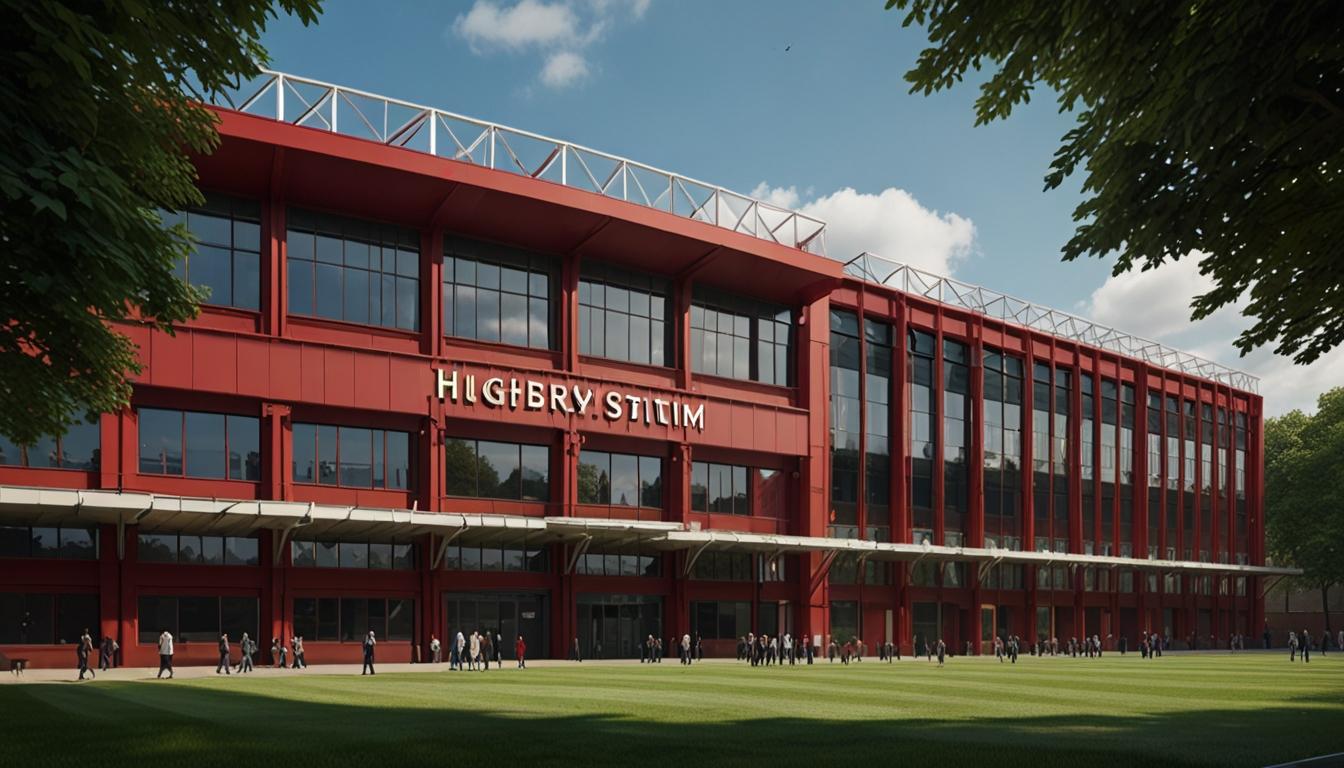
In recent years, technological advances have allowed for intriguing glimpses into 'what might have been', and a new project has taken to exploring the possibilities of iconic football stadiums in the UK with the use of artificial intelligence (AI). With a nod to history and the evolution of sporting infrastructure, this project speculatively envisions what some of the UK’s most famous football grounds could look like today had they undergone redevelopment instead of being demolished.
Among the stadiums re-envisioned is Arsenal's iconic Highbury. The Gunners departed from their historic home in 2006, moving into the modern Emirates Stadium. Highbury's East Stand is a Grade II listed building, creating limitations that contributed to the decision to construct a new stadium. Nowadays, Highbury has found new life as converted residential flats. AI's reimagining suggests that if Arsenal had retained Highbury, the stadium might have featured a fusion of its classic design with modern twists.
Similarly, Tottenham's redevelopment journey saw the replacement of White Hart Lane with a cutting-edge arena that opened in 2019. The new stadium, which doubles capacity and hosts concerts, replaced the historical ground where Spurs initially played. AI imagines a redevelopment scenario where the beloved White Hart Lane might have retained elements of its traditional aesthetic despite new modern features.
Manchester City's move from Maine Road to the Etihad Stadium in 2003 marks another chapter in this narrative. The old stadium site now hosts a housing estate and a school. Fans who wished for an enlargement of the original 35,000-capacity ground may find solace in AI’s depiction of a Cornwall-championed and revamped Maine Road, maintaining its iconic square shape and elevated Kippax Stand.
West Ham United embarked on a significant relocation from the Boleyn Ground to the London Stadium in 2016, a decision stemming from London’s Olympic legacy needs. However, the new venue has faced criticism for its multi-purpose design. AI’s retrospection paints the Boleyn with its original character intact, notably retaining the memorable Chicken Run Stand, imagining a scenario where the ground would have sported its old-school charm with modern enhancements.
Brentford's Griffin Park served as the club's home from 1904 until their move to the Gtech Community Stadium in 2020. The AI representation envisions an expanded Griffin Park, suggesting a larger venue that competes with the club's current stadium.
Lastly, England’s Old Wembley Stadium brought down its turnstiles for the last time in 2000. AI’s interpretation forecasts the replacement of the iconic twin towers with a more contemporary design, maintaining an indelible link to its heritage.
These AI-generated images, while purely speculative, offer fascinating insights into how history and modernity could collide in the realm of sports architecture. As more clubs face dilemmas between heritage and innovation, these images prompt reflection on how football grounds have evolved and what these spaces might have represented within the fabric of their communities had history unfolded differently.
Source: Noah Wire Services