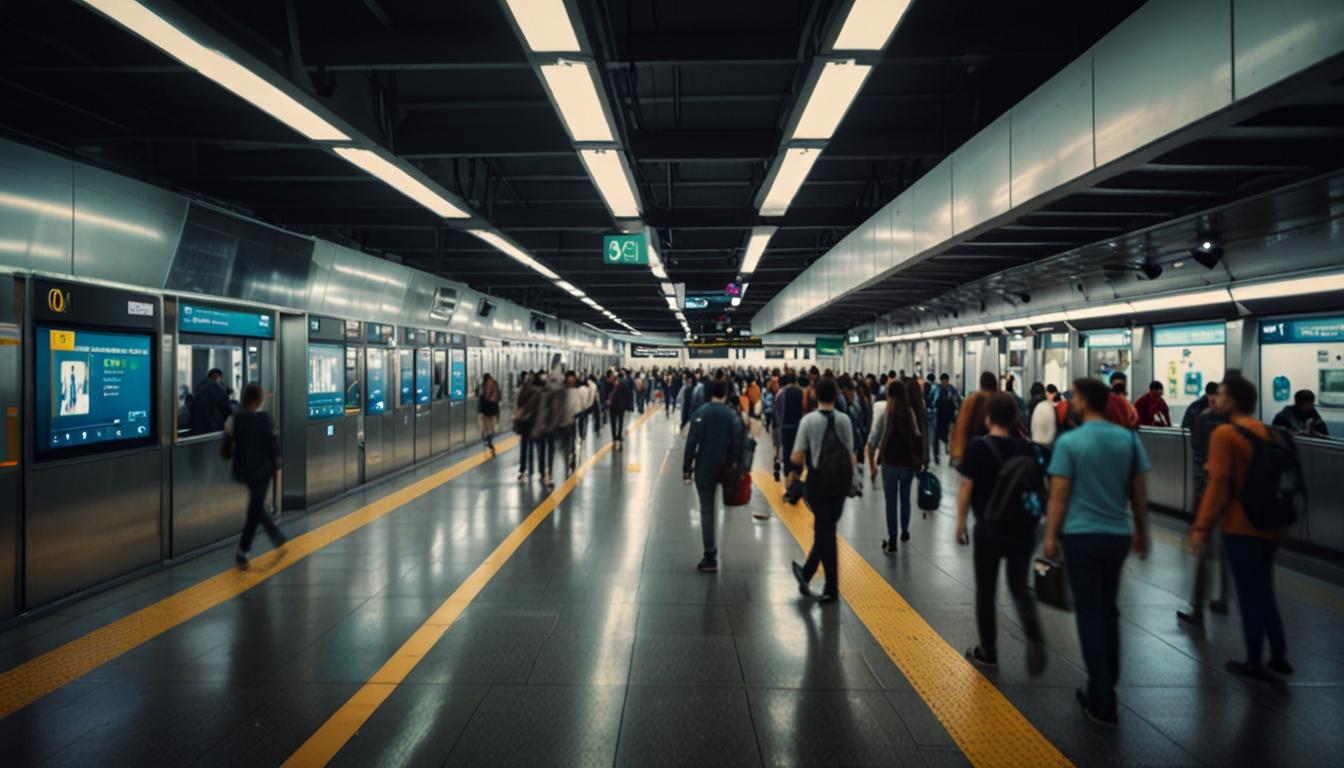
In recent years, mass transit systems around the world have been exploring innovative technologies to enhance their operational efficiency and improve the passenger experience. Transit agencies have increasingly turned to video surveillance systems enhanced with AI-enabled analytics, going beyond traditional security applications to address broader challenges within public transportation systems.
The use of AI in surveillance technology depicts a significant evolution in how transit operations are managed, particularly in response to mounting financial pressures post-COVID. Reduced commuter numbers due to the proliferation of remote work have led to substantial drops in fare revenue, pushing transit agencies to rethink their operational strategies. The integration of analytics into video surveillance is a promising attempt to provide multifaceted benefits that include improving safety, efficiency, and eventually, financial sustainability.
Unlike traditional views that position mass transit purely as a public service, today's systems are run as financially driven operations where passenger experience is as critical as safety. Surveillance cameras, traditionally viewed as security apparatus, are now being reimagined as multipurpose tools capable of yielding insights into traffic flows, passenger behaviours, and potential problem areas within transit systems. The overarching aim is to optimize operations by employing these technologies to enhance decision-making.
Airports offer an illustrative example of leveraging advanced surveillance and analytics systems to meet operational goals. They have integrated systems capable of monitoring restroom activity, baggage claim congestion, and queues at checkpoints. These technologies facilitate rapid response measures, such as dispatching additional personnel to ease congestion or adjusting staffing based on real-time data analysis. Furthermore, airports have deployed systems that notify travellers about current wait times at security checkpoints, enabling better journey management and improving the overall experience.
Mirroring such practices within broader mass transit networks could benefit public transportation avenues, such as subways or buses. Here, AI-enhanced surveillance could detect unusual behaviours, such as unauthorised access attempts or aggressive conduct, allowing for immediate intervention before situations escalate. Additionally, these technologies can observe passenger movement patterns, providing data to inform scheduling, improve service frequency during peak times, and redesign layouts to reduce congestion.
These analytics bring potential for vast improvements in passenger experience and operational efficiency. By identifying trends such as consistently overcrowded bus routes or high-traffic areas within train stations, transit authorities can make informed adjustments to enhance service delivery. Not only does this promise more pleasant and efficient commutes, but it also encourages increased ridership, thereby boosting revenue streams.
Furthermore, the potential for AI to monitor safety-critical aspects, such as detecting smoke or fire through sensors integrated with cameras, adds another layer of security, offering real-time alerts to emergency responders and ensuring swift actions to protect passengers and infrastructure.
The deployment of AI in these scenarios reflects a conscientious push by transit authorities to cater to the dual needs of operational fluidity and user satisfaction. As AI analytics continue to mature and become more sophisticated, transit agencies stand to benefit from a transformed service model that is both efficient and financially viable.
While these technologies are still emerging across many transit systems, the integration of AI and analytics in public transportation is poised to revolutionize the sector, ensuring a leaner, more adaptable response to both everyday operations and unexpected challenges.
Source: Noah Wire Services