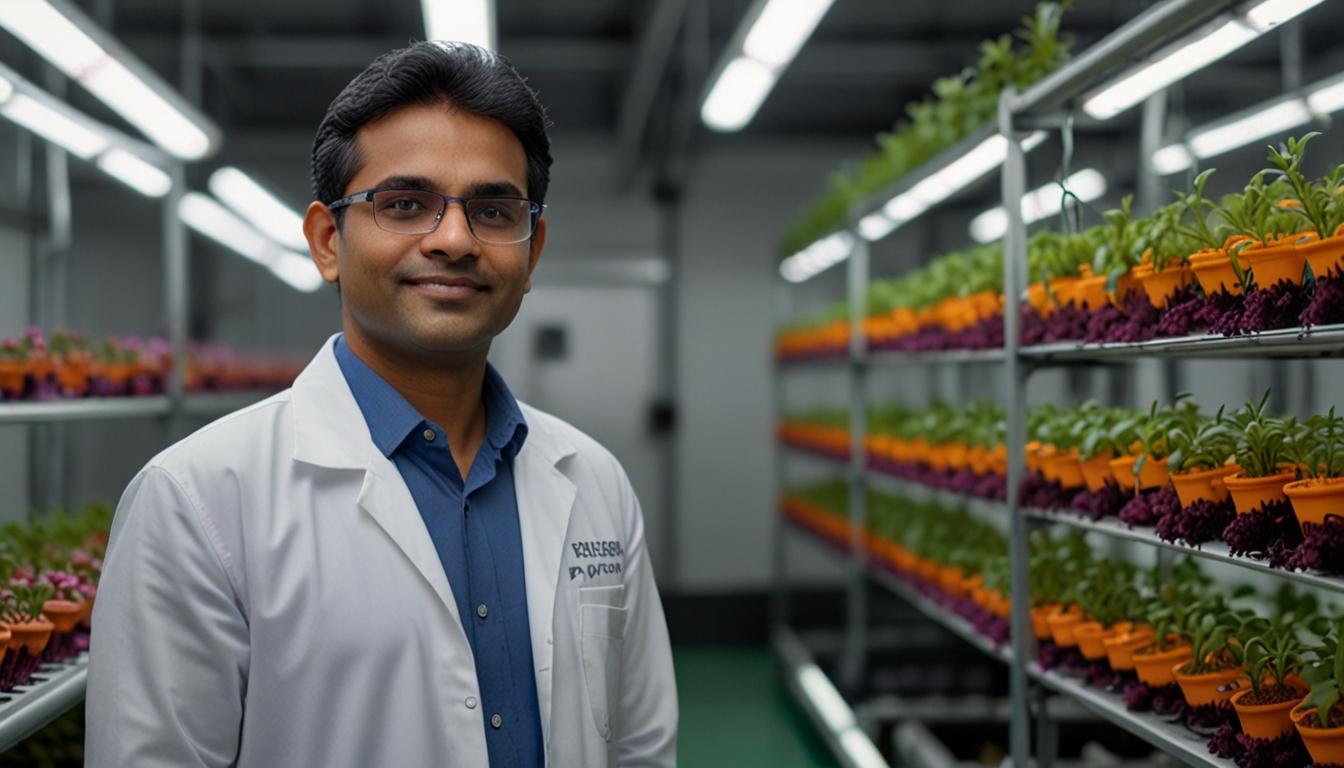
The agricultural industry, long challenged by issues such as climate unpredictability, soil degradation, and the burgeoning demand for food, is witnessing a transformative shift through technological innovations. Among the pioneers of this change is Vivek Raj, a trailblazer in the field of sustainable, high-efficiency farming techniques. Raj has become an influential figure in the use of hydroponic and aeroponic systems to cultivate high-value crops, such as saffron, herbs, and medicinal plants. His work underscores the transformative potential of technology in reshaping agriculture to meet the dual goals of food security and environmental sustainability.
Vivek Raj embarked on his venture in hydroponics in 2014, motivated by the desire to address the numerous challenges presented by conventional farming practices. Hydroponics involves growing plants in nutrient-rich water rather than soil, while aeroponics suspends plant roots in the air, misting them with nutrients. These systems allow for precise control over growth conditions, significantly lessening the impact of pests, diseases, and capricious weather. This controlled environment provides a dependable, sustainable method for year-round crop cultivation.
Raj’s efforts have particularly focused on saffron, a spice known for its rarity and high economic value, traditionally cultivated in regions like Kashmir and Iran. By meticulously replicating the environmental conditions preferred by saffron—such as cool temperatures and a specific range of humidity—Raj has successfully cultivated saffron hydroponically in Indiana, USA. His advanced AI-driven system meticulously regulates factors such as temperature, lighting, and nutrient supply, ensuring optimal plant care and minimising wastage. This pioneering initiative has yielded impressive outcomes, with profitability from trial runs noted to be up to 300% higher than those from traditional farming.
Growing saffron usually demands very specific environmental conditions, including a cooler climate and well-drained soil. By leveraging indoor growing facilities, Raj is able to consistently replicate these conditions independent of external weather fluctuations, thereby guaranteeing uniform yield and quality. The Indiana facility maintained a day temperature range from 15°C to 18°C and a night temperature as low as 4°C, closely mimicking the natural climate of Kashmir. Full-spectrum LED lighting parallels autumn sunlight, while AI systems offer precise nutrient mixes for optimal growth.
There are distinct advantages to this method: hydroponic saffron is cultivated in a sterile environment, free from common environmental pollutants and contaminants affecting field-grown crops. The absence of soil eliminates the need for harmful agrochemicals like pesticides or herbicides, resulting in a purer, more organic product. Raj’s hydroponically grown saffron has already reached an exclusive client base to positive acclaim. As the operation progresses, Raj plans to expand, aiming to meet the increasing global demand by 2026, targeting both domestic and international markets.
Additionally, Raj’s application of these indoor farming methods extends to other high-value crops, including spices and medicinal plants, all of which gain from the precision offered by hydroponic and aeroponic systems. In 2021, he filed a patent for a smart LED system which incorporates artificial intelligence and machine learning to dynamically adjust environmental conditions such as light and humidity, enhancing scalability and efficiency in indoor farming.
While Raj's saffron operation in Indiana has drawn international interest, he is initiating a similar venture in Karnataka, India. With this move, Raj seeks to replicate his success overseas and contribute to India’s agricultural innovation landscape. India, with its growing appetite for high-value crops and varied agricultural requirements, offers an opportune environment for Raj’s cutting-edge techniques to blossom.
This innovative approach addresses longstanding challenges in conventional agriculture and enables crop cultivation in regions with scarce land and water resources. Hydroponics and aeroponics consume significantly less water compared to traditional farming methods and negate the necessity for extensive tracts of arable land. As climate change continues to exert pressure on the agricultural sector, these techniques provide a viable pathway for adaptation, enabling farmers to meet new challenges while maintaining high levels of productivity.
Vivek Raj’s integration of hydroponic and AI-driven technologies is actively transforming the agricultural landscape, offering a sustainable and scalable solution for growing high-value crops like saffron. His endeavours illustrate how controlled-environment agriculture can overcome obstacles traditionally faced, such as land scarcity, water consumption, and climate variability. As the industry evolves, these innovative practices are expected to play a critical role in securing food supplies and fulfilling global demand for premium agricultural products.
Source: Noah Wire Services