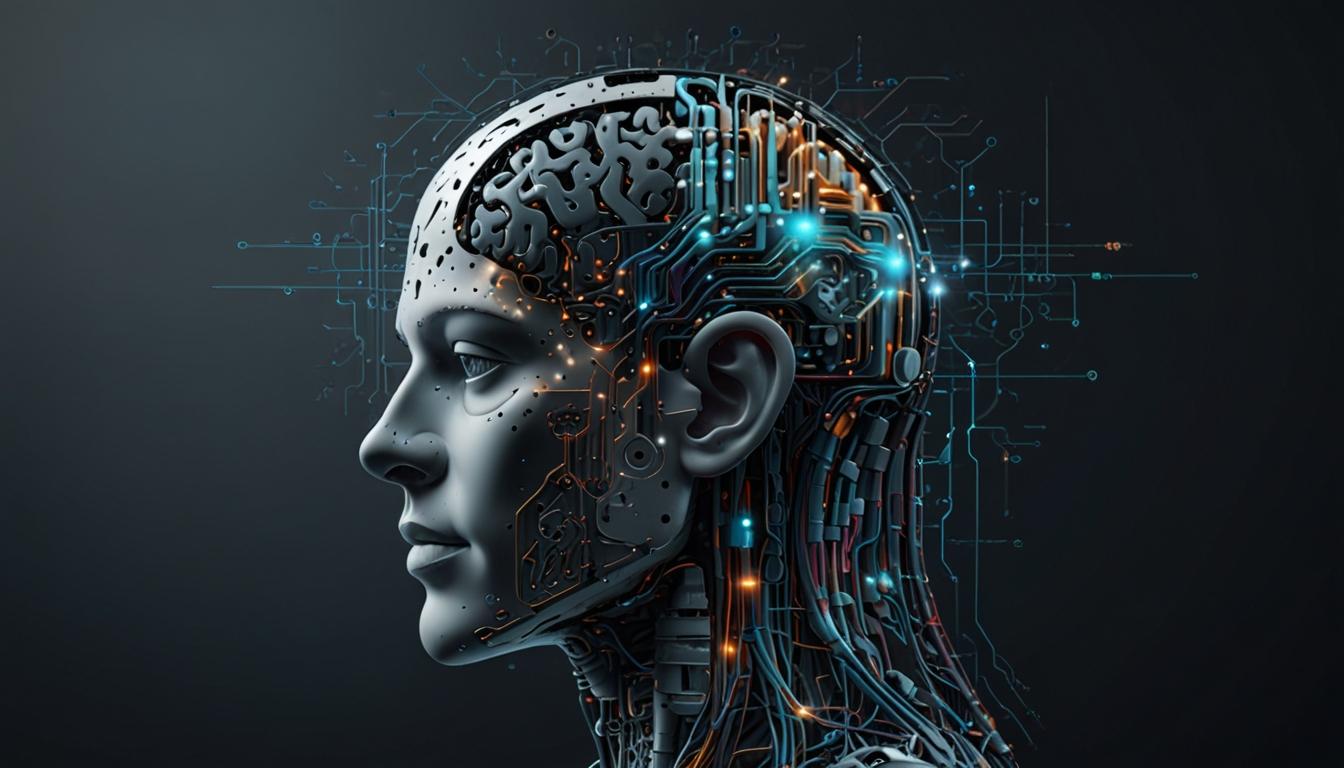
As the realm of artificial intelligence continues to evolve, key players in the tech industry are unveiling pivotal updates and developments, each promising to redefine the landscape. OpenAI, Microsoft, Google, and Meta are among the frontrunners, introducing innovative features that not only enhance AI capabilities but also provoke discussions on privacy, accuracy, and practical application.
OpenAI's latest development, "OpenAI o1" — colloquially known as "Strawberry" — signifies a shift in naming conventions and possibly an exploration of new machine learning structures. Unlike earlier versions of ChatGPT, which relied heavily on pre-trained models for generating responses, OpenAI o1 is designed to engage in a "chain of thought" process. This means that it can refine its reasoning the longer it works on a query, potentially enhancing the accuracy of its answers. In testing, this model has shown notable improvements in performance, for example, solving 83 percent of Math Olympiad problems, a significant leap from the 13 percent achieved by its predecessor, ChatGPT-4o.
In a separate development, Microsoft is advancing its Copilot+ line with an AI feature called "Recall", slated for release in November 2024. This feature is designed to periodically capture and store images of a user's computer screen, enabling users to later inquire about past activities. Originally paused due to privacy concerns, Recall will now be available on an opt-in basis. Questions remain about how the snapshots—potentially containing sensitive data—will be managed and what rights Microsoft reserves over the collected information, especially considering the company's history of gradually making optional features standard.
Google, on the other hand, has been integrating AI-generated responses into its search engine, aiming to provide clear, synthesised answers. However, this approach has met with criticism due to slow response times and inaccuracies, notably a suggestion involving glue in a pizza sauce recipe. Looking to advance this feature, Google is now incorporating brand-name recommendations within its AI's suggestions. This could signal an enhanced advertising strategy, although customer feedback suggests growing dissatisfaction with Google search results, perceived as prioritising advertisements over utility.
Meanwhile, Meta has entered the AI video creation space, unveiling a model capable of generating video clips accompanied by audio. One example featured a rock music theme paired with a dune buggy's engine sounds. While the technology is not yet available for public use, Meta intends to collaborate with entertainment companies to produce AI-generated films. Such ventures parallel those of Lionsgate and Runway, who are embarking on similar projects.
In an unforeseen intersection of natural disaster and technology, Tropical Storm Helene has impacted the semiconductor industry. The storm severely affected areas in North Carolina, particularly Spruce Pine, known for its high-quality quartz crystals essential for manufacturing computer chips used in AI systems. With excavation efforts halted due to damage assessments, concerns mount over potential disruptions in chip supply chains, echoing the crises witnessed during recent pandemic-related shortages.
This array of developments underscores a period of adaptation and exploration within the tech industry. By addressing vulnerabilities in current models and extending AI's application across diverse sectors, these initiatives are set to influence both the short-term and long-term trajectory of artificial intelligence. While these innovations promise considerable advancements, they also invite careful scrutiny concerning ethical considerations, privacy, and practical utility.
Source: Noah Wire Services