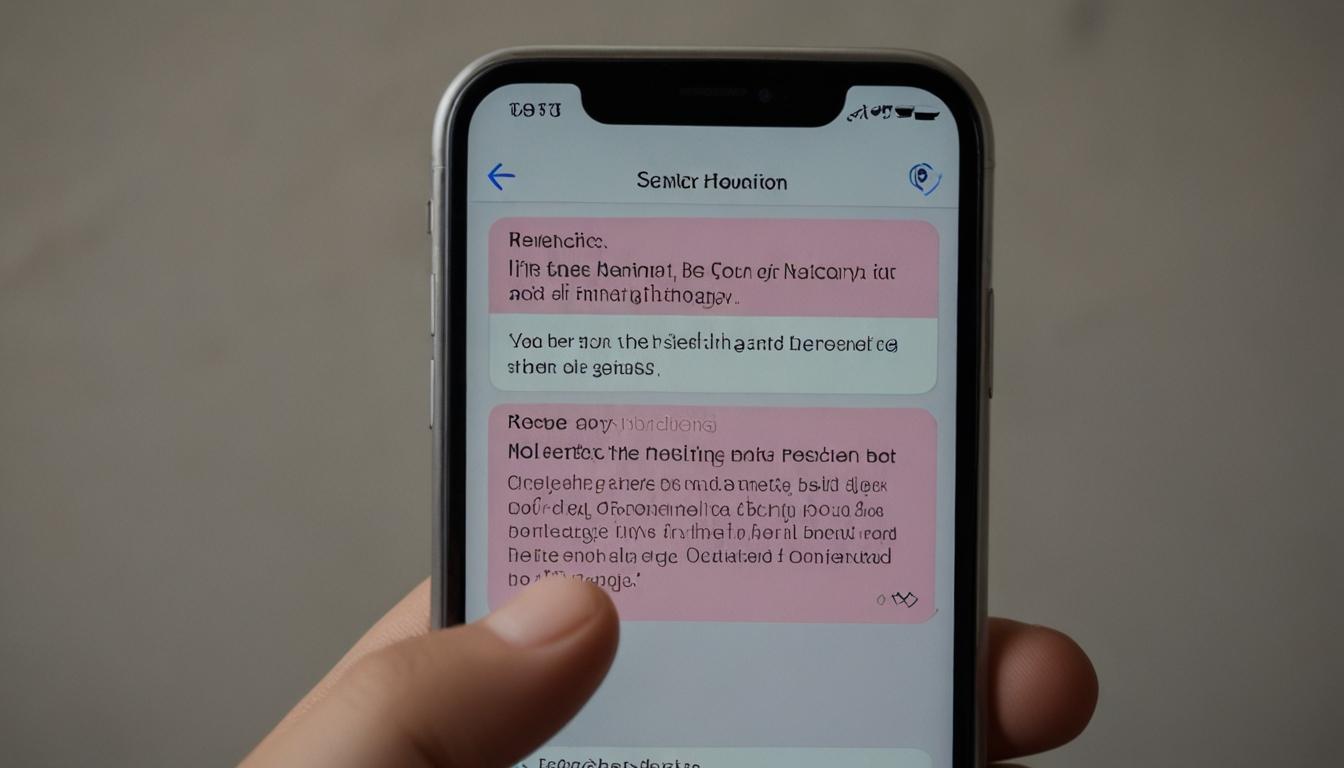
In a modern twist on the age-old tradition of relationship breakups, a software developer from New York, Nick Spreen, found out his romantic relationship had ended through an unexpected channel. Testing a beta version of Apple's forthcoming AI-powered feature, Apple Intelligence, on his iPhone, Spreen was greeted on his birthday with a succinct, AI-generated summary of his girlfriend’s texts, which was delivered before he even had a chance to read them in full. The AI summary clinically stated, "No longer in a relationship; wants belongings from the apartment."
Spreen, who runs his own tech firm, decided to share this peculiar experience with the world by posting a screenshot of the AI-generated synopsis on X (formerly Twitter). The post quickly went viral, amassing millions of views as users expressed both amusement and concern over the implications of AI in such personal matters. Spreen confirmed the authenticity of the message, adding that the AI system's intervention occurred following an argument with his girlfriend that culminated at a bar, leading to the cold epithet delivered straight from his device.
The Apple Intelligence feature — slated for release alongside iOS 18.1 later this month — functions as a simplified version of conversational AI like ChatGPT, parsing incoming messages to generate brief overviews of their contents. While this might prove advantageous for summarising lengthy communications, Spreen's experience serves as an early indication of how disruptive AI can be when processing intimate, human emotions.
Reflecting on the incident, Spreen described the experience as "unreal and dystopian", likening the AI's intervention to having a professional assistant deliver unfortunate news. While this detached delivery might have softened the emotional blow, it raises questions about the evolving mechanisms of communication and the roles AI might play moving forward.
The incident has sparked a broader conversation on social media regarding the nature of AI summaries and their potential effects on interpersonal communication. As artificial intelligence increasingly integrates into daily life, its proficiency — and inadvertent bluntness — in summarising complex human emotions has become a topic of interest. Spreen’s anecdote highlights the potential for misinterpretation and emotional disconnect that such technologies can inadvertently introduce.
As Apple gears up to deploy this feature, along with enhancements to Siri, grammar and spelling checks, and new capabilities like generating images and emojis on newer iPhone models, questions about the reliability and sensitivity of AI-built communication tools are more pertinent than ever. Previous iterations of similar technology, such as Google's Gemini AI, have faced scrutiny and ridicule for occasionally producing erroneous or awkward summaries, highlighting the challenges facing developers aiming to refine AI's grasp on human nuance.
While some see texting — and by extension, AI summaries of texts — as a practical, even preferable way to deliver unfortunate news, scepticism remains. Experts like relationship coach James Preece warn that the absence of emotional nuance in these communications could make sensitive messages blunter and open to misinterpretation, potentially exacerbating misunderstandings.
In this light, Nick Spreen's experience emerges as a vivid example of the drawbacks and promises of AI-mediated communication, capturing both the curiosity and the caution society has towards increasing AI involvement in personal spheres. As AI technologies continue to advance and permeate daily interactions, the balance between efficiency and empathy in AI communications will likely remain a significant point of discussion.
Source: Noah Wire Services