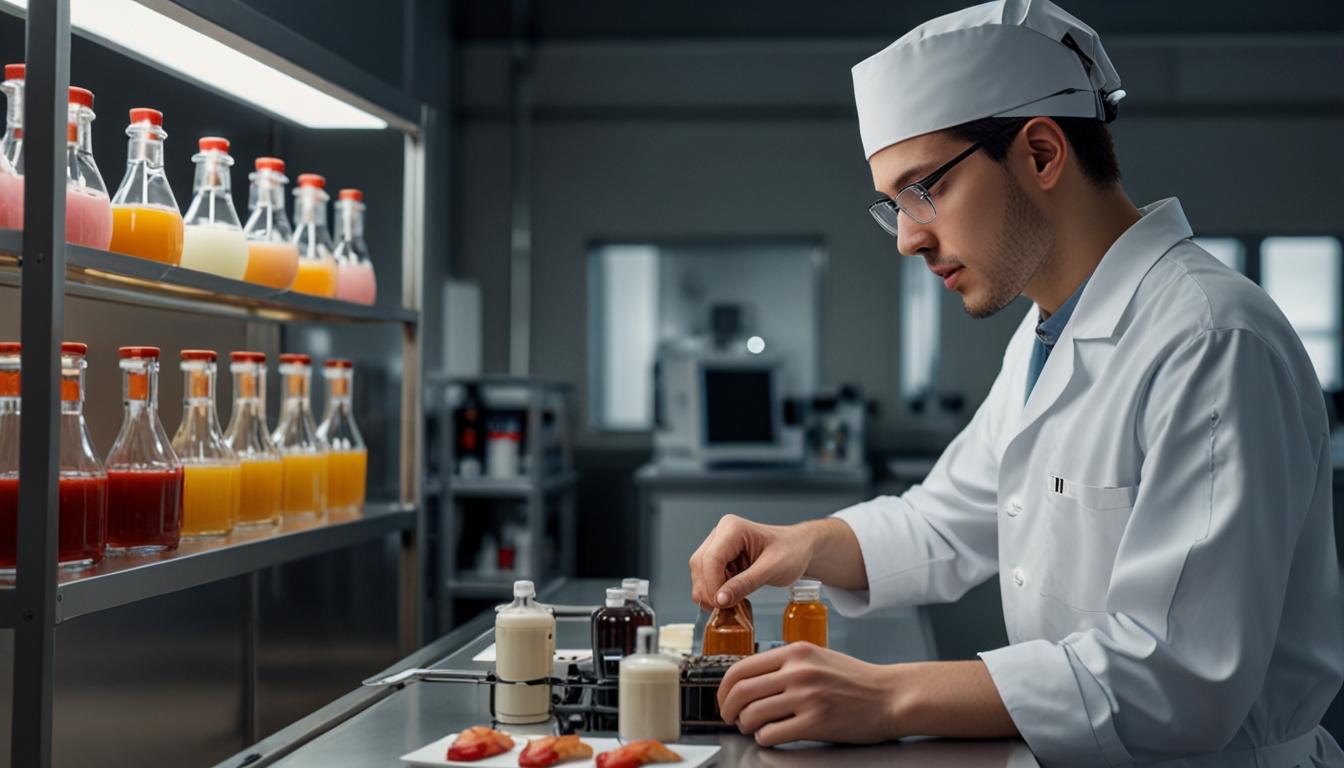
Title: Revolutionary AI-Driven Robotic Taster Could Transform Food and Health Sectors
Researchers at Penn State University have made a significant breakthrough in the culinary and scientific fields with the development of a robotic taster. This innovative system combines artificial intelligence (AI) with an electronic tongue to discern minute and complex flavour differences in various consumable products.
The robotic taster project, spearheaded by a team of scientists at Penn State, seeks to enhance the precision of flavour detection far beyond the traditional human palate and existing measurement technologies. The electronic tongue, which harnesses advanced sensors known as ISFET (graphene-based ion-sensitive field-effect transistors), allows for the simultaneous measurement of various complex chemicals. This cutting-edge technology moves past the capabilities of standard electronic measuring devices, such as those that only gauge acidity and temperature.
A detailed paper published by the research team explains how the AI, acting as a neural network 'brain', processes data from these sensors. The electronic tongue was trained to detect the water content in milk, identify the blend of beans in coffee, and spot subtle signs of spoilage in fruit juices—tasks that often elude even the most refined human senses.
The initial data from the AI taster demonstrated an impressive ability to correctly identify different soda types and assess juice freshness with over 80% accuracy. Notably, its success rate surged to 95% once the AI system was permitted to develop its analytical methods, minimising the number of incorrect assessments.
The applications of this advanced technology are manifold. Within the realm of food testing, its ability to measure purity and freshness could revolutionise quality control standards. Beyond culinary uses, the potential extends into industrial and medical fields. Given that taste is fundamentally about identifying chemicals, the AI taster could theoretically detect industrial chemical variations or identify biomarkers indicative of health issues, paving the way for innovations in medical diagnostics.
While these potential applications are still under exploration, the notion of an AI-enabled electronic tongue suggests a promising future for both food quality assurance and healthcare diagnostics. This breakthrough exemplifies how AI technology continues to redefine the boundaries of human capability in various domains, working towards solutions that improve the accuracy and efficiency of everyday tasks and complex industrial processes.
Source: Noah Wire Services