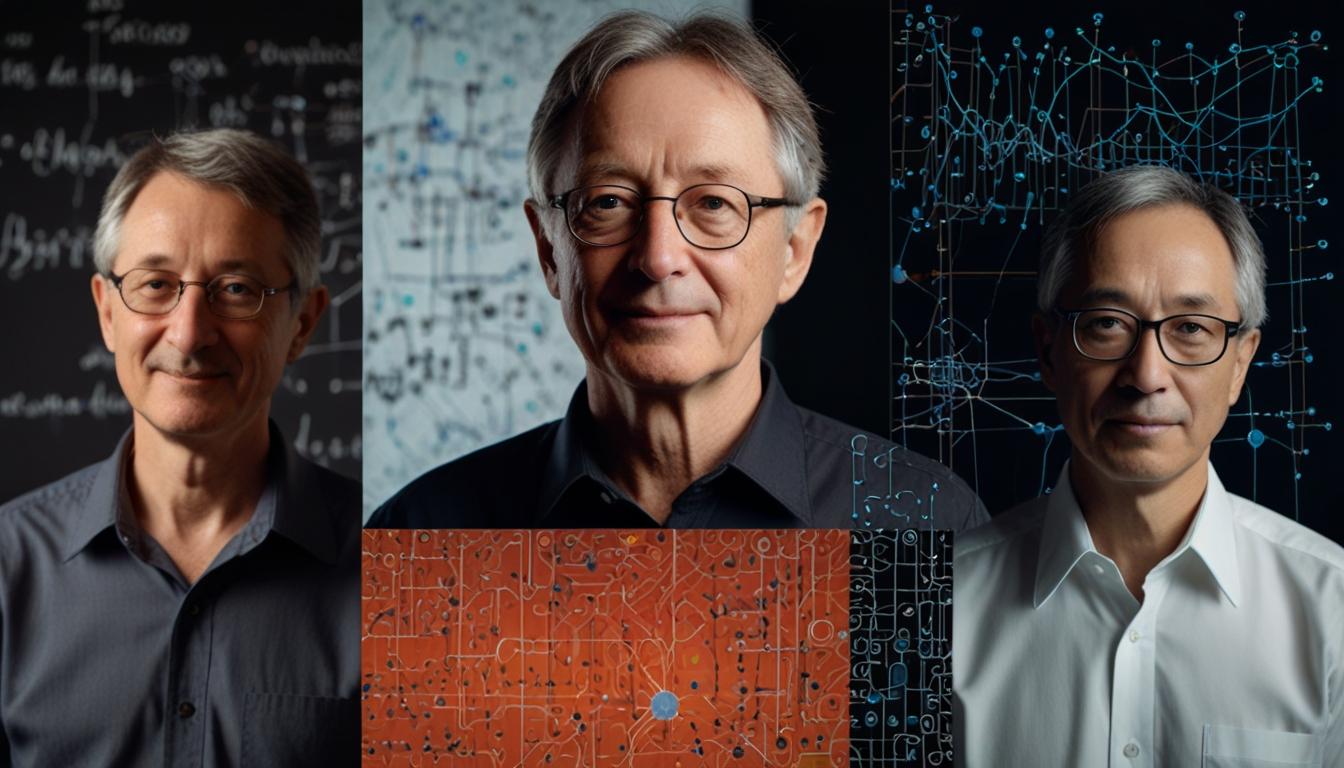
The recent awarding of the Nobel Prize to Geoffrey Hinton for his significant contributions to the field of artificial intelligence has ignited a contentious debate regarding how innovations and their pioneers are recognised. Hinton, credited for his pioneering work in artificial intelligence, particularly concerning his popularisation of backpropagation, has become the face of this award. However, this recognition has not been without its critics, notably AI expert Jürgen Schmidhuber, who points out that the award overlooks the fundamental work of earlier pioneers such as Paul Werbos and Shun-ichi Amari.
Paul Werbos's 1974 doctoral thesis and Shun-ichi Amari's adaptive learning model from 1972 were pivotal in establishing the foundational theories that modern neural networks are built upon. Despite their significant contributions, these figures remain less celebrated compared to those, like Hinton, who have developed and popularised the technology. This trend of overlooking early contributors in favour of their successors reflects a broader issue within the realm of innovation.
This phenomenon isn't exclusive to the field of artificial intelligence. The history of technology reveals numerous instances where credit is disproportionately awarded to those who build upon existing ideas rather than those who initially develop them. Take, for instance, Steve Jobs, who, despite not inventing the smartphone, is often credited with revolutionising personal technology through the development of the iPhone. Similarly, while Elon Musk is popularly associated with bringing electric vehicles to prominence through Tesla, the concept itself has been in existence for over a century. Both Jobs and Musk are examples of individuals who have excelled not by creating something entirely new, but by refining existing technologies to make them more accessible and appealing to the masses.
The notion of the 'lone genius' — figures who are often perceived as having single-handedly propelled technological advancements — dominates public discourse. This narrative, however, largely disregards the cumulative and collaborative nature of innovation. In places like Silicon Valley, technological giants such as Facebook and Google have thrived by enhancing and scaling existing ideas rather than inventing new ones outright. Facebook capitalised on the social networking groundwork laid by predecessors like MySpace and Friendster, while Google improved upon the search engine technology that was already in place.
In the context of artificial intelligence, Hinton's work is crucial, yet it is built upon layers of previous research. The breakthroughs seen in technologies like AlphaGo and OpenAI’s GPT are the result of decades of continuous and collective development. The individual achievement narrative tends to overshadow the collaborative and multi-layered essence of technological progress.
Recognising innovation, therefore, involves appreciating both the originators of ideas and those who later refine, expand, and implement these ideas effectively. The foundational efforts of Werbos and Amari were instrumental in facilitating the strides made by Hinton and others in artificial intelligence. By focusing solely on the most visible contributors, the contributions of those who laid the groundwork for these advancements can be unjustly relegated to the background.
Looking ahead, the most significant technological advancements, particularly in artificial intelligence, are likely to stem from those who can enhance existing concepts rather than those who create new ones from scratch. The narrative and recognition around innovation should encompass the entire spectrum of contributors, acknowledging both the inventors and those who bring their ideas to fruition on a larger scale. Only through this inclusive recognition can the true nature of progress be fully appreciated.
Source: Noah Wire Services