The Role of AI in Modern Electoral Redistricting: Balancing Fairness and Bias
As election season unfolds, the integration of artificial intelligence (AI) in the realm of political campaigning and elections has become increasingly relevant. This year's election landscape is being shaped not just by traditional political strategies but also by advanced AI technologies that personalise and tailor social media news feeds, potentially reinforcing confirmation biases and proliferating misinformation. However, AI also offers promising solutions to longstanding issues in electoral processes, particularly in the realm of redistricting.
Redistricting, the process of redefining electoral boundaries, is a recurring and contentious aspect of the political landscape, occurring every decade. Historically, this process has been fraught with bias and political manipulation. The term "gerrymandering," coined in 1812, refers to the strategic shaping of electoral districts to favour a particular political party. By carving out districts to concentrate or dilute the influence of certain voter groups, political entities can sway election outcomes significantly.
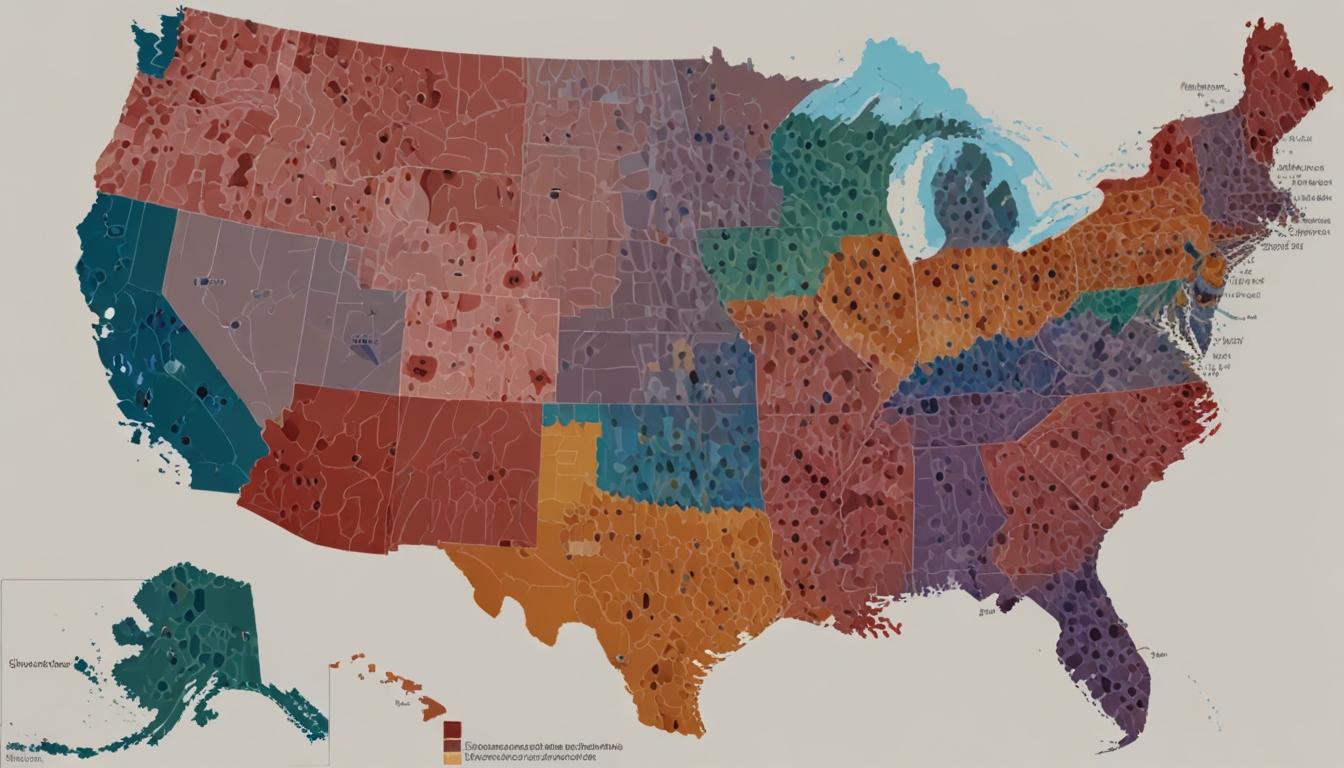
Today, as gerrymandering remains a prevalent concern, AI emerges as a potential tool to combat this manipulation. AI can be leveraged to create maps for redistricting that are more objective and fair. These AI-generated maps could be based on social, economic, and demographic data to assign locations within a state to appropriate electoral districts. The guidelines for these maps would adhere to established criteria, such as contiguity, geographical compactness, and representation of communities with similar political, economic, and social interests.
The challenge lies in determining the characteristics that should guide the delineation of electoral districts. Opinions vary widely on which aspects, such as income, education, or race, are most crucial. Nevertheless, the incorporation of AI in this process could shift focus from specific boundary lines to broader rule-making discussions, fostering a bipartisan dialogue about fair representation.
Geographic information systems (GIS), a digital mapping technology, already play a key role in elections and redistricting, collecting vast data on demographics and geographies. AI, supported by GIS data, could systematically incorporate multiple considerations and address competing priorities in the redistricting process. This integration of AI could potentially create an electoral mapping system grounded in fairness, rather than political interests.
However, it is crucial to acknowledge that AI, like any tool, is not free from bias. The quality and fairness of AI-generated maps are heavily contingent upon the data and rules used in their creation, primarily sourced from the Census. The developers of these AI systems must represent diverse perspectives to mitigate the risks of bias.
Trisalyn Nelson, Chair of Geography at the University of California, Santa Barbara, and public voices fellow, underscores the importance of broad participation in the creation and application of AI rules. She suggests that focusing discussions on the principles guiding electoral boundaries, rather than specific district lines, could lead to more equitable outcomes.
While AI has demonstrated potential to disrupt democratic processes negatively, as seen in instances of misinformation spread, it also holds the capability to enhance democracy by ensuring more equitable electoral practices. With careful consideration of data integrity and inclusivity in development, AI could play a pivotal role in redefining electoral fairness in modern democracies.
Source: Noah Wire Services