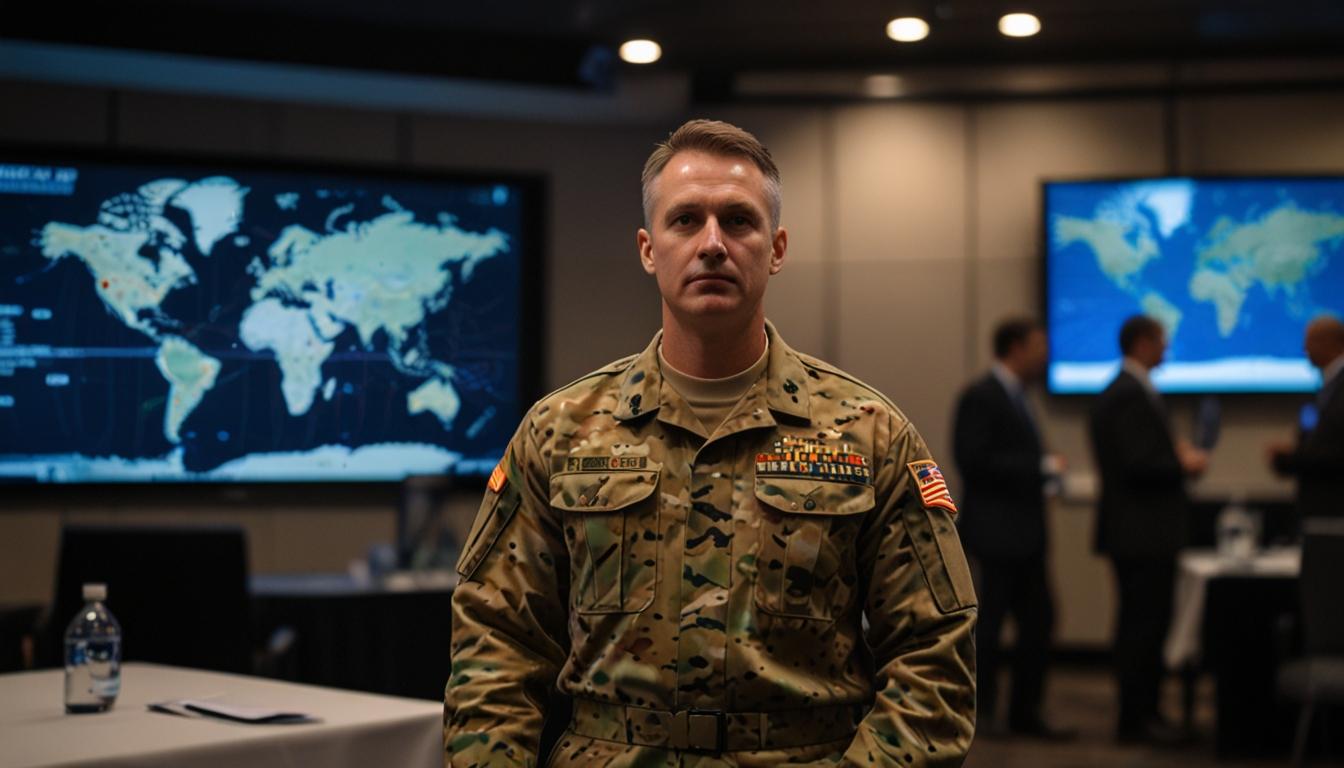
WASHINGTON — In an effort to expedite the development and deployment of artificial intelligence (AI) technologies, Army acquisition officials are collaborating with their counterparts in the Office of the Secretary of Defense (OSD). The initiative aims to address the unique and rapid evolution of AI programs, which currently outpaces the standard procedures defined under the existing Software Acquisition Pathway (SWP). These discussions were highlighted during the annual Professional Services Council conference on defence, held in Washington.
Young Bang, who serves as the principal civilian deputy to Army acquisition chief Doug Bush, articulated the challenges and opportunities presented by AI development. He emphasized that AI algorithms can be updated and retrained in exceptionally short timeframes, sometimes overnight, which is significantly faster than what the SWP typically accommodates. The SWP, established in 2020, was designed to incorporate best industry practices to speed up software development, marking a shift since its proposal in 2019 by then-Under Secretary for Acquisition, Ellen Lord.
“There is great utility in the Software Pathway,” Bang noted at the conference, highlighting its original aim to deliver a Minimum Viable Capability Release (MVCR) within a year. “But we’re endeavouring to get capabilities out faster.” To achieve this, he suggested the possibility of creating a specialised sub-pathway within SWP specifically for AI to further compress these timelines.
Deborah Rosenblum, acting deputy to the Department of Defense (DoD) acquisition chief Bill LaPlante, acknowledged the ongoing discussions about potential modifications or enhancements to current processes. While not inclined towards establishing an entirely new pathway, Rosenblum suggested that modifications could indeed be accommodated within the existing SWP framework, which she described as sufficiently flexible and agile.
Contributing to the dialogue, John Tenaglia, a senior adviser and contracting expert, mentioned the inherent flexibility of the current procurement system, allowing for potential combinations and adaptations of existing pathways. This adaptability could, for instance, allow SWP to be combined with other procurement methods, thereby aligning different contract types to suit specific project needs.
Illustrating the Army's approach to blending different acquisition strategies, Bang referenced the XM-30 programme. This initiative aims to replace the outdated M2 Bradley troop carrier and utilises both the SWP for software elements and a Mid-Tier Acquisition (MTA) strategy for the hardware component. Such a hybrid model permits software updates to advance independently from the longer, more traditional development schedules associated with physical vehicles. This dual approach is also being applied to the ambitious Robotic Combat Vehicle programme.
In what became a call for innovation within bureaucratic confines, Bang expressed a commitment to challenging existing norms: “I’m about disrupting the status quo,” he proclaimed. Encouraging creativity and synergy across different acquisition strategies, he urged cooperation with the OSD to streamline processes for faster AI deployment.
The ongoing discussions underscore the urgency and importance the U.S. Army places on swiftly adapting to new technological advancements, particularly in the field of AI, to maintain its competitive edge in defence capabilities.
Source: Noah Wire Services