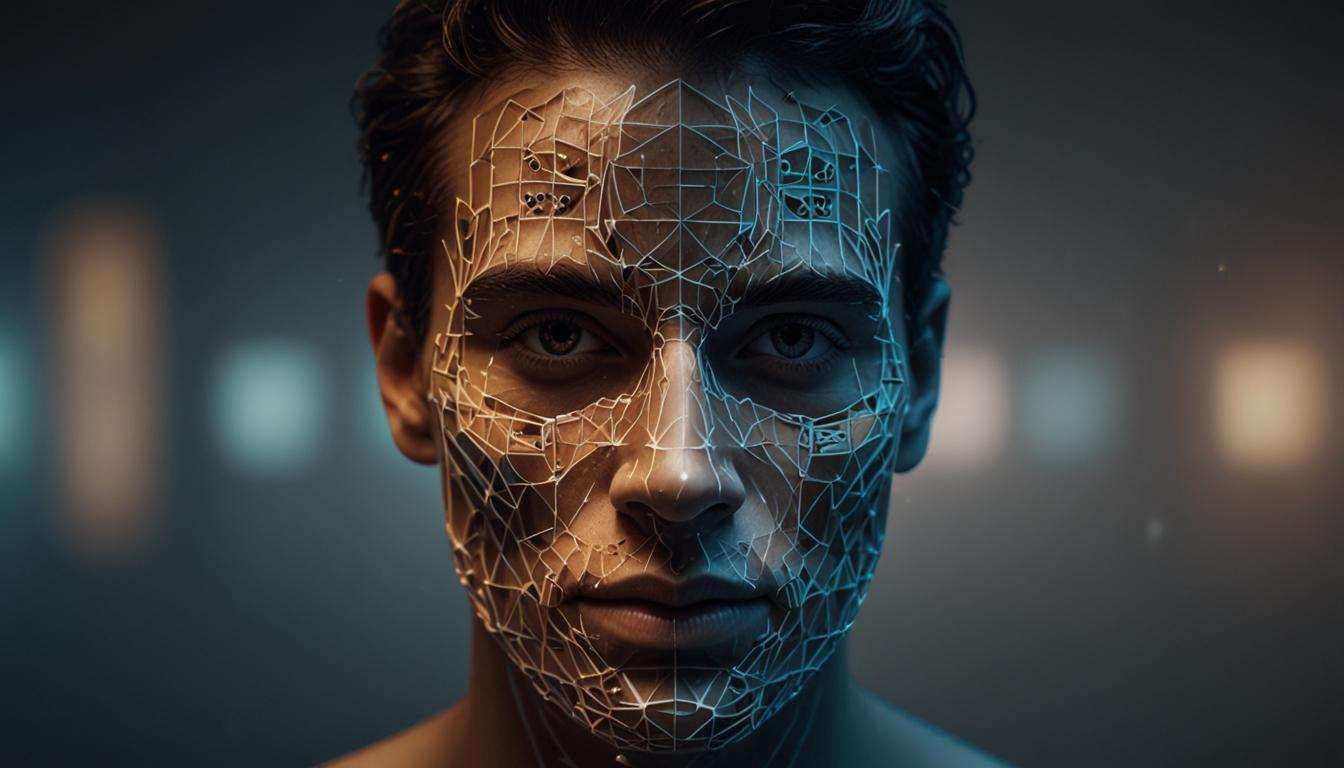
Understanding Deepfake Technology: A Double-Edged Sword of AI
In recent years, deepfake technology has rapidly advanced, becoming a significant topic of discussion. Deepfakes are a form of synthetic media that employs artificial intelligence to replace or superimpose someone’s likeness onto images or videos, creating highly realistic and seamless imitations. Leveraging sophisticated AI algorithms and deep learning, this technology can mimic intricate details such as facial expressions and vocal intonations, making it challenging for the average observer to discern between authentic and altered media.
The Mechanics Behind Deepfakes
The term "deepfake" combines "deep learning," a subset of AI, and "fake." At its core, deepfake technology involves complex neural networks, particularly Generative Adversarial Networks (GANs), which pit two AI systems against each other to generate increasingly realistic images and videos. The creation process is intricate, starting with the collection of high-quality data that includes images, videos, and audio of the target individual. This data undergoes preprocessing to align and normalize it, ensuring consistency in the input.
Autoencoders and GANs play a crucial role during the training phase, enabling the transformation of one person's face into another’s in every frame of a video. Voice synthesis tools are employed to clone the target's voice, adding further authenticity to the illusion. Post-production refinements enhance realism, with quality assurance checks performed to ensure the end product closely mirrors genuine footage.
Positive Applications
Despite the controversies surrounding deepfakes, the technology offers several beneficial applications. In entertainment, it enhances visual effects in films and television, allowing for seamless integration of actors' faces onto doubles or creating digital avatars of historical characters. In education, deepfakes can bring historical or fictional characters to life, enriching learning experiences. The healthcare sector benefits from deepfakes through improved medical imaging and simulations, facilitating better training and patient-doctor interactions.
Challenges and Risks
However, the misuse of deepfakes poses significant risks, particularly in the political arena, where altered videos can spread misinformation, manipulate public opinion, and potentially influence elections. Deepfakes can also cause financial havoc by impersonating executives to manipulate markets or commit fraud. The capability to easily produce deceptive media raises concerns about privacy invasion and the erosion of trust in digital content.
The challenges extend to cybersecurity, as deepfakes can facilitate sophisticated phishing attacks and disrupt national security by spreading false information. Such developments underscore the pressing need for effective detection tools and regulatory frameworks to mitigate associated risks.
Legal and Regulatory Context
Globally, governments are working to regulate the implications of deepfake technology. The European Union is advancing legislation requiring transparency and traceability in AI systems. In the United States, various states have enacted laws against non-consensual use of deepfakes in pornography and political interference.
China's regulatory framework seeks a balance between controlling AI's rapid advancement and supporting innovation, reflecting broader international efforts to ensure public welfare and national security are not compromised.
Detecting Deepfakes
To combat the potential threats posed by deepfakes, several detection tools and techniques have been developed. Advanced software, such as Deepware Scanner and Sentinel, employs machine learning to identify digital manipulations. Users can also observe for tell-tale discrepancies in facial expressions, movements, and audio-visual synchronisation that might reveal AI-generated tampering.
Conclusion
As the line between reality and AI-generated content blurs, understanding deepfakes becomes crucial. While the technology offers remarkable possibilities for creativity and innovation, its potential misuse necessitates vigilance and effective regulatory measures. The evolving landscape of deepfakes calls for a balance between leveraging its positive potentials while safeguarding against its potential threats. As such, continuous education and technological development will be essential in navigating this complex domain.
Source: Noah Wire Services