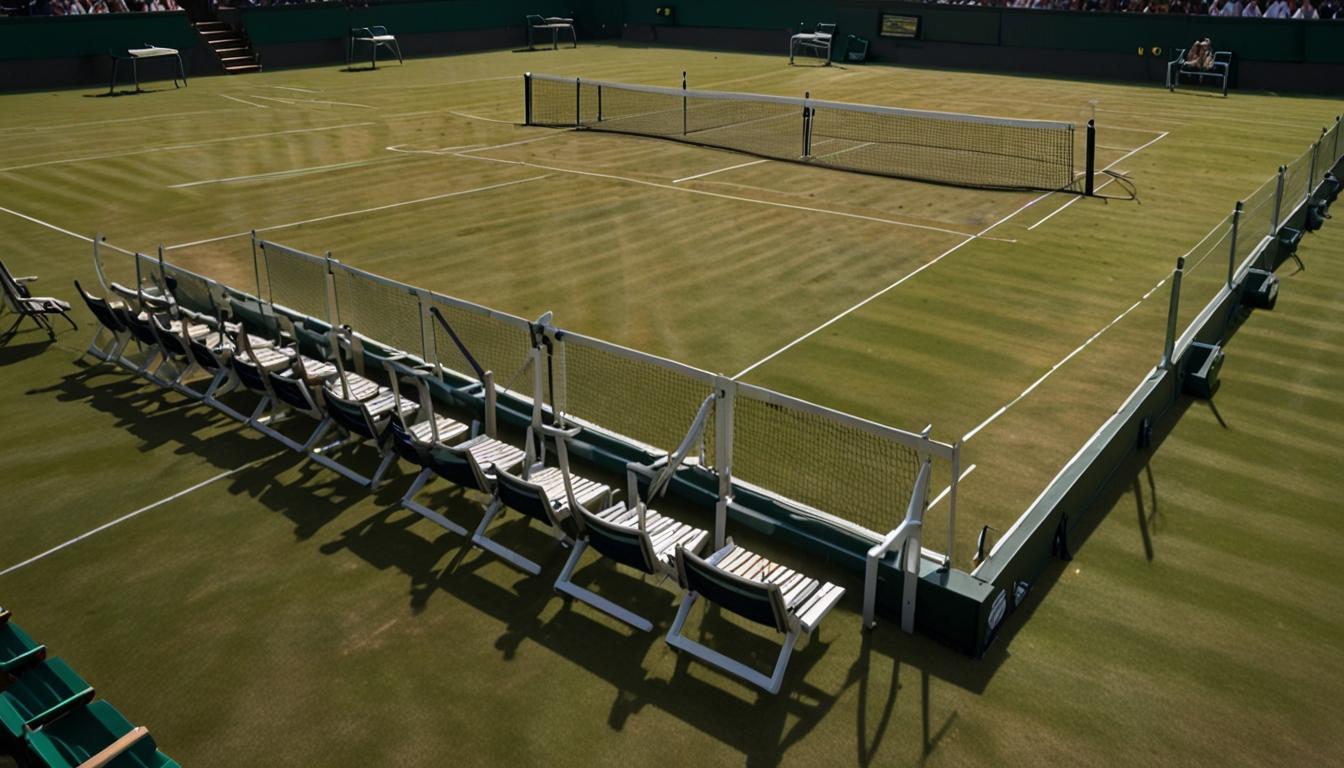
Wimbledon, one of tennis's most iconic Grand Slam tournaments, is set to implement a pivotal change by removing line judges from its courts starting from the 2025 Championships. This historic event, taking place at the All England Club in London, will replace the traditional use of human line calling with an Electronic Line Calling (ELC) system, primarily to enhance accuracy in officiating.
The decision, announced on Wednesday, marks a significant departure from a century and a half of tradition. Since 1877, line judges have been a staple presence on the courts of Wimbledon, known for their precision in calling "out" or "fault" during matches. However, after successful testing of the ELC technology during the 2024 Championships, the club decided the technology was ready for full implementation.
Sally Bolton, the chief executive of the All England Club, explained the motivations behind the decision, stating, "Having reviewed the results of the testing undertaken at The Championships this year, we consider the technology to be sufficiently robust and the time is right to take this important step in seeking maximum accuracy in our officiating." She emphasised that this move aligns Wimbledon with the standards of other major tournaments where players already compete under similar conditions.
Wimbledon’s adoption of the ELC follows in the footsteps of the Australian Open, which became the first Grand Slam to fully implement the technology in 2021. The US Open followed suit in 2022, while the French Open remains the last holdout among the major championships still relying entirely on human line judges. ATP Tour events are also set to incorporate the technology from 2025, making it a standard across professional tennis.
The transition to ELC at Wimbledon will involve the use of several cameras to track the ball's flight, providing immediate and precise line calls. Automated voice calls will replace the existing review system, with decisions made within a tenth of a second. Despite this technological shift, certain aspects of traditional officiating will remain; chair umpires will continue to oversee matches and ensure the game's smooth running.
However, the change has raised concerns about the future of current line judges, with over 300 employed each year to cover more than 650 matches over the two-week-long tournament. Chair umpire Richard Ings, a former ATP officiating head, described the move as a "sad but inevitable day," highlighting the human element potentially lost to technology.
The decision, though welcomed by some for adding precision and consistency to line calls, has sparked debate over its impact on tradition and the opportunities for officials to participate in high-profile roles at Wimbledon. The presence of line judges, who have ranged in age from 18 to 80 and are often UK-based part-time workers, has been a quintessential aspect of the Wimbledon experience.
The transition to ELC also underscores larger trends in tennis, where advancements in technology continually redefine the way the game is officiated. As tennis officials and organisations, such as the Lawn Tennis Association and the Association of British Tennis Officials, work on strategies to adapt to these changes, the move symbolises both a loss and a gain in the evolving landscape of professional tennis. Despite this shift, Wimbledon remains committed to balancing innovation with its rich history, ensuring that while the tools of the game may change, its spirit endures.
Source: Noah Wire Services