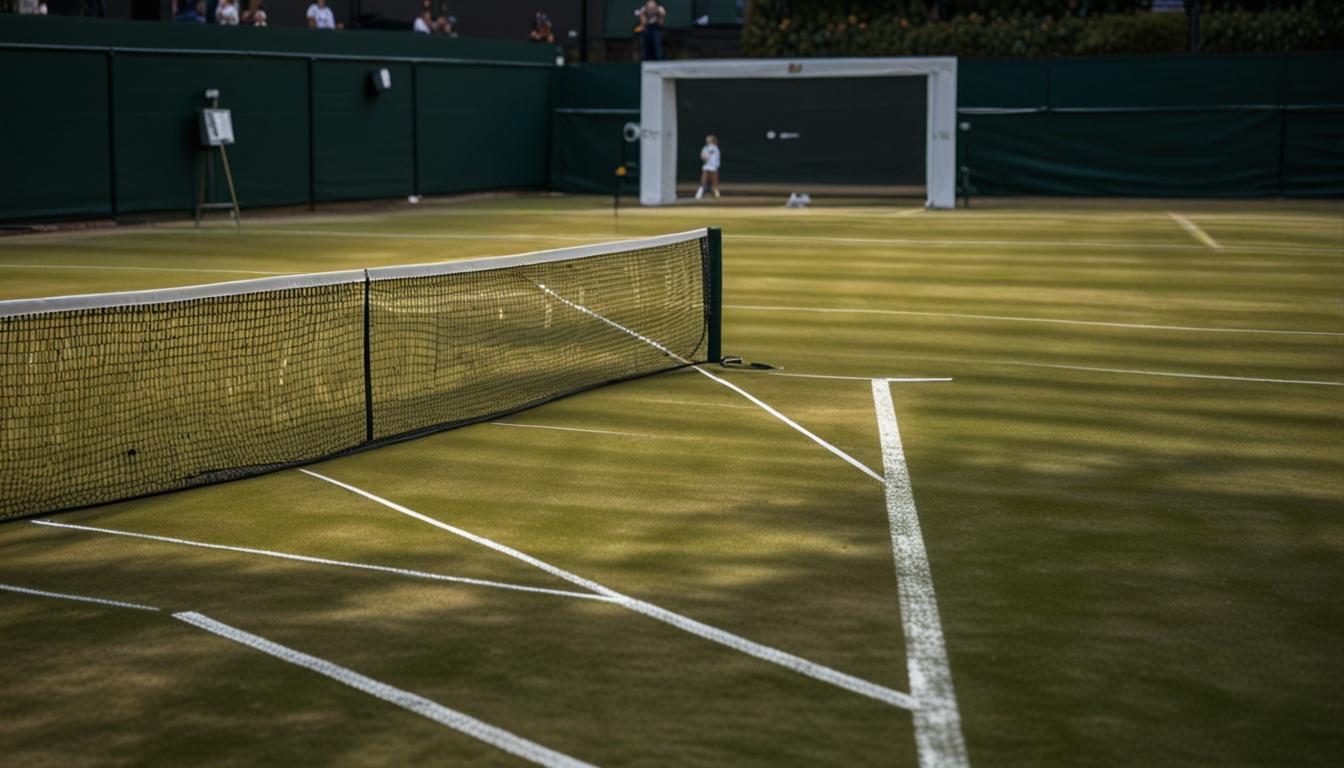
In a groundbreaking move, the Wimbledon Championships, one of tennis's most venerable tournaments, announced the complete integration of an automated electronic line calling (ELC) system for its 2025 season. This decision marks a significant departure from the tradition of having human line judges on court, a first in the event's illustrious 147-year history. The deployment of AI technology reflects a broader push towards precision and fairness in sports officiating, a shift that echoes through various sporting disciplines worldwide.
The All England Club, the organiser of the Wimbledon Championships, has long embraced innovation, albeit with caution, given the tournament's deep-rooted traditionalism. The introduction of the Hawk-Eye challenge system in 2007 marked Wimbledon's initial step towards technological advancement, allowing players to contest line calls through computerised ball-tracking. This system facilitated quicker decisions and reduced the potential for human error, paving the way for further innovations.
Similar to Wimbledon's latest move, the US Open implemented the Hawk-Eye Live system across most of its courts in 2020 as an adjustment to the constraints imposed by the COVID-19 pandemic. This system drastically reduced human error, eliminating contentious calls, a feature highly appreciated by players and fans. With the Australian Open also following suit by 2021, Wimbledon had been lagging behind its counterparts in fully embracing AI for line judging until the recent announcement.
At the heart of this technological evolution in tennis lies the Hawk-Eye system, renowned for its ability to track and predict the ball's trajectory using multiple cameras. Though it initially served as a backup to human oversight, the system's proven precision has led it to become the main arbiter in match officiating at several major tournaments. The AI technology reportedly made only 14 errors out of 225,000 calls during the 2020 US Open, a testament to its accuracy and reliability.
The transition to ELC at Wimbledon is part of a broader strategic modernisation plan by the All England Club, aiming to maintain Wimbledon's premier status among Grand Slam tournaments. This includes an approved expansion plan, despite facing environmental concerns from local communities, to build additional courts and enhance the facility. These efforts are designed to attract global talent and ensure the tournament remains competitive in a rapidly evolving sports landscape.
The replacement of over 300 human line judges with AI technology raises pertinent concerns. Notably, Tim Henman, a member of the Wimbledon committee and former British tennis professional, has voiced his worries about the diminishing human aspect in tennis. The interaction between players and line judges, combined with the suspense and crowd engagement stemming from the challenge system, added an enthralling dynamic to matches. Critics argue that while AI enhances precision, it risks stripping the game of its intrinsic human elements.
However, proponents of AI-driven officiating argue for its efficiency and impartiality, especially in an era where serves routinely exceed speeds of 120 mph, making human judgement less feasible. By relying solely on technology, Wimbledon aims to ensure matches are decided purely on player performance, free of mistakes in officiating.
The influence of AI extends beyond tennis into other sports such as Major League Baseball, where robotic umpires have been tested, and the NBA, where instant replay systems are now standard. In football, technologies like goal-line technology and Video Assistant Referee (VAR) have become integral, though not without their share of debate and controversy.
Wimbledon's embrace of AI is illustrative of a wider societal shift towards technology as a means to enhance accuracy and fairness. As younger, tech-savvy audiences with a penchant for data-driven insights become the dominant demographic, sports must adapt to meet their expectations for precision and transparency.
As the 2025 Wimbledon Championships approach, this revolutionary step highlights a melding of tradition with cutting-edge innovation. While marking the end of an era where human line judges graced its courts, the tournament is poised to charter a new course, ensuring it remains at the forefront of tennis in the 21st century. In doing so, Wimbledon exemplifies how tradition can coexist with technological progress, setting a precedent for the future of sports worldwide.
Source: Noah Wire Services