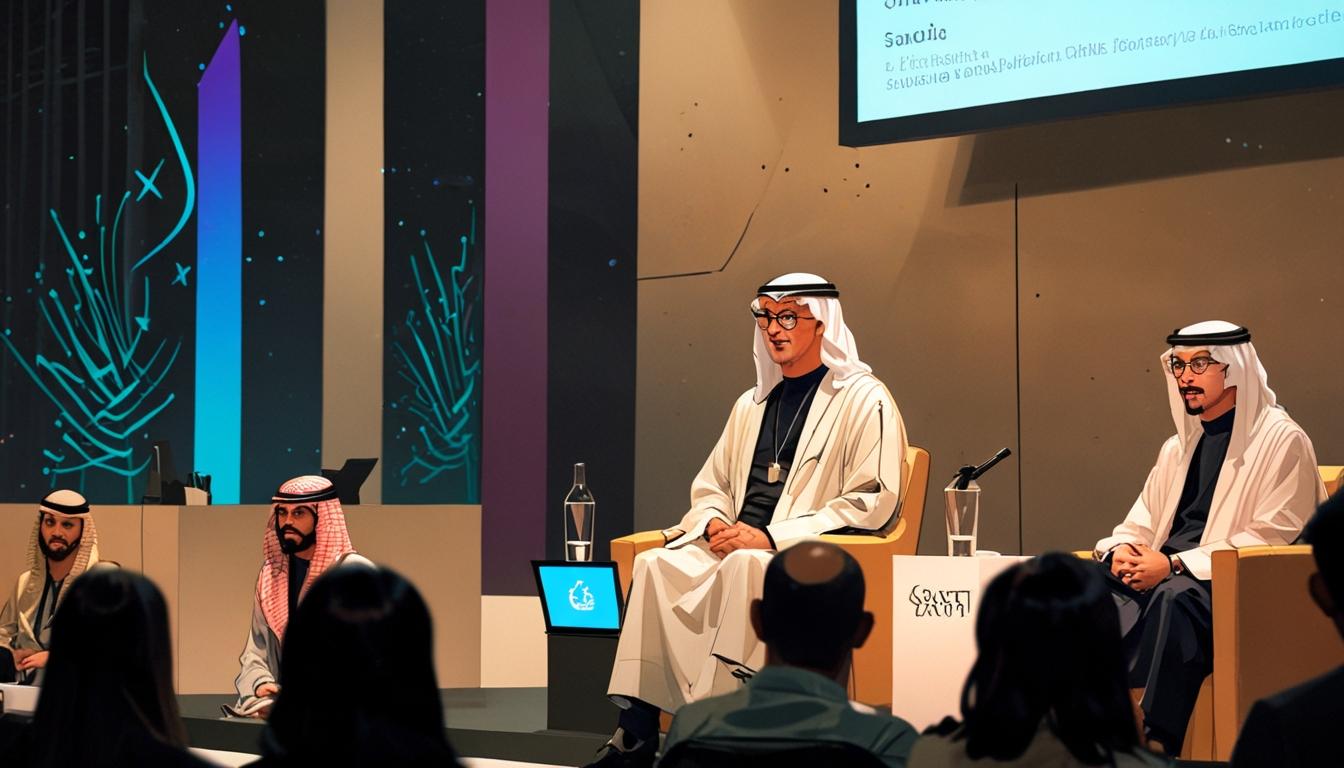
Saudi Arabia's premier academic institution, the King Abdullah University of Science and Technology (Kaust), is steering its future collaborations with a keen eye on international relations and regulatory compliance. Under the leadership of its newly appointed head, Professor Sir Edward Byrne, Kaust has made a significant policy adjustment concerning its artificial intelligence (AI) partnerships, particularly with Chinese entities. Sir Edward Byrne's leadership, which commenced last month, marks a pivotal shift in the university's approach to fostering international collaborations.
In an interview, Professor Byrne articulated his strategic priority to cultivate and enhance ties with the UK, Europe, and the United States. This diplomatic recalibration is primarily influenced by the complexities of current US trade regulations, particularly those regulating access to advanced AI technology and US-made chips. Professor Byrne emphasised his commitment to fully adhering to these regulations, recognising their critical role in sustaining collaborative projects with US entities. "I have an absolute commitment as president to abide by all US trade regulations," he stated, underscoring the university's intention to align its activities with US guidelines.
Kaust, established in 2009 through a $10 billion endowment from the late King Abdullah, is pivotal in advancing Saudi Arabia's academic and technological stature in the global arena. The university's decision to revisit its collaborations, especially those involving Chinese partners, is influenced by the US's heightened control over the export and access of its cutting-edge AI chips to foreign markets, including China. This has raised concerns within the Middle East about the broader implications of these export controls.
Byrne's predecessor, Tony Chan, had notably expanded collaboration with Chinese institutions, including a joint effort with the Chinese University of Hong Kong, Shenzhen, and the Shenzhen Research Institute of Big Data. This project was aimed at developing an Arabic-focused large language model named AceGPT. However, amidst escalating regulatory scrutiny, such initiatives have prompted reconsiderations to prevent potential disruptions in accessing US technology.
Saudi Arabia, alongside the United Arab Emirates (UAE), is aggressively pursuing advancements in AI, striving to balance robust trade relationships with both China and the US. This delicate diplomatic act is being closely monitored, as Washington remains a key security ally for the region. Indicative of these efforts is a Saudi fund's recent investment into China's leading generative AI start-up, marking it as the sole foreign investor.
Beyond academic circles, Saudi officials are taking proactive measures to secure US-made AI technology. Of particular interest is Nvidia's advanced chip technology, essential for AI development. Technology Minister Abdullah Alswaha has undertaken multiple visits to the United States, engaging with American counterparts and tech leaders in Silicon Valley to negotiate access to these critical components.
In alignment with these ambitions, Riyadh recently hosted a significant AI conference, showcasing the governmental authority's progress in developing Arabic large-language models. The Saudi Data and Artificial Intelligence Authority announced a substantial agreement with Nvidia for 5,000 graphics processing units (GPUs), reinforcing the kingdom’s aspirations to bolster its AI infrastructure. An official indicated confidence that their existing access to 1,000 Nvidia GPUs is likely to expand in the near term.
Kaust's strategic realignment reflects a broader tactical adaptation by Saudi Arabia and its partners within the region, as they navigate the evolving landscape of AI technology and international diplomacy. The institution continues to play a crucial role in the country's vision to become a leader in academic excellence and technological innovation.
Source: Noah Wire Services