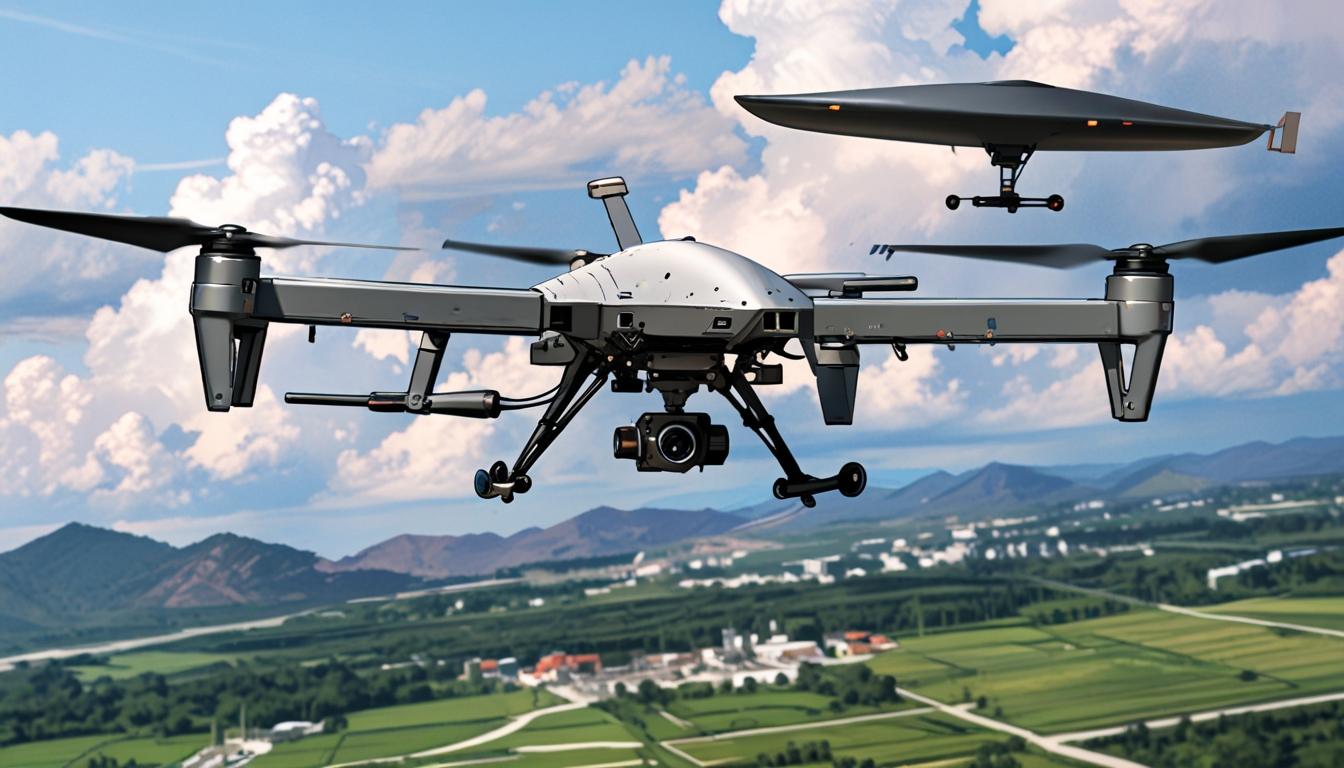
In the past two years, US defence and security agencies have seen a significant increase in their investments in artificial intelligence (AI), directing substantial financial resources towards its development and application. This comes as global interest and investment in AI technology continue to surge, partly catalysed by the release of the ChatGPT chatbot by OpenAI.
The Department of Defense (DOD) has been at the forefront of this movement, pushing the boundaries of AI utility within military operations. According to data reviewed by Fortune, since the advent of ChatGPT, the DOD has awarded contracts worth approximately $670 million to nearly 323 different companies. This marks a 20% increase from the previous two-year period, underscoring the department's growing reliance on AI technology.
Meanwhile, the Department of Homeland Security (DHS) has also expanded its partnership with AI companies, shelling out $22 million through contracts to 20 firms during 2022 and 2023 — a figure that is more than triple their spending in the prior comparable period.
The US military's partnership extends to a diverse array of firms, ranging from established tech companies like Palantir to emerging startups such as Scale AI. This diverse collaboration illustrates a comprehensive strategy aimed at advancing AI capabilities in various defence applications.
One of the most notable contracts awarded by the DOD is a $117 million agreement with ECS, a branch of ASGN Inc, which focuses on developing prototypes related to AI and machine learning algorithms for the US Army. The scope and financial commitment of this contract have since expanded to $174 million, reflecting its significance in the DOD's strategic planning.
Palantir also received substantial backing, with a $91 million contract focused on testing AI applications for defence scenarios within the Army. This initiative is part of a broader $480 million contract over five years for enhancing the Maven Smart System, although this specific contract is categorised separately from AI-specific records.
In addition to these large contracts, the DOD has engaged in 83 other contracts for generative AI development classified as "indefinite delivery vehicles" (IDVs). These agreements, due to their flexible deliverable schedules, could result in spending exceeding $1 billion if fully executed. These projects vary widely in their financial scope, with individual contracts ranging from $4 million to $60 million.
Scale AI, a company known for its involvement with OpenAI and backed by investors like Amazon and Meta, holds a contract potentially worth $15 million for refining AI tools for the US Army.
Smaller companies are also playing pivotal roles. Morsecorp Inc., an autonomous vehicle technology firm, is engaged in a $33 million testing and evaluation contract to study the rapid developments in AI for the Army. Mile Two LLC is working on designing AI-enhanced workflows for the Air Force under a $15 million contract.
Meanwhile, the DHS awarded its largest AI-related contract of $4 million to LMD for services related to marketing and AI innovations for the US Coast Guard. LMD, known for campaigns like "If you see something, say something," secured a second contract valued at $3 million. Additionally, Noblis Inc. received two contracts exceeding $3 million for providing analytics and support to DHS.
Despite these expansive developments and investments, official comments from both the DOD and DHS were not forthcoming, with inquiries left without response. This increased engagement with AI reflects an ongoing strategic shift in US defence and homeland security planning, anticipating a landscape deeply intertwined with advanced technological capabilities.
Source: Noah Wire Services