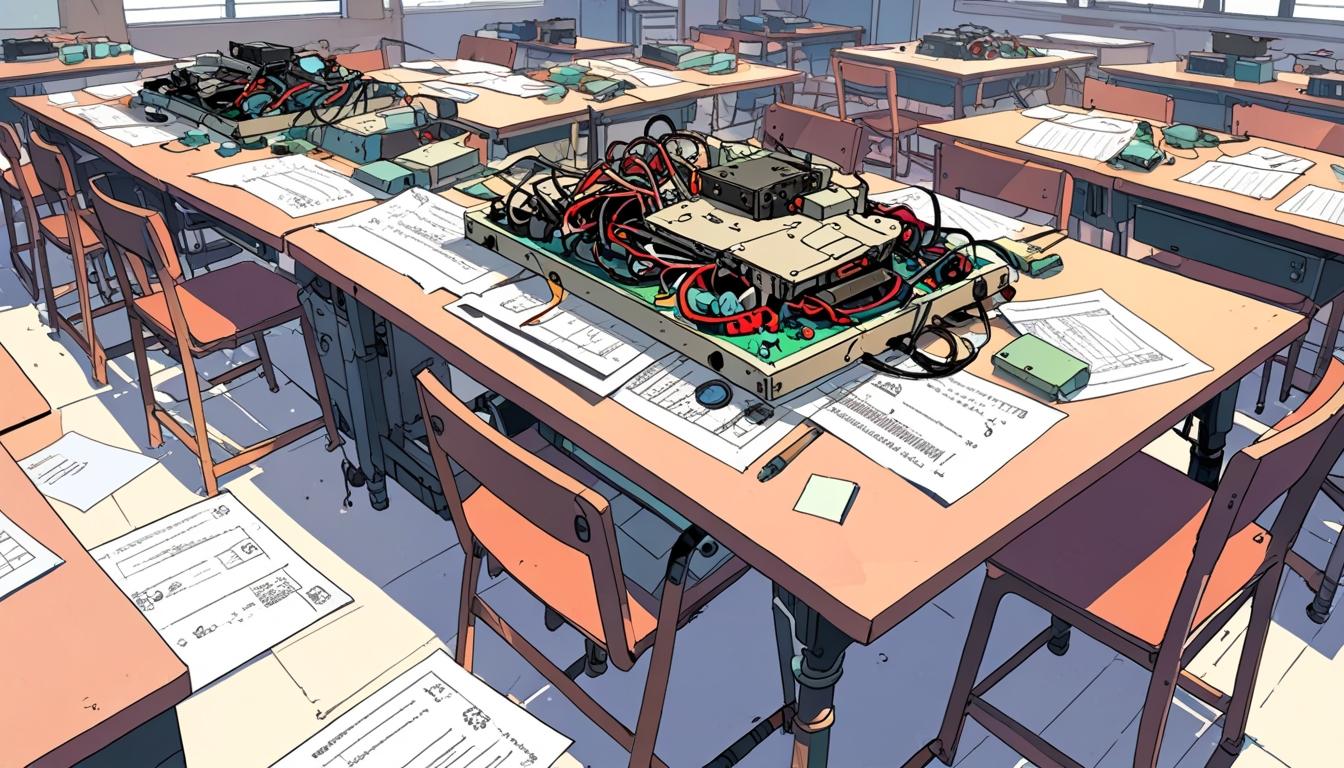
In an unexpected turn of events during the Higher School Certificate (HSC) English exam in New South Wales, Australia, students have raised concerns over the use of a potentially AI-generated image as a stimulus in a question, a decision that has provoked discussion around the integration of artificial intelligence in educational assessments. The incident has highlighted growing tensions between traditional assessment practices and the burgeoning influence of AI technologies.
The specific exam, taken on a Tuesday and compulsory for thousands of students enrolled in standard and advanced English courses, focused on the theme of "texts and human experiences." Question 3, a five-mark question, asked students to compare an extract from Elizabeth Strout’s novel "My Name is Lucy Barton" with an image described as a "photograph." The image depicted a table cluttered with electronics and wires, gazing out to an ocean, and was meant to provide a basis for students to explore how individuals perceive their surroundings.
The image in question was unattributed within the exam, leaving students to speculate on its origins. A subsequent inquiry revealed that the picture was sourced from a blog post by tech enthusiast Florian Schroeder, published on medium.com. The post, intriguingly titled "The Power of Digital Detox: Unlocking Productivity Through Switching Off," discusses the impact of digital engagement on productivity, further fuelling speculation about the image's authenticity. Schroeder, who describes himself as passionate about AI, notably co-founded the AI-focused magazine AI Rockstars and presents an online image that some suggest might be AI-generated itself.
Despite student concerns, a spokesperson from the New South Wales Education Standards Authority (NESA) did not confirm the image's origins, focusing instead on the educational outcomes expected from the exam. They stated that students' performance would be judged on their response to the question using the image as a stimulus, irrespective of its origin, thus sidestepping debates on whether the image was AI-generated.
In the wake of the exam, a wave of frustration broke out among students on social media. Some expressed distraction and annoyance at the use of what they perceived to be an AI-generated image, questioning why students are barred from using AI when the examination board appears to not adhere to the same standards. This has opened discussions on what appears to be a double standard regarding the use of technology in academic settings.
NESA’s policies regarding AI use in schools maintain that AI is not a replacement for comprehensive curriculum and effective teaching. AI's unregulated use is considered a breach of academic integrity; all student work is expected to be either original or correctly attributed. The authority warns that AI tools can produce unreliable or biased information, and thus require careful human oversight.
Dr Benjamin Miller, an English and writing lecturer at the University of Sydney, offered insights into the situation, suggesting that students' reactions might stem from a lack of preparedness to interpret AI-generated content, signalling a need for educational adaptation. Miller emphasised the inevitability of AI's role in future workplaces and lives, citing the importance of teaching students critical skills to cope with new digital tools and texts. He suggested the occurrence could serve as a constructive moment, pushing educational strategies forward to encompass AI literacy.
Within the educational community, opinions are divided. Some educators believe a formal complaint to NESA is justified if the image was indeed AI-generated, arguing that it undermines the essence of English studies, which is to interpret deeper meanings in texts. Others see the inclusion of AI in exams as a potentially timely and relevant teaching tool if well-identified.
The incident occurred against the backdrop of a diverse examination paper, which also included works from a range of international authors such as Hernan Diaz, Kate Morton, John Green, and James Vincent, providing students with varied literature to analyse. As discussions continue, this situation may prompt broader conversations on how educational institutions balance traditional pedagogies with the integration of advanced technologies in academia.
Source: Noah Wire Services