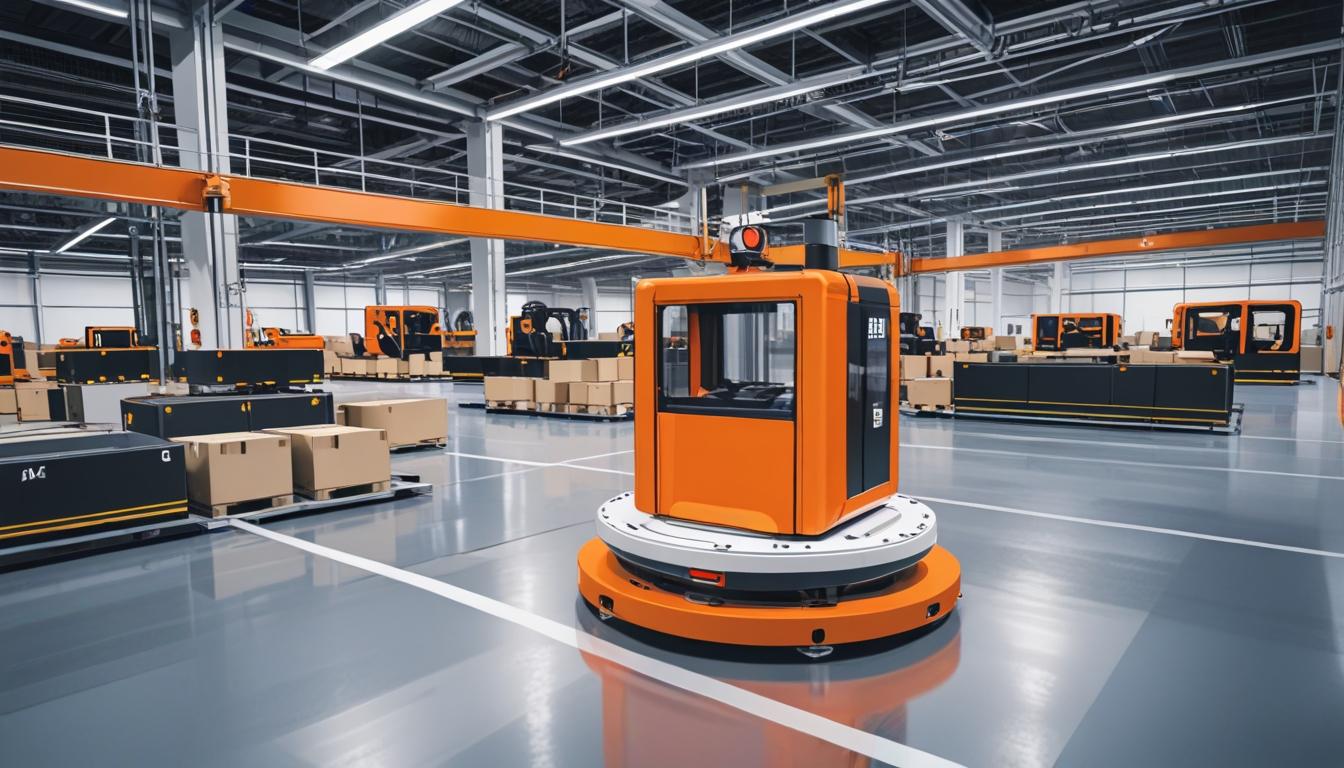
The in-plant logistics market for automobile Original Equipment Manufacturers (OEMs) is anticipated to see robust growth over the next few years. A report by Technavio forecasts the market size to increase by USD 557.8 million between 2024 and 2028, driven by developments in automation and the incorporation of Industry 4.0 technologies.
The introduction and advancement of Automated Guided Vehicles (AGVs) are pivotal in this projected growth. These technologies are enhancing productivity across the automotive industry while simultaneously reducing labour costs. The adoption of Industry 4.0, which integrates digital tools like cloud computing, IoT, cyber-physical systems, and cognitive computing, is further transforming the sector. Through these technologies, the automotive industry expects to achieve agile supply chains, reduce downtime, allow for vehicle customisation, and respond flexibly to production demands.
Despite these benefits, challenges persist. The high initial investment required for implementing these advanced technologies could potentially hinder revenue growth for some companies. Also, the intricate layout of automobile production facilities necessitates customised logistical solutions. This customization involves balancing material movement efficiency with logistical cost minimisation, which can be a complex task.
Major players in the sector include AP Moller Maersk AS, BLG Logistics, CMA CGM SA Group, and Volkswagen AG, among others. These companies are leveraging new technologies to streamline operations, reduce costs, and increase their competitive edge.
Market segments covered by the report include in-plant warehousing, line-side feeding, and packing. Geographically, the forecasted growth spans across regions including APAC, Europe, North America, South America, and the Middle East and Africa, highlighting the global scale of these logistical advancements.
The push towards automation and AI technologies is a significant driver behind this evolution. Predictive analytics and real-time tracking systems are aiding in the optimisation of inventory management and production processes. These systems ensure just-in-time delivery, contributing to the efficiency of production by keeping stock levels minimal and reducing waste.
However, the industry faces numerous external pressures such as environmental protection regulations, geopolitical instability, changing oil prices, and international trade tensions. These factors influence the deployment and maintenance costs as well as the overall strategic direction of in-plant logistics services.
Overall, the market outlook suggests a dynamic period ahead for in-plant logistics within the automobile industry, with substantial innovations and trends set to redefine how OEMs operate internally. Whether these developments will align smoothly with existing structures and regulations remains to be seen, but the trajectory indicates a progressive leap towards a more automated and efficient future in automotive logistics.
Source: Noah Wire Services