New Research Offers AI-Based Strategies to Address the Opioid Crisis in the United States
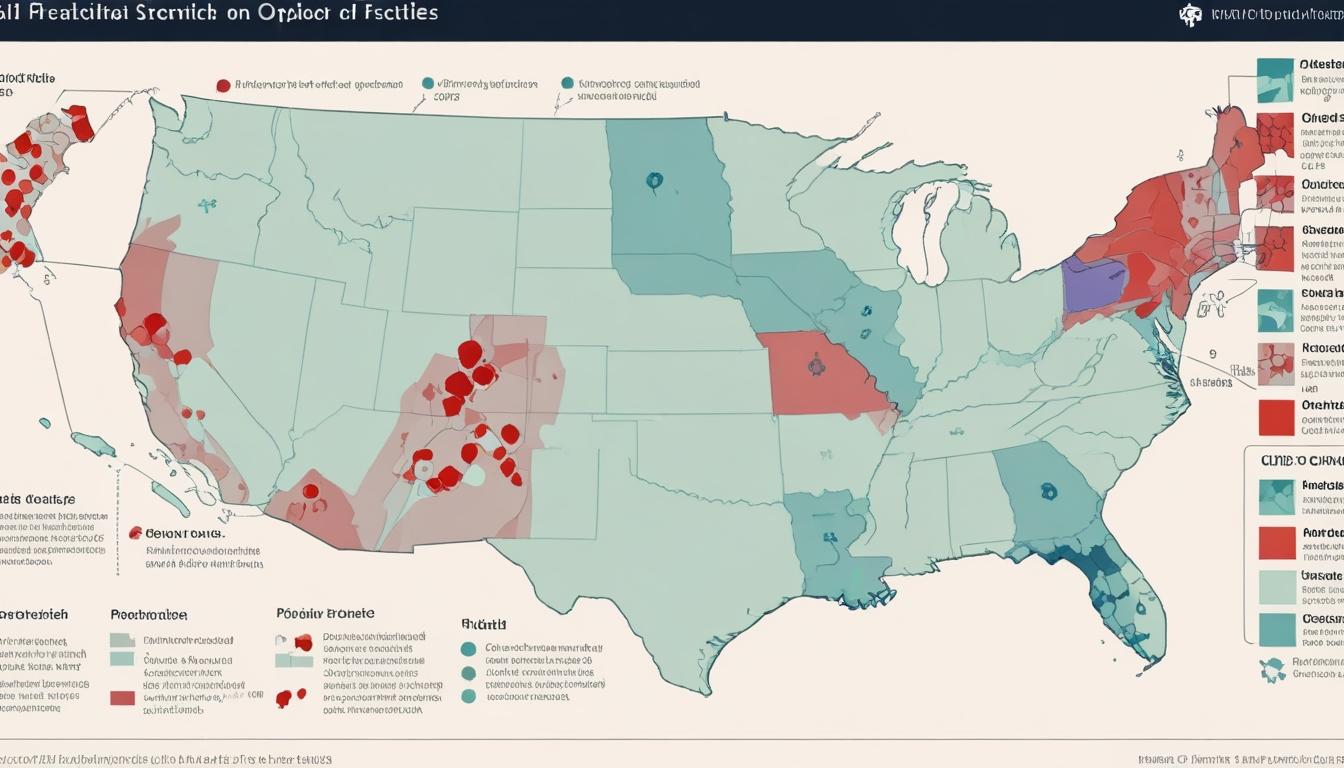
In a groundbreaking development in the ongoing battle against the opioid epidemic in the United States, new research utilises artificial intelligence (AI) to propose solutions aimed at increasing equitable access to treatment for opioid use disorder (OUD). This innovative study, published in the Manufacturing & Service Operations Management journal, introduces data-driven recommendations that tailor treatment strategies to specific state needs.
The research, led by Joyce Luo from the Massachusetts Institute of Technology and Bartolomeo Stellato from Princeton University, outlines a methodology for optimising the location and resource allocation of treatment facilities. This method stands out by taking into account socio-economic disparities across different states, potentially reducing inequalities in treatment access.
The study's unique approach combines AI with epidemiological and socio-economic data to decide where treatment resources should be most strategically allocated. Unlike previous methods that have primarily focused on population size and social vulnerability metrics, this approach offers a more nuanced view that promises more substantial reductions in both the prevalence of OUD and the associated mortality rates.
According to the researchers, implementing these AI-driven recommendations could, on average, result in a noticeable decrease in opioid-related deaths and an increase in the number of individuals receiving effective treatment over a two-year period. This could mark a significant advance in combating the opioid crisis, which, according to the Centers for Disease Control and Prevention (CDC), has resulted in approximately 500,000 deaths from opioid overdoses between 1999 and 2019.
Medication-assisted treatment (MAT) remains the primary method for addressing OUD. Despite its proven efficacy in maintaining patient recovery and preventing relapses, access to MAT services is still notably uneven across the United States. The disparity is particularly pronounced in rural areas with inadequate healthcare infrastructure, highlighting the urgent need for the targeted strategies discussed in the research.
"The epidemic evolves differently in different states, and policies related to opioid treatment should be reflective of the needs of each state," Luo explains. She emphasises the critical nature of developing customised policies rather than relying on generic, one-size-fits-all solutions. By using AI to strategically place treatment facilities and allocate budgets at the state level, the potential exists for greatly improved health outcomes.
Stellato adds that their recommendations take into account the social vulnerabilities of each county within a state, ensuring a more equitable distribution of facilities. This socioeconomically aware approach could guide more effective decision-making processes by policymakers.
The study holds promise for setting a new precedent in the fight against the opioid epidemic, potentially revolutionising how states across the U.S. tackle the complex issues of treatment access and resource distribution.
Source: Noah Wire Services