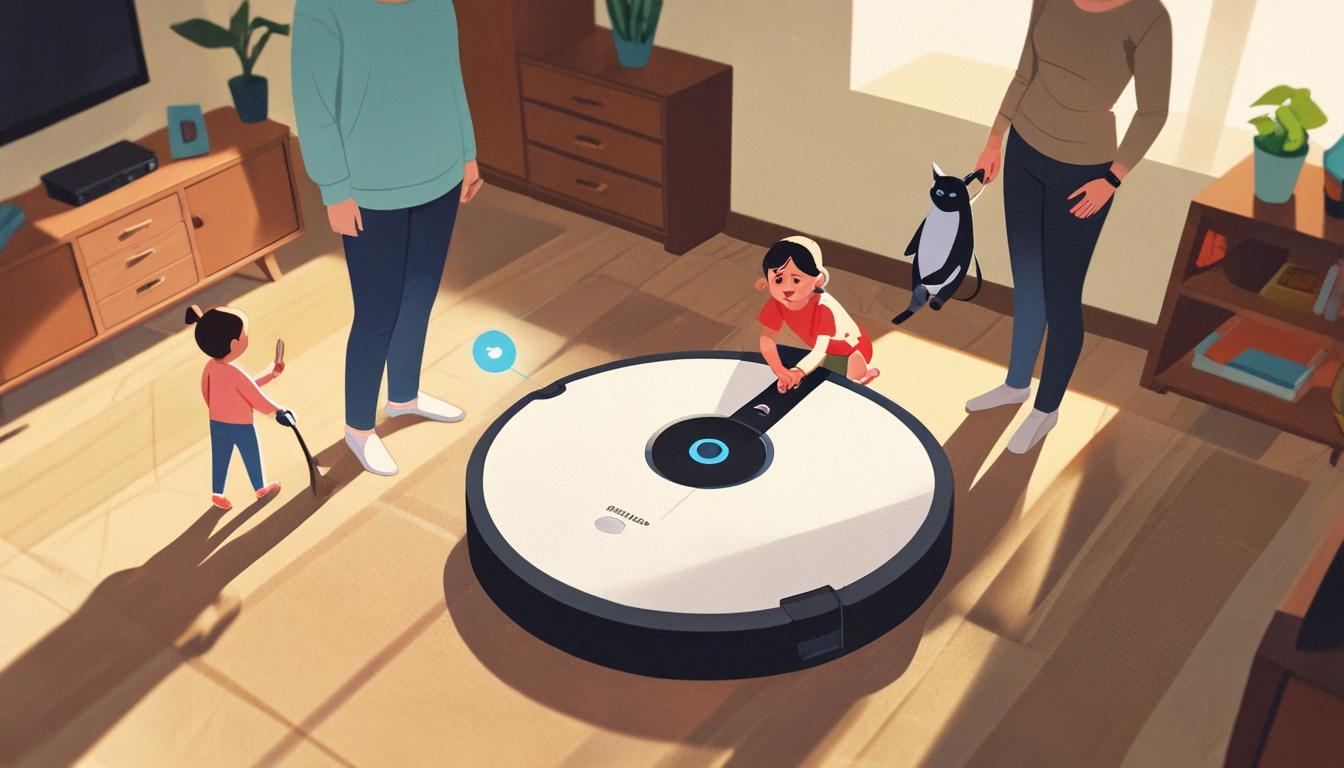
In a rapidly evolving technological landscape, robot vacuum cleaners have recently come under scrutiny for privacy concerns after reportedly collecting photos, videos, and audio from users to train AI models. Notably, several incidents have emerged that raise significant questions about data security and user privacy.
The concern began to surface in 2017 when it was suggested that iRobot, the producer of the Roomba vacuum cleaner, could potentially sell data about the size and layout of homes collected by its devices. Fast forward five years, the issue has intensified as these devices now come equipped with cameras, posing heightened privacy risks. In a striking example reported by MIT Technology Review in 2022, images from robots included highly sensitive moments, such as a woman on a toilet and a young boy playing on the floor, collected by development versions, not yet in the consumer market. These images were utilised by Scale AI, a startup tasked with labelling data for companies like iRobot.
Currently, this kind of data aggregation is essential for developing large-scale AI systems, requiring vast amounts of training data. This has intensified the race among companies to gather and use such data extensively, including that collected by robot vacuums. Ecovacs, a Chinese home robotics company known for its Deebot models, has been implicated in privacy concerns over its data collection practices. The company collects photos, videos, and audio recordings from inside customers' homes to enhance its AI models. Users "willingly participate" through an opt-in feature in the Ecovacs smartphone application, purportedly to aid in product improvement, although they are not clearly informed about the details of data collection.
Ecovacs’s privacy policy allows broad collection of user data, encompassing house maps, voice recordings, and camera footage. The company reassures users with promises of anonymised data and strict access management protocols, although past instances have shown that such measures can sometimes be bypassed, leading to data breaches. Illustratively, it was reported that remote access could be gained to an Ecovacs robot vacuum, allowing the viewing of live images from its camera and accessing sensitive information such as Wi-Fi credentials.
Adding to these concerns, recent reports highlighted that robot vacuums in several US cities were hacked, enabling attackers to control the devices remotely. These hackers not only controlled the vacuums but also used onboard speakers to yell obscenities and racial slurs, with one incident in Los Angeles seeing the device chasing a dog around the home. Ecovacs responded by reassuring customers about the security and privacy of its products.
Despite the existence of technical solutions to enhance privacy, such as the development of privacy-preserving cameras by researchers at the Australian Centre for Robotics, the underlying challenge remains the corporate reluctance to robustly implement such measures. The pressure to rapidly introduce AI-enhanced products often overshadows the commitment to safeguarding personal data.
This ongoing issue underscores a critical debate in the intersection of technology and privacy, amplified by the rush in AI development. Robot vacuums, once seen as harmless household aids, are now at the forefront of discussions about privacy and security in the era of smart devices. As technology continues to advance, these concerns remain pivotal in shaping the landscape of consumer electronics and data privacy.
Source: Noah Wire Services