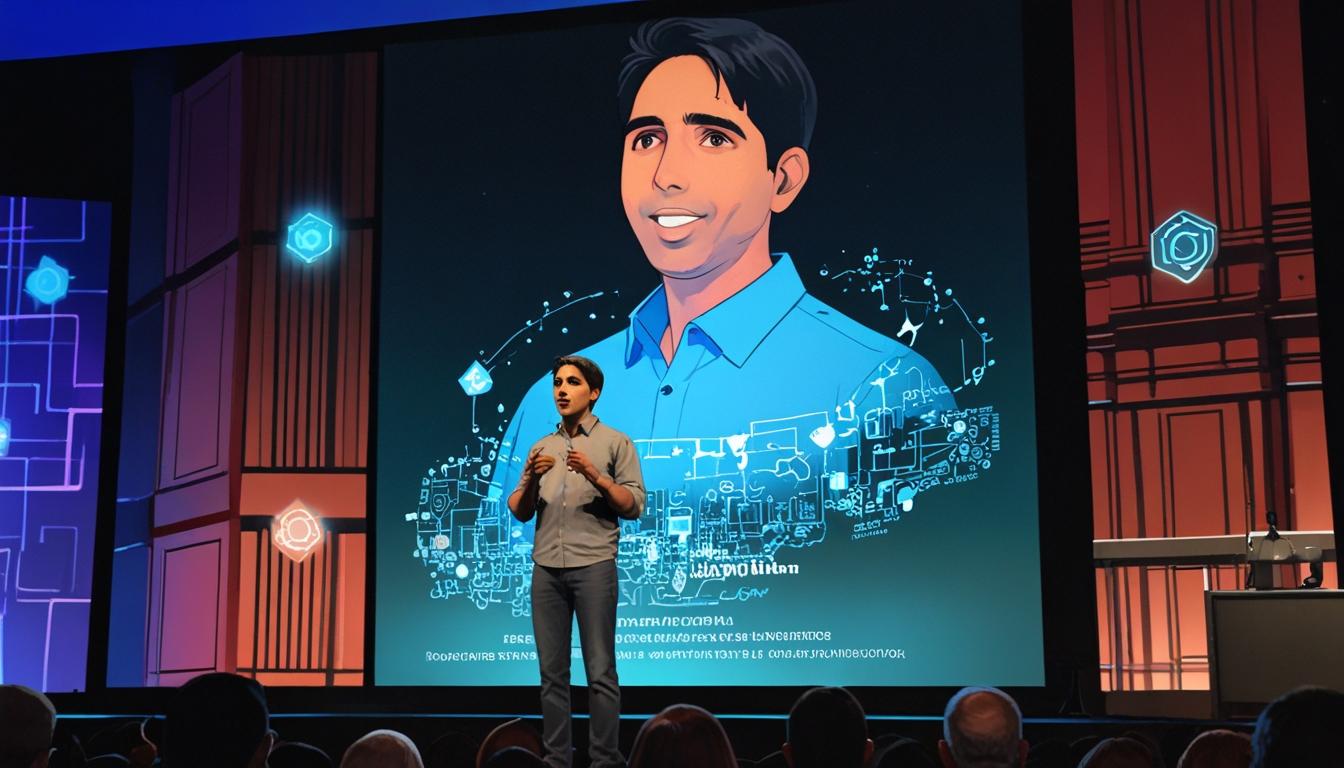
On a picturesque Saturday afternoon at the Arlington Theatre in Santa Barbara, an eminent assembly gathered to hear from a prominent figure in the world of education. Among the audience were UC Santa Barbara Chancellor Henry Yang, Santa Barbara County Superintendent of Schools Susan Salcido, and numerous other educational leaders. The spotlight was firmly on Salman "Sal" Khan, the visionary founder of Khan Academy, whose journey from a hedge fund manager to a trailblazer in the educational field began with tutoring his cousin in mathematics and has since expanded into a global educational phenomenon.
Khan's visit to the theatre was part of the UCSB Arts & Lectures series, where he delivered a thought-provoking talk that revolved around the transformative role of artificial intelligence in education. The lecture coincided with the promotion of his forthcoming book, "Brave New Words: How AI Will Revolutionize Education (and Why That’s a Good Thing)" set to be released in 2024. During his address, Khan articulated the benefits AI brings to the discipline, while recognising the need to carefully manage associated risks.
Central to Khan's vision is Khanmigo, an AI tutor developed by Khan Academy, underpinned by GPT-4 technology and crafted following learning science principles. Khanmigo exemplifies the integration of technology with human interaction, a theme Khan stressed, highlighting the importance of everyone playing an active role in shaping the educational landscape of the future.
Khan explored what he terms "the principle of educated bravery", recounting how Khan Academy was an early adopter of GPT technology despite the initial trepidations surrounding AI. He acknowledged the potential misuse of such tools but called for positive engagement to counteract such risks. "We can educate ourselves with risk and be brave and move forward," Khan asserted, elaborating on how Khan Academy developed Khanmigo as a supportive AI for both students and educators.
Using anecdotes, Khan illustrated the challenges faced while adopting new technology and how these experiences were captured in his upcoming book. He urged a reconsideration of possibilities introduced by AI, while emphasising the necessity of addressing fears and inhibitions. Khan posited that the integration of AI in education heralds a pivotal shift with extensive implications for learning, work, and broader human objectives.
Expressing caution against adopting technology for its own sake, Khan advocated for identifying educational challenges and seeking straightforward solutions. He questioned how education could be personalised, how access to first-rate learning could be broadened, and how teachers and parents could be better supported. Khan reflected, "If the technology is pencil and paper, so be it. But maybe AI can be part of that solution."
The event served as a platform for Sal Khan to share insights into harnessing AI in education, fostering both innovation and dialogue, as educators consider how to embrace such advancements. With more than 155 million registered users across over 190 countries, Khan Academy is already cementing its role as a global leader in educational technology, now furthering its reach through AI tools like Khanmigo.
Source: Noah Wire Services