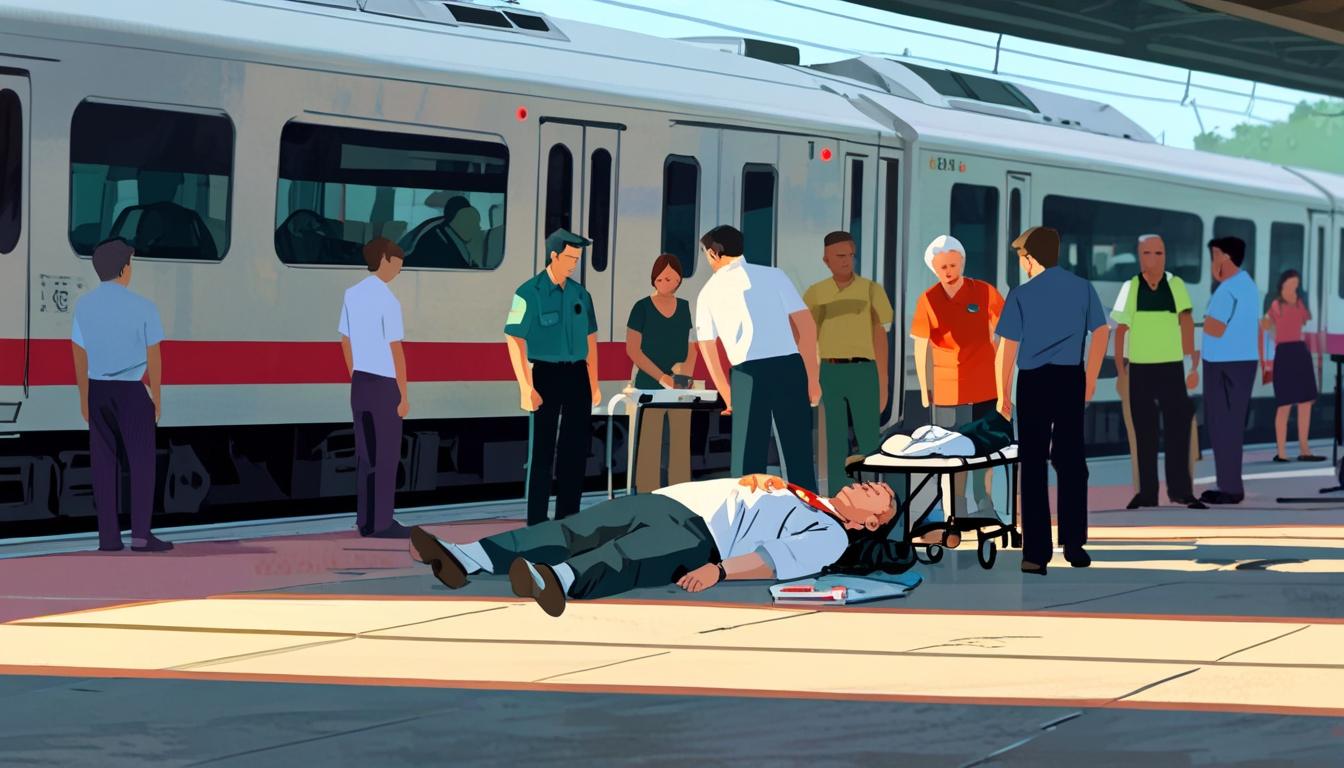
A South Florida resident narrowly escaped a potentially life-threatening situation thanks to the swift actions of bystanders and medical professionals. The incident occurred on Monday, 7th October, when 33-year-old Roy Law was preparing to board the Brightline train back to his home in Orlando.
As Law attempted to collect his belongings, he was unexpectedly paralysed on his left side, a result of a stroke caused by a blood clot. His sudden fall and inability to retrieve his phone caught the attention of a Brightline staff member, who immediately brought him to the guest services area. Quick-thinking bystanders also called emergency services, ensuring that Law received prompt medical attention.
Law was transported to Broward Health Medical Center classified as a Level 2 trauma patient. Upon arrival, the medical team identified the critical situation, prompting emergency mechanical thrombectomy surgery to extract the clot. This life-saving procedure was expedited by AI-powered imaging technology, accessed conveniently through a mobile application, which pinpointed the affected region in his brain. The clot was obstructing the middle cerebral artery, putting the entire right hemisphere of his brain at risk.
Describing his experience, Law recounted, “I couldn’t move my left arm; I couldn’t move my left leg. I had no idea what was going on. It was just so frustrating, not being able to talk, not being able to text. I knew what my name was, but I wasn’t able to say it to anybody.”
The surgery, performed by Dr. Mehdi Bouslama and his team, was completed with remarkable efficiency. “We were able to go in through a minimally invasive procedure, via the groin artery, all the way up to the brain, and suck the clot out. It took five minutes to get it out,” explained Dr. Bouslama. Follow-up MRI scans confirmed that Roy had not sustained any devastating or permanent brain damage from the stroke.
Now, Roy Law is on the road to full recovery, expressing gratitude for both the intervention of the bystanders and the medical staff. “It was just a really scary experience,” he said. “I am looking forward to getting back to work and getting back to my cats. Looking forward to just getting back to the gym and getting back to my normal daily routine.”
The rapid identification and intervention clearly highlight the importance of timely medical response in stroke cases. Specialists underline the significance of early detection and recommend using the "Be-Fast" system to assess possible stroke symptoms, focusing on an individual's balance, eyes, face, arms, and speech before ensuring they receive urgent medical care.
Source: Noah Wire Services