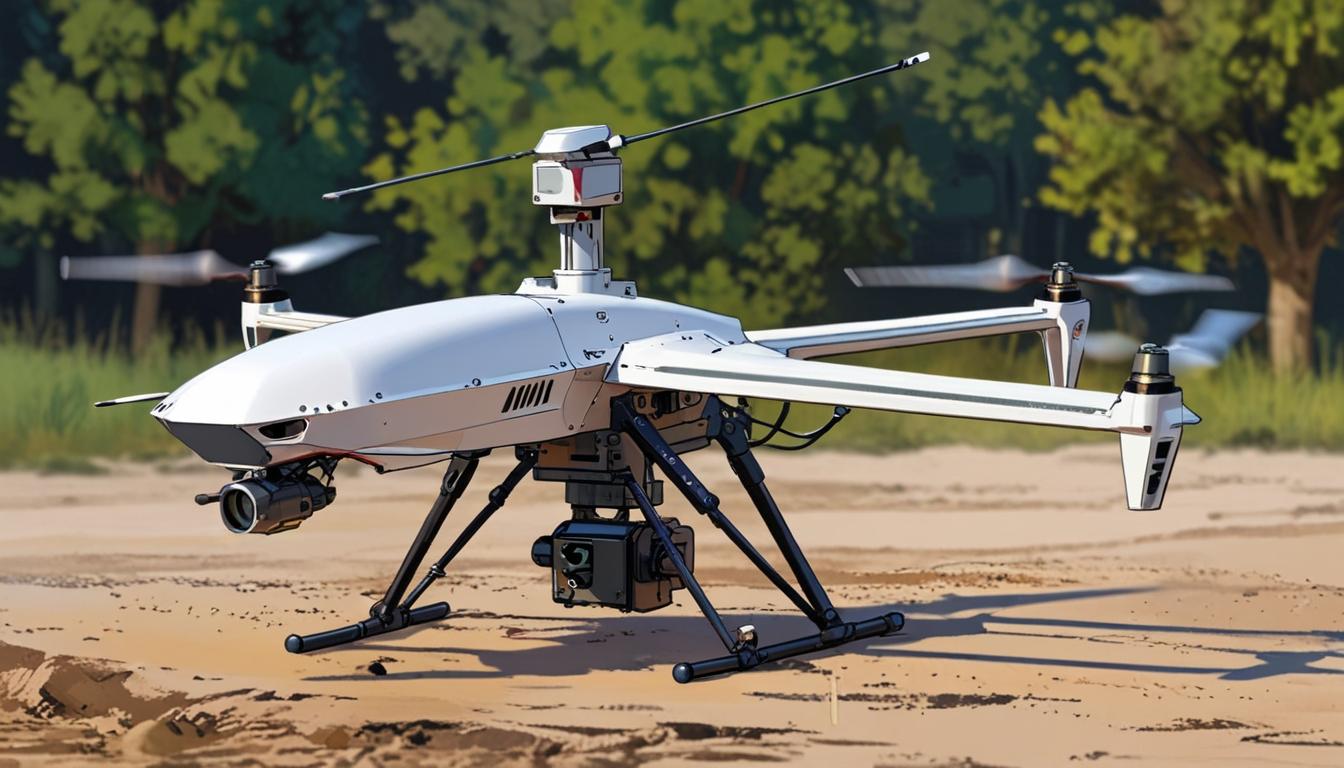
The U.S. Army is advancing its efforts to address the growing threat posed by small drones, focusing on both established and emerging technologies. This initiative forms a part of the Pentagon's Replicator 2 programme, as unveiled by Defense Secretary Lloyd Austin in a memorandum on 29 September, 2023. The programme aims to develop enhanced counter-drone defence systems to protect critical installations and troop concentrations, with funding proposals expected in the fiscal 2026 budget. The goal is to have significantly improved systems operational within two years.
Following the approach of the original Replicator programme, which sought to deliver thousands of affordable drones by next summer, Replicator 2 is dedicated to identifying and scaling existing and new capabilities to fill gaps in counter-drone frameworks. The Pentagon plans to invest a total of $1 billion through fiscal 2024 and 2025 for these initiatives.
Doug Bush, the Army's head of acquisition, emphasized Replicator 2's concentration on countering small uncrewed aerial systems at fixed sites, thereby enhancing the defence of military installations and facilities. The Army has already been deploying systems to detect and neutralize drone threats in overseas bases in the Middle East. Replicator 2 now seeks to amplify production of these technologies. Bush highlighted the potential for immediate production increases and the possibility of reallocating funds from fiscal 2025 to accelerate this effort.
Bush also stressed the importance of integrating artificial intelligence and machine learning with existing systems to enhance target detection, decision-making, and engagement processes. The Replicator initiative, championed by Deputy Defense Secretary Kathleen Hicks, strives to expedite the procurement and scaling of essential capabilities within the Pentagon's operations.
Maj. Gen. David Stewart, director of the Joint C-sUAS Unmanned Aircraft Systems Office, noted that the Army is undergoing a validation process for Replicator 2, which involves verifying what needs protection and assessing available commercial and military technologies. Planned demonstrations, such as the upcoming NORAD and U.S. Northern Command’s C-sUAS event, Falcon Peak, are part of this validation process.
At the Association of the U.S. Army's annual conference, numerous companies showcased their counter-drone technologies. Leidos, for example, presented its AirShield C-UAS system, which uses its Multifunction X-Band Radar to autonomously detect and track aerial systems. The AirShield system includes an AI-driven decision engine to assess potential threats, and employs a nonkinetic effector, CUGAR, which can disable drones by entangling them in streamers.
Smart Shooter, an Israel-based firm, demonstrated its SMASH fire control system, which can be mounted on standard weaponry to offer dismounted units a high-precision counter-UAS capability. Additionally, the company showcased a vehicle-mounted version called Hopper, expected to showcase at the annual International Special Operations Forces demonstration in the following spring.
These efforts reflect the Army's ongoing commitment to adapting to and mitigating the risks associated with small drone threats, integrating cutting-edge technology to ensure robust and agile defence capabilities.
Source: Noah Wire Services