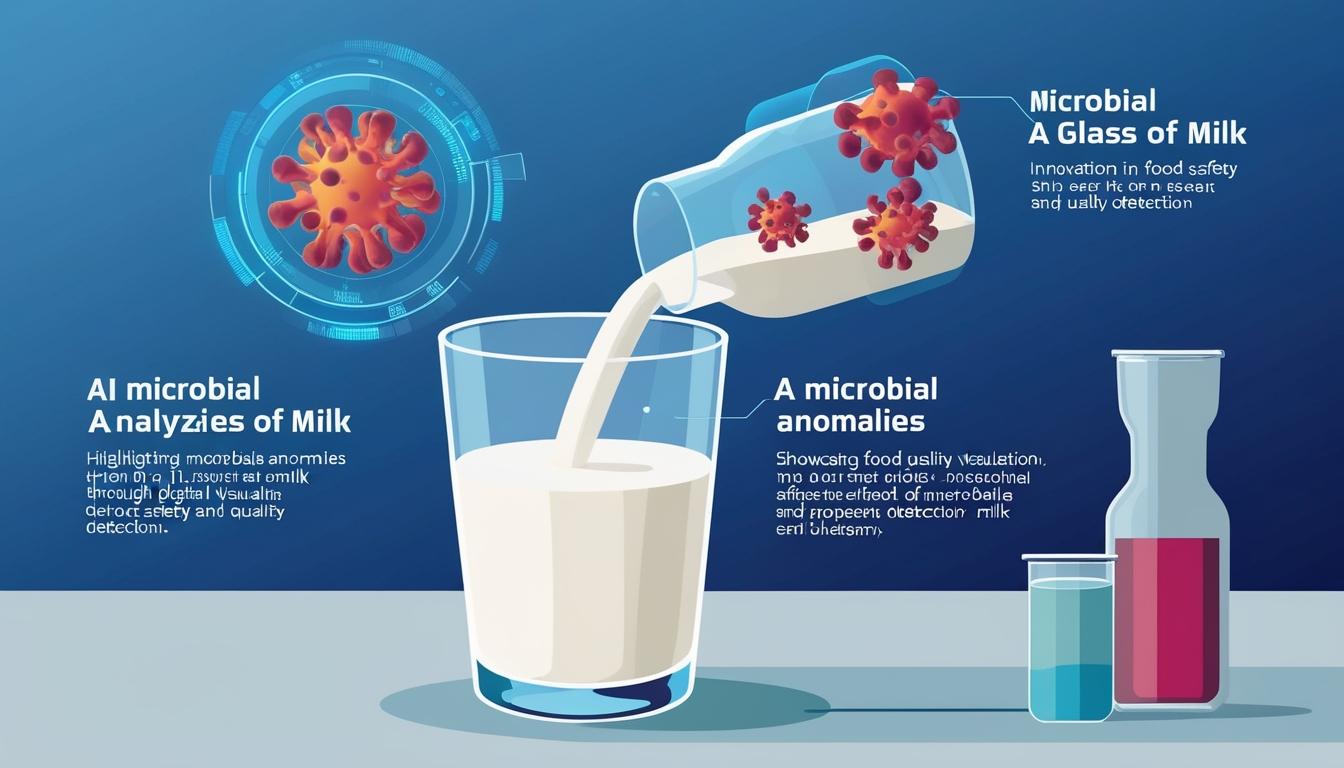
Advanced AI Technology Revolutionises Milk Quality Detection
A cutting-edge study involving collaborative efforts from researchers at Penn State, Cornell University, and IBM Research has demonstrated the potential of artificial intelligence (AI) in improving milk safety by identifying anomalies undetected by traditional methods. The research, recently featured in the mSystems journal of the American Society for Microbiology, highlights the integration of AI with genetic sequencing to detect issues such as contamination or the presence of unapproved additives in milk.
The researchers utilised shotgun metagenomics data combined with AI to identify irregularities in milk, specifically targeting instances of antibiotic-treated milk that were deliberately introduced into bulk tank samples. To ensure the reliability and accuracy of their findings, the AI tool was also tested on publicly available datasets of genetically sequenced bulk milk samples, reinforcing the robustness of their untargeted approach.
Erika Ganda, an assistant professor specialising in food animal microbiomes at Penn State College of Agricultural Sciences, led the study. Ganda explained, "We can analyse the data stemming from the microbes present in raw milk, and through AI, discern whether these characteristics suggest milk is pre-pasteurisation, post-pasteurisation, or originates from cows treated with antibiotics."
For the study, the team collected 58 bulk milk samples and applied an array of AI-driven algorithms to distinguish between normal baseline samples and those exhibiting potential anomalies, such as foreign milk or antibiotic-laden samples. This research marks the most comprehensive characterisation of raw milk metagenomes to date, providing deeper insights into the microbial community in milk.
One of the significant findings from the study is the potential for AI to significantly augment the current methods of detecting food production anomalies. Traditional microbial sequencing approaches, employing metrics such as alpha and beta diversity, were not as effective in differentiating between typical and atypical samples. The integration of AI, however, allowed for precise classification and detection of microbial factors linked to these anomalies.
Kristen Beck, a senior research scientist with IBM Research and the study's principal author, noted, "The complex and dynamic interactions between microbes make the food supply chain an ideal area for AI application. There are numerous variables affecting the signals we aim to detect, and AI helps disentangle these intricacies."
Although this study focuses predominantly on dairy production, its implications reach far into the broader food industry. Milk was chosen as the focal point because it solely consists of one ingredient used extensively in fluid milk production—a significant concern for food fraud, particularly in developing regions.
Ganda articulated that issues related to food quality and safety can lead to extensive impacts throughout the supply chain, resulting in considerable health and economic repercussions. There is thus a profound interest in applying a combination of both targeted and untargeted methods to detect ingredients or products that signal an elevated risk of food-related issues.
"Untargeted methods evaluate all identifiable molecules to notice ingredients or products deviating from a 'baseline state', considered normal or controlled," Ganda explained. "These are screening techniques suggesting deviations that should instigate further action or investigations."
The synergy among the partnering institutions played a crucial role in the research's success. IBM's contribution of its open-source AI technology, Automated Explainable AI for Omics, proved vital in processing enormous amounts of metagenomic data. This enabled the identification of microbial signatures, often invisible to conventional methods. Meanwhile, the expertise of Cornell researchers in dairy science brought crucial relevance and applicability to the dairy industry, and the contributions from Penn State’s One Health Microbiome Center enriched the integration of microbial data for wider health and safety uses.
Source: Noah Wire Services