In recent years, the agricultural sector has experienced significant advancements in technology, offering novel solutions to age-old challenges. One such persistent issue faced by farmers globally is the management of weeds, which threaten crop yields and contribute to increased labour and resource costs. Historically, methods such as plowing and hand-weeding were employed to tackle weeds, requiring substantial time and physical exertion, yet offering only limited success.
The introduction of herbicides marked a revolution in agricultural practices, allowing for the widespread spraying of chemicals to manage weeds and pests. However, this method inherently lacked precision, leading to unnecessary herbicide application across entire fields, even in areas devoid of weeds. This inefficiency not only leads to financial wastage but also has potential environmental repercussions.
The implementation of advanced technologies like artificial intelligence (AI) and computer vision into agricultural practices is now addressing these inefficiencies. AI and computer vision systems have been developed to improve the precision of herbicide application, significantly transforming the agricultural landscape. By utilising machine learning models trained with vast datasets, these systems can accurately identify individual weeds among crops. This precision in targeting specific areas for herbicide application represents a major stride forward in terms of resource efficiency.
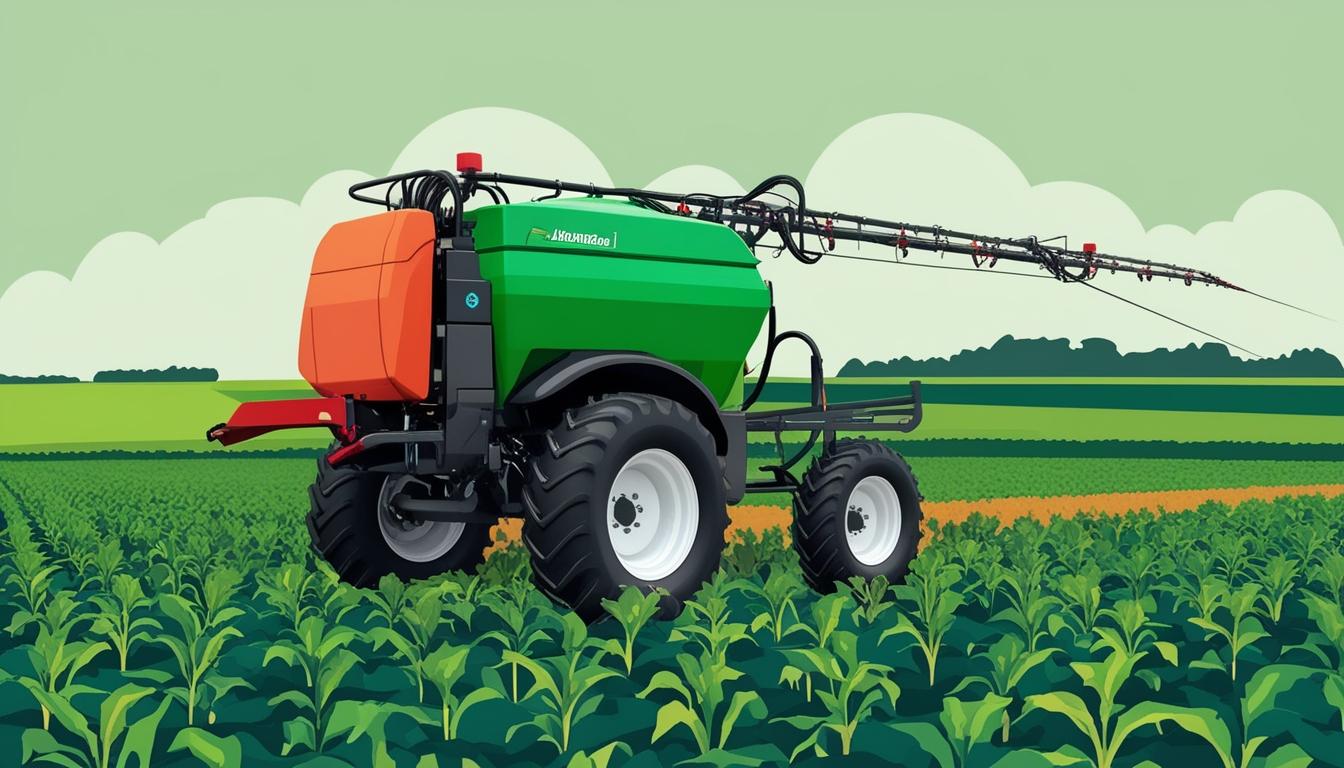
The cornerstone of this technological transformation lies in sophisticated sprayers, which are integral to modern farming. These machines are equipped with extensive booms, sometimes spanning up to 120 feet and fitted with an array of cameras and processors. As the sprayer traverses a field, these cameras can scan vast areas rapidly—up to two thousand square feet per second—and process imagery to identify the presence and location of weeds in real time.
The AI models behind these systems have been trained with millions of images and continue to evolve, gaining accuracy with each pass. This capability not only allows for more effective weed management but also minimises damage to surrounding crops. The automated sprayers, enhanced with GPS technology and precision correction signals, further improve operational efficiency, guiding the machines accurately and reducing the need for human intervention.
This precise application method reduces herbicide use by up to two-thirds, leading to notable cost savings and improved sustainability. Given that modern farms can be as expansive as small cities and encompass millions of plants, such advancements are incredibly significant. They alleviate the need for excessive chemical inputs, optimising the balance between productivity and environmental care.
As the global population is projected to reach 10 billion by 2050, with corresponding increases in food demand, the role of technology in agriculture is becoming increasingly critical. AI and computer vision technologies are expected to play a substantial role in meeting this demand by enhancing crop yields while maintaining ecological integrity. The continued adoption and refinement of such technologies appear essential as farmers strive to manage the pressures of feeding an ever-growing global population.
In summary, the integration of AI and computer vision into agriculture represents a pivotal development in sustainable and efficient farm management. By bringing precision to herbicide application, these technologies offer a promising solution to some of the most pressing challenges faced by modern agriculture.
Source: Noah Wire Services