In the competitive world of advertising and marketing, large holding companies such as WPP and Publicis have recently made headlines by investing significant sums into developing their own AI systems. This trend highlights a burgeoning focus on artificial intelligence, with many in the industry contemplating whether to follow suit. Agency leaders may feel compelled to invest in AI systems to avoid falling behind or losing competitive edge. However, given the rapidly evolving nature of AI technologies, there is growing advice to approach its adoption with strategic caution.
Generative AI, while still in its infancy at less than two years old, is advancing swiftly. The prospect exists that future developments may produce systems significantly more capable than those currently being developed within any single agency. Accordingly, while many companies are piloting AI applications, experts suggest doing so strategically, ensuring that decisions are informed by a comprehensive understanding of AI capabilities rather than a fear of missing out.
The first crucial step for agencies considering AI integration is to achieve proficiency and a solid understanding of generative AI. Training teams on existing AI tools and engaging with experts can facilitate the identification of innovative, relevant AI applications tailored to an agency's needs, ensuring technological investments yield substantial returns.
Ethical and operational considerations are inherent in any technological advancement, and AI is no exception. Establishing a governance framework to ensure the responsible use of AI within an agency is vital. AI has the potential to amplify creativity but also poses risks, such as confidentiality breaches and copyright concerns. Agencies are encouraged to establish policies that address these issues, safeguarding both their interests and those of their clients.
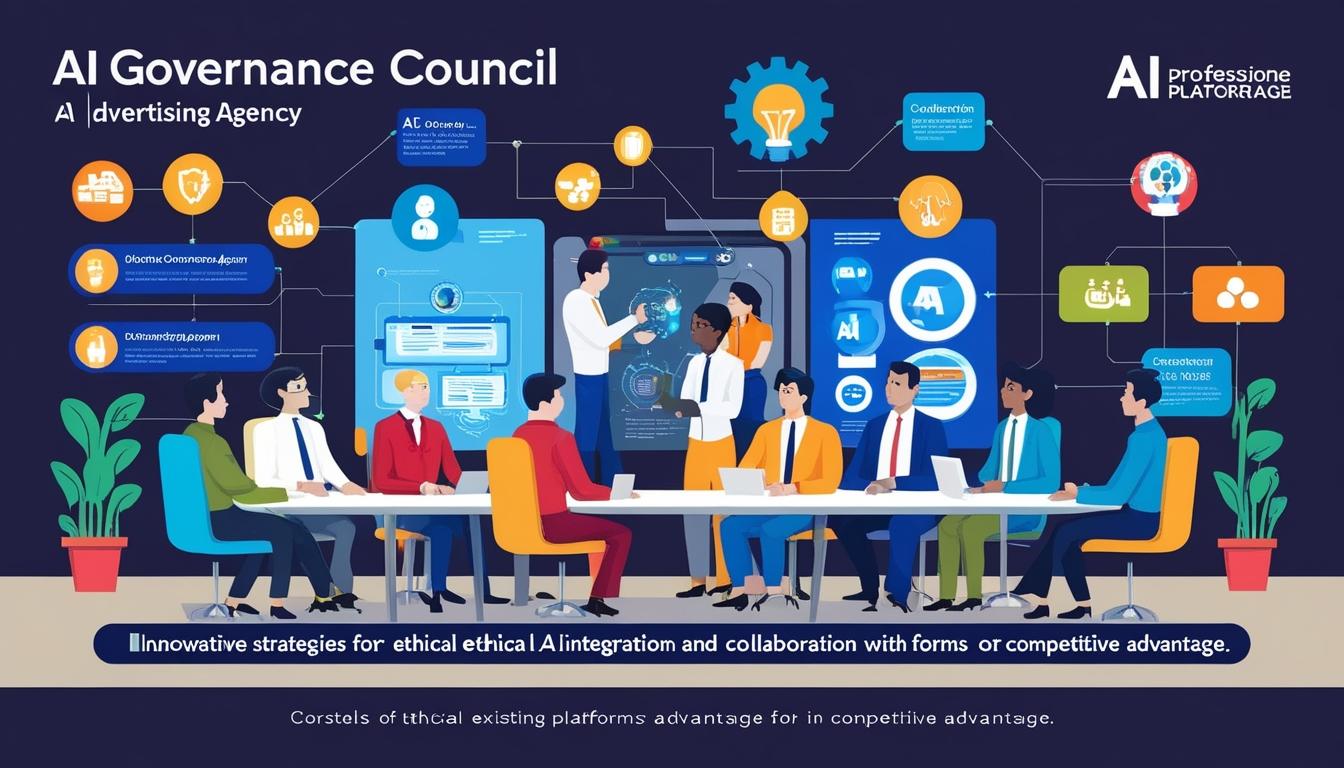
Forming an AI council within an organisation can support this governance effort. The council, consisting of informed leaders, can help oversee AI use policies, manage pilot initiatives, and foster AI proficiency throughout the agency.
Agencies are also advised to explore partnerships with existing AI platforms instead of launching into developing proprietary systems. By leveraging established AI platforms such as OpenAI's ChatGPT, agencies can enhance their strategic capabilities. These platforms can serve as strategic collaborators, assisting in decision-making and offering new avenues for innovation, rather than simply being tools for writing or analysis.
This approach utilises AI's multifaceted capabilities to identify new opportunities, streamline operations, and deliver more personalised client experiences. It is suggested that adopting AI should be a strategic process, with an emphasis on areas where AI can significantly impact operations, rather than attempting to maintain an independent AI infrastructure that may soon become outdated.
This strategic approach is echoed by lessons from other industries, such as finance and healthcare, which spent substantial resources developing bespoke AI models, only to discover that generic models often performed comparably, if not better. Therefore, the focus should remain on harnessing AI efficiently, rather than expending resources on custom systems that may swiftly become obsolete.
In conclusion, the objective for agencies should be not just to integrate AI, but to lead in its effective application to enrich business outcomes. The competitive edge lies in how well an agency can utilise AI to offer enhanced value to clients, rather than in who can build the most elaborate AI system.
Source: Noah Wire Services