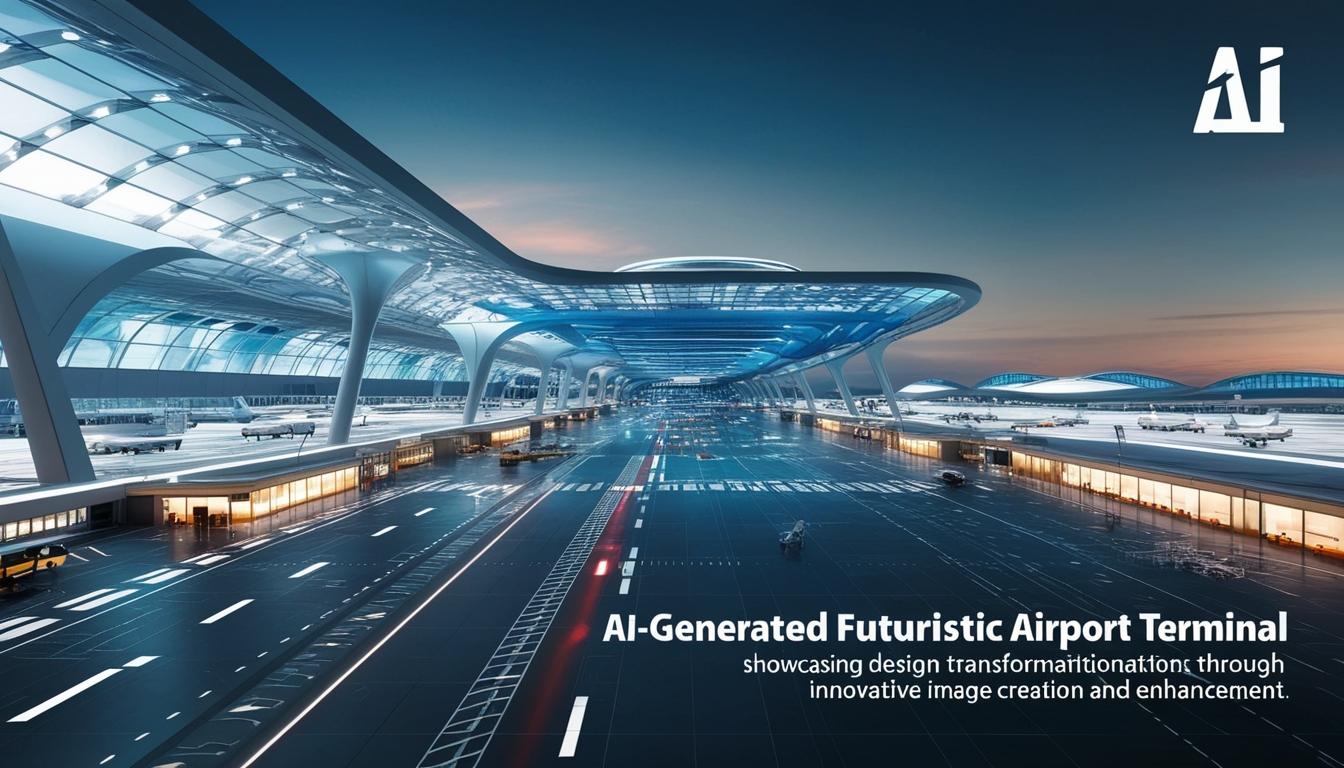
AI Revolutionises the Design Landscape: Redefining Creativity and Efficiency
In the ever-evolving landscape of technology, Artificial Intelligence (AI) continues to pervade various facets of everyday life. Its integration is evident across a broad spectrum of products and services, enhancing functions in everything from communication devices to sports analytics. However, within the realm of design, AI emerges not just as an augmentation but as a transformative force, redefining how professionals address design challenges and expanding the realm of creative possibilities.
AI's influence in design is particularly significant in visualisation, where it provides a robust suite of tools capable of significantly reducing the time and effort traditionally required to achieve compelling results. The array of AI-powered tools available today facilitate an innovative approach to image generation, manipulation, enhancement, and even reanimation, offering profound implications for the design process.
AI in Image Generation
At the forefront, AI is utilised in image generation, a fundamental capability allowing for the creation of visuals from textual descriptions. When the specific image required isn’t readily available, AI steps in, generating unique images tailored to precise requirements. Whether for conceptual projects or distinctive stock images, AI-generated visuals can fill gaps otherwise challenging to bridge through conventional methods.
An instance provided by Gresham Smith showcases AI's application, producing a rendering of an airport curbside at a futuristic terminal, all initiated from simple text prompts and reference style images.
Advanced Image Manipulation
Post-generation, the manipulation of AI-created images becomes crucial. Despite their seeming imperfections, these images serve as valuable bases for further refinement. Here, traditional tools like Photoshop come into play. Designers can retain desirable elements while modifying or eliminating other aspects as needed. This iterative process relies heavily on creativity, enabling designers to experiment with different material options and make incremental improvements.
Gresham Smith offers another example, where a sketch model depicting a restaurant overlooking an aviation museum was enhanced using AI to add runway and airport views, ultimately creating a refined and versatile image.
Enhancing Images with AI
Following manipulation, image enhancement takes the process an extra mile. Initial sketches undergo refinement in digital environments like Photoshop. These are then processed by AI platforms, which incorporate specific prompts, creativity levels, and style mimicry to generate high-quality images. Unexpected artefacts, termed "hallucinations", often arise, necessitating additional adjustments in Photoshop to perfect the final product.
The cycle of iterative adjustments between AI platforms and tools like Photoshop boosts efficiency and opens up design pathways previously unexplored, thereby significantly shortening project timelines.
Pioneering Reanimation
AI’s capabilities extend beyond static visuals to reanimation, with static images serving as the bedrock for dynamic content. Designers articulate animation sequences via textual descriptors, guiding AI to create animations from established images. This technology diminishes the historically intensive time and economic costs of animation, allowing for expedited generation of short animated clips, perhaps depicting a scenic sunrise or complex product assemblies.
The Future Trajectory of AI in Design
These advanced capabilities are reshaping how designers work, creating high-quality outputs across various stages of design while freeing up significant resources previously tied to laborious tasks. This evolution not only promotes efficiency but allows designers to channel their energies into innovation, experimenting with possibilities that stretch beyond traditional design boundaries.
As AI continues its inexorable march forward, this partnership with the design sector heralds uncharted advancements and encourages a perpetual journey of iterative improvement and cutting-edge innovation. The state of AI in design, captured here from September 2024, is anticipated to advance, bringing forth new dimensions in creativity and productivity.
Source: Noah Wire Services