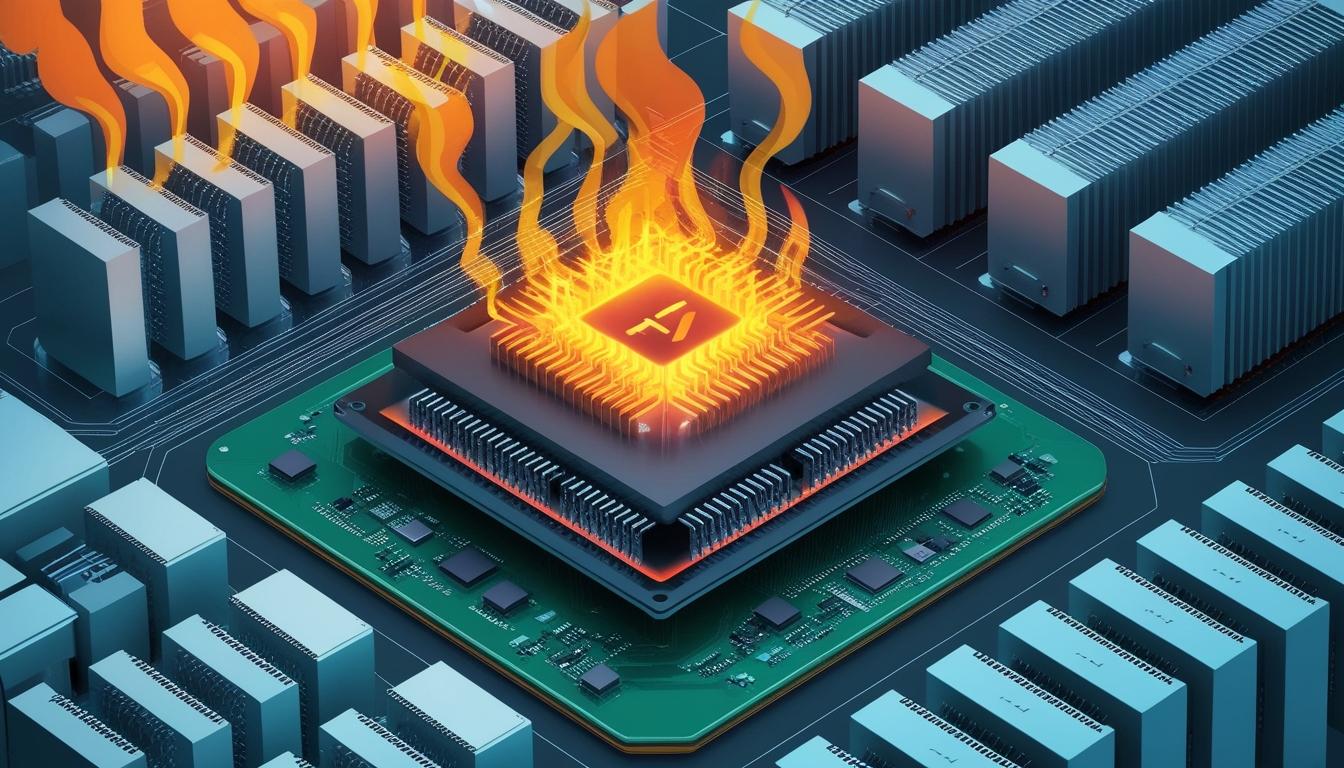
The growing influence of artificial intelligence (AI) in technology is escalating the demand for more powerful chips to be used in data centres. These chips are essential for training complex large language models (LLMs) and facilitating their deployment in real-time applications through AI inference. However, this technological advancement presents significant challenges, notably increased electricity consumption and heat generation, both of which data centres must now grapple with.
According to market research firm IDC, electricity consumption in AI data centres is expected to grow at an annual rate of 45% through to 2027. Moreover, IDC forecasts that the overall electricity consumption of data centres may more than double between 2023 and 2028. Goldman Sachs also predicts a 160% increase in data centre power demand by 2030, implying substantial financial implications for data centre operators due to rising energy costs.
These operational challenges are linked with the clustering of numerous powerful chips, which not only consume considerable electricity but also generate significant heat. The resultant environmental concerns highlight the potential negative impact AI data centres could have on the climate and the additional pressure they could exert on the electrical grid.
In this context, two companies, Nvidia and Super Micro Computer, are emerging as key players in addressing these issues and are poised for increased product adoption as a result.
Nvidia has become a dominant force in the AI chip market, commanding a substantial share exceeding 85%. This is underscored by the deployment of Nvidia's graphics processing units (GPUs) in training popular AI models such as OpenAI's ChatGPT and Meta's Llama. One of the reasons for Nvidia's strong market position is the increasing power and efficiency of its chips. The company's forthcoming Blackwell AI processors are particularly noteworthy, promising to reduce energy consumption by up to 25 times compared to their predecessors. Moreover, these chips are projected to deliver a 30-fold increase in performance, thereby enabling faster AI model training and deployment with reduced power usage.
Mizuho, a Japanese investment bank, anticipates Nvidia’s revenue could exceed $200 billion by 2027, a substantial increase from its fiscal 2024 revenue of $61 billion. Such forecasts suggest Nvidia may potentially surpass Wall Street revenue estimates for fiscal 2026, positioning the company for sustained market leadership.
On the other hand, Super Micro Computer faces scrutiny despite its potential in providing solutions to the heat issue in AI data centres. The company has recently been in the spotlight following allegations from Hindenburg Research concerning financial irregularities, and reports of a potential probe by the Department of Justice, neither of which have been conclusively verified. Despite these hurdles, Supermicro's innovations in liquid-cooled server solutions are attracting attention, evidenced by the shipment of over 2,000 liquid-cooled server racks since June. These solutions purportedly offer up to 40% in energy savings and up to 80% in space savings, suggesting strong demand for their products.
Supermicro has expressed its capacity to deliver 5,000 liquid-cooled server racks monthly, and with the overall demand for such technology forecasted to grow significantly over the next decade, the company is well-positioned to benefit from this trend. Their projections for future earnings growth further underscore potential investor interest.
As the AI industry continues to expand, addressing the challenges of increased electricity consumption and heat generation remains crucial. Nvidia and Super Micro Computer are at the forefront of innovations aimed at mitigating these challenges, holding promise for their roles in the evolving landscape of AI technology.
Source: Noah Wire Services