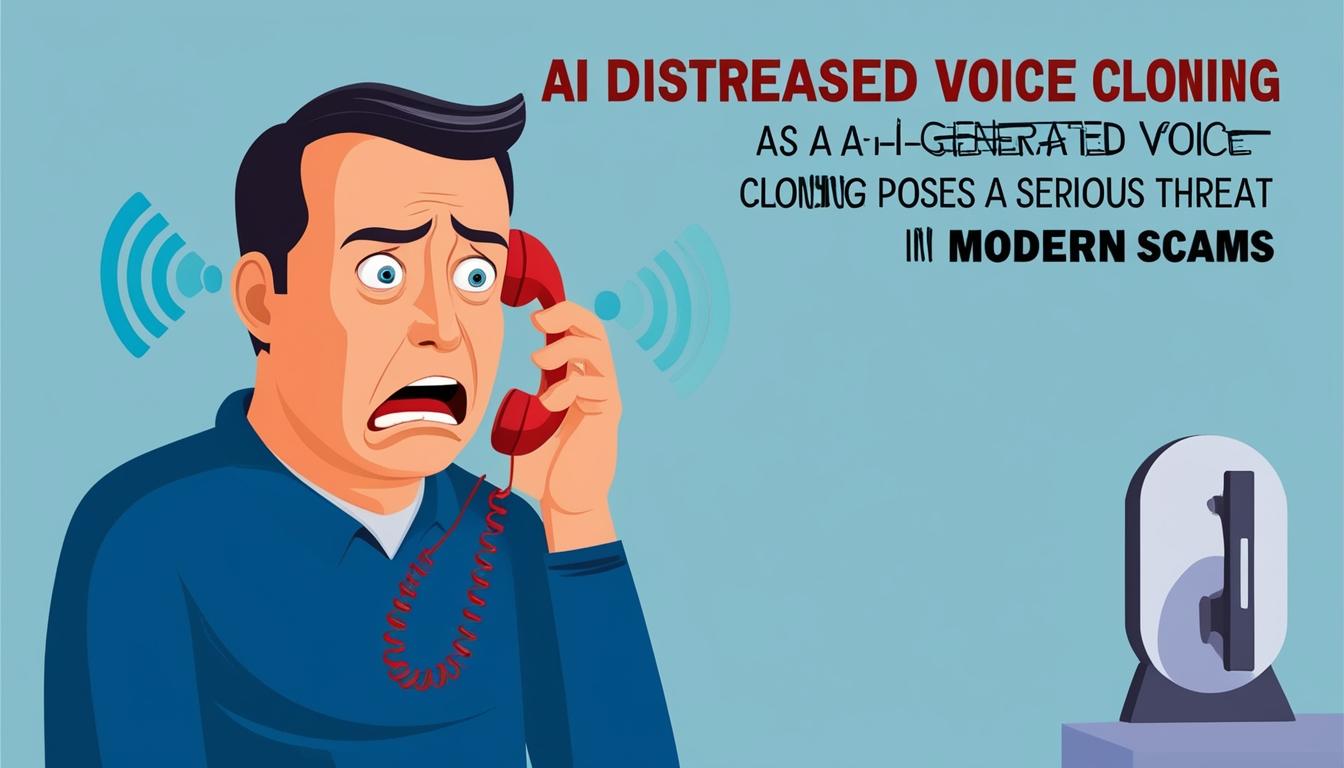
In a sophisticated scheme that underscores the evolving tactics of fraudsters, a man from Los Angeles, identified only as Anthony, fell victim to a scam involving artificial intelligence-designed voice cloning. The deception led him to believe his son was in legal trouble and resulted in the loss of a significant sum of $25,000.
The fraud unfolded when Anthony received a call that seemingly identified as his son's voice. He was told his son had been involved in a vehicular accident, reportedly striking a pregnant woman. Shortly after the initial call, a person named Michael Roberts contacted Anthony, claiming to be a lawyer representing his son. This supposed legal representative informed Anthony that a bail amounting to $9,200 was necessary to secure his son's release from jail.
"I need you to get $9,200 as quickly as possible; otherwise, your son will have to spend 45 days in jail," the phoney attorney warned. Concerned for his son's welfare and unable to reach him directly, Anthony proceeded to withdraw the specified amount from his bank, citing it was for a solar panel installation to avoid raising suspicion.
Upon returning home, Anthony's daughter attempted to ensure the legitimacy of the situation by contacting Michael Roberts. They were instructed that an Uber vehicle would arrive to collect the money. Surveillance footage captured the moment Anthony's daughter handed a manila envelope with the funds to the Uber driver, who was seemingly not complicit in the scam.
The situation took a more dramatic turn when another call was received, this time from a person introducing himself as Mark Cohen, another purported lawyer on the case. The caller informed Anthony that the pregnant woman involved had died, thus escalating the bail to a demand for increases ranging from $15,800 to $25,000. Driven by the urgency instilled by the attackers and the desire to protect his son, Anthony repeated the earlier process, securing additional funds and relinquishing them to yet another Uber driver.
After the dust settled and prompted by his daughter's research, Anthony confronted the unthinkable reality that he had been defrauded of a total of $25,000. The revelation was a bitter pill to swallow, particularly given the innovative way the scam was orchestrated, using AI technology to create what seemed like his son's voice.
Detective Chelsea Saeger of the LAPD noted that this brand of scam, while not new, has taken on a modern twist with the advent of AI and social media. "The scammers are becoming increasingly savvy, leveraging personal information found online to fabricate believable scenarios," she explained. "The use of AI can convincingly mimic a loved one's voice with just a few seconds of audio, making the ruse alarmingly believable."
In these scams, ride-share drivers, such as those from Uber or Lyft, are generally unwitting participants, unaware that they are part of a fraudulent operation. Authorities advise the public to remain vigilant and sceptical, particularly of unsolicited requests for funds, stressing that legitimate institutions will not ask for immediate monetary transfers or payments through cryptocurrency ATMs—a contemporary warning sign of fraudulent intent.
Though Anthony expressed his embarrassment over the incident, he hopes sharing his experience underscores the sophistication of modern scams and helps others avoid similar situations. His cautionary tale serves not only as a personal misfortune but as an insight into the deceptive means employed by fraudsters in today's tech-driven age.
Source: Noah Wire Services