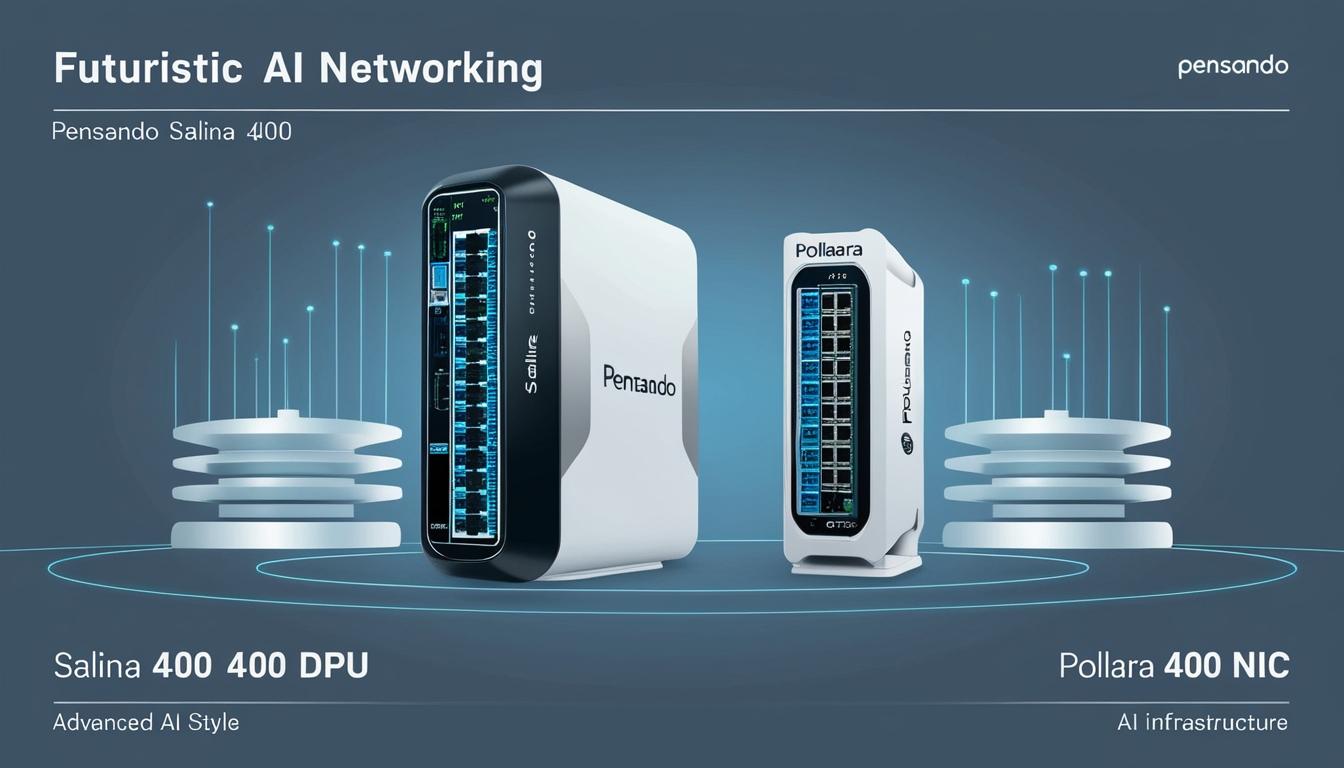
AMD Introduces Advanced AI Networking Solutions with New Pensando Salina 400 DPU and Pollara 400 AI NIC
AMD has unveiled two groundbreaking products aimed at enhancing AI networking and infrastructure: the Pensando Salina 400 Data Processing Unit (DPU) and the Pensando Pollara 400 AI Network Interface Card (NIC). These innovations are set to revolutionise the efficiency and scalability of AI systems, addressing the mounting demands of hyperscalers and organisations focused on optimising their AI and high-performance computing (HPC) frameworks.
Enhanced Performance with Pensando Salina 400 DPU
The Pensando Salina 400 DPU represents the third generation of AMD's data processing units, showcasing significant advancements in performance metrics. It boasts double the bandwidth and performance compared to its predecessor, effectively managing massive AI data loads and enhancing transfer and processing speeds critical for high-efficiency operations. The Salina 400 extends its capabilities to include software-defined networking (SDN), firewalls, encryption, load balancing, and network address translation (NAT). Additionally, by offloading storage tasks, it liberates CPU resources, optimising overall system efficiency.
Revolutionising AI Workloads with Pollara 400 AI NIC
Similarly, the Pensando Pollara 400 AI NIC introduces a sophisticated approach to managing the intricate data transfer demands inherent in AI and HPC systems. Notably, it is the first of its kind to be Ultra Ethernet Consortium (UEC) ready. This innovation promises a substantial six-fold increase in performance for AI workloads compared to previous models.
Leveraging a specialised processor, the Pollara 400 AI NIC excels in optimising AI networking through intelligent multipathing, which permits data flow adjustments across several routes to minimise congestion. It employs path-aware congestion control to redirect data away from congested pathways, maintaining network efficiency. Additionally, its fast failover capabilities enable prompt detection and bypassing of network failures, ensuring uninterrupted high-level communication between GPUs.
Scalability and UEC Compatibility
The Pollara 400 AI NIC stands out for its ability to handle expansive AI cluster networks without increasing latency, thereby contributing to a more robust and reliable AI infrastructure. This feature is particularly crucial for enterprises integrating AI into their operations.
Moreover, the Pollara 400's alignment with the specifications set out by the UEC marks a significant step forward. The UEC, which has rapidly grown to include 97 members, is a major player in the networking industry, striving to adapt Ethernet technology for AI and HPC workloads. The UEC plans to release its 1.0 specification next year, in tandem with the commercial availability of the Pollara 400 NIC. This specification will enhance existing Ethernet standards, allowing AI and HPC workloads to operate under tailored protocols that bolster performance while keeping Ethernet technology relevant.
Implications for AI-Driven Industries
As AI continues to permeate various sectors, the need for high-speed, dependable networking infrastructures is expected to grow correspondingly. With these latest innovations, AMD is positioning itself as a leader in this transformative phase of technology, even as the AI requirements of businesses expand and diversify.
Source: Noah Wire Services